…as Tuggar say its time for economic reorientation, local investment


By Gloria Ikibah
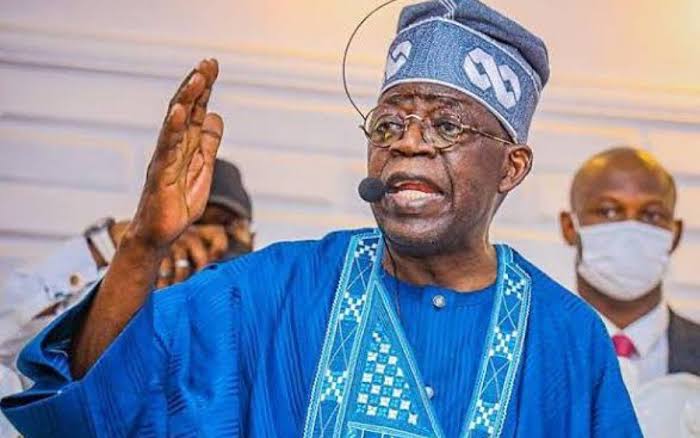
President Bola Ahmed Tinubu has called on West African nations to stop relying on words and start delivering results, urging leaders across the region to deepen economic cooperation, invest in infrastructure, and create a business-friendly environment that supports trade and job creation. 
Speaking at the first-ever West Africa Economic Summit in Abuja on Saturday, Tinubu welcomed heads of state, regional leaders, business delegates, and development partners to what he described as a turning point for the region’s economic future.
While acknowledging West Africa’s rich potential, Tinubu cautioned that potential alone is not enough.
He pointed to the region’s low level of trade between member states—still under 10%—as a major obstacle
He said: “We gather at a decisive moment. Today is not about celebrating how far we’ve come but forging a new path that leaves behind fragmentation and missed opportunities and moves us toward deeper integration, collective action, and shared prosperity.
“West Africa is one of the last great frontiers of economic growth. Yet opportunity alone does not guarantee transformation. Opportunity is not destiny. We must earn it through vision, integration, policy coherence, collaboration, and capital alignment.
“Intra-regional trade remains under 10%—a challenge we can no longer afford to ignore. The low trade is not due to a failure of will but a coordination failure. The global economy will not wait for West Africa to get its act together, and neither should we. Rather than competing in isolation or relying on external partners, we must strengthen our regional value chains, invest in infrastructure, and coordinate our policies”.
Tinubu said that the low trade is not due to a failure of will but a coordination failure, he therefore warned that the global economy will not wait for West Africa to get its act together.
He called for stronger regional value chains, the Nigerian president urged nations to stop operating in isolation and instead focus on aligning policies, strengthening infrastructure, and unlocking youth potential.
“Our region’s greatest asset is its youthful population. However, this demographic promise can quickly become a liability if not matched by investments in education, digital infrastructure, innovation, and productive enterprise. For example, Nigeria invests in skills development, digital connectivity, and youth empowerment. But no one country can do this alone. Our prosperity depends on regional supply chains, energy networks, and data frameworks. We must design them together — or they will collapse separately.
“From the Lagos-Abidjan Highway and West African Power Pool to digital and creative industry initiatives, our joint projects demonstrate what is possible when we work together. But we must do more. We must move from declarations to concrete deals; from policy frameworks to practical implementation”‘ he added.
He acknowledged that the greatest asset of the sub-region is its youthful population, President Tinubu however, said this demographic promise can quickly become a liability if not matched by investments in education, digital infrastructure, innovation, and productive enterprise.
Tinubu cited examples from Nigeria’s efforts to train young people and build digital access, but stressed the importance of cross-border cooperation.
“Let us also recognise that Africa was left behind in previous industrial revolutions. We cannot afford to miss the next one. Our rare minerals power tomorrow’s green technologies—yet it is not enough to be resource-rich; we must become value-chain smart and invest in local processing and regional manufacturing. The era of pit to port must end. We must turn our mineral wealth into domestic economic value—jobs, technology, and manufacturing.
“The fundamental transformation will not come solely from government but from unleashing our people’s entrepreneurial spirit. Governments must provide the right environment—law, order, and market-friendly policies—while the private sector drives growth.
“Our task is to find new and effective ways to invest in our collective future, improve the business climate, and create opportunities for our youth and women.
“Let us emerge from this summit with actionable outcomes: a renewed commitment to ease of doing business, enhanced intra-regional trade, improved infrastructure connectivity, and innovative ideas that move our people from poverty to prosperity. Let us build a West Africa that is investable, competitive, and resilient—one that leads with vision, responsibility, and unity”, he stated.
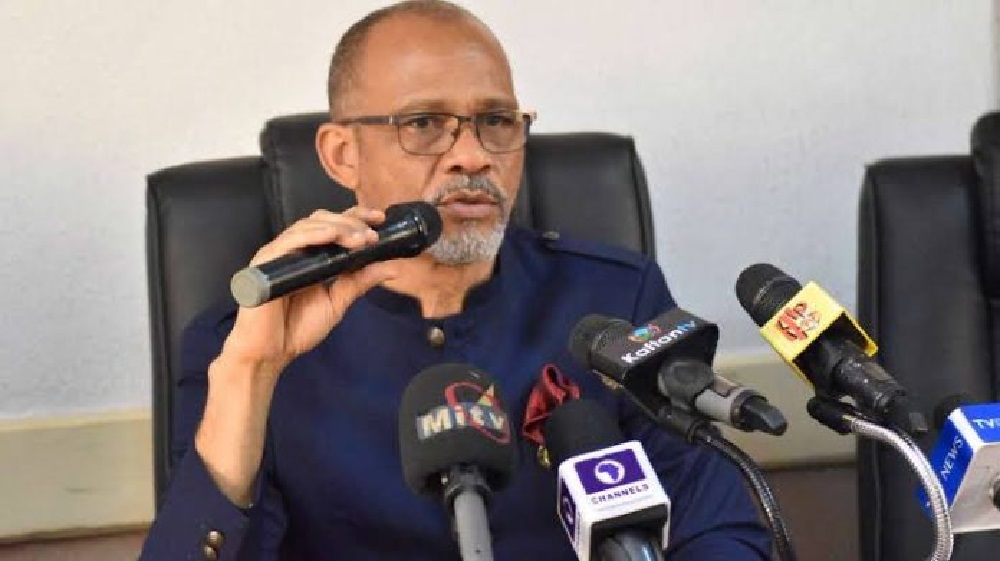
Earlier in his welcome address, Nigeria’s Minister of Foreign Affairs and Chair of the ECOWAS Council of Ministers, Ambassador Yusuf Maitama Tuggar called for a regional economic reset, urging West African nations to shift away from overdependence on external trade and rethink how the region engages with markets, innovation, and its own resources.
Tuggar noted that while the region has made strides in trade frameworks and infrastructure integration, much more remains to be done in practical terms.
He reminded the gathering that West Africa already has the tools in place: freedom of movement, frameworks for trade, energy cooperation, and infrastructure corridors.
“Our purpose today is to ‘Reset the Vision for the Economic Future of the West Africa Region.’ Now, that is quite an ambitious target. And let’s be honest: it’s up to the creative talents, enterprise and ingenuity of our people to deliver that transformation. Governments and organisations are at their best when they realise the limits of their influence and power.
“So we are here today to build on that enabling environment. We are not re-inventing the wheel. As an economic community, West Africa enjoys freedom of movement and a framework to facilitate trade, pool electricity and integrate transport corridors. Our job today is to build on what we have and to find new ways that add momentum to the search for peace and stability, prosperity and growth”.
Referencing the deep-rooted trade networks of the pre-colonial era, Tuggar said West Africans have long been active economic players without needing treaties or external validation.
He said that in 2024 alone, the region exported goods worth over $166 billion, but only 8.6% of that trade occurred within West Africa.
“We can find some answers to the future in how we understand our past. Long before this city was founded, before independence movements and colonial cartography, the people of this region related and traded — not through treaties, but through brotherhood and trust. Livestock from the Sahel moved southward; kola nuts from the forest zone moved northward. Markets such as Salaga, Katsina, and Kano were economic engines long before the modern state existed.
“Let’s reflect on that for a moment: markets. Markets are a West African story, a story about trade, innovation and the generation of wealth and opportunity. We still believe in free markets – not a free-for-all, but markets that thrive because of effective co-operation between supply and demand, regulated by accepted and acceptable parameters.
“Let us not forget that in 2024, West Africa exported goods valued at over $166 billion. Yet only 8.6 percent of that trade remained within our borders. Imports follow the same pattern — heavily tilted toward partners outside the continent. Machinery and manufactured goods from China, India, the United States, and the European Union dominate our import flows, while we continue to export unprocessed raw materials.
“This trajectory is untenable — and the issue is not just capacity, but orientation. We know what economists call the informal sector finds ways to deliver what the market wants, bypassing borders and regulations when they are too slow and bureaucratic. As governments, as states and the region, we need to do more to make it easy to bring that activity within the formal sector, to bring with it the economies of scale and other efficiencies that will accelerate growth and help our entrepreneurs. And this is already happening: this Summit, as envisioned by President Tinubu, is the chance to build on that change.
“We are not offering royal charters to monopoly corporations anymore. That was a long time ago. Our job now, our responsibility, is to help find the best way to deliver goods and services to our people, to help the private sector and the free market to do what they do best, generating investment and building capacity. We want people to see the difference. I say to our friends here today in industry, banking and other sectors: President Tinubu and the other leaders present are listening – let’s stop outsourcing the future and take back control of our destiny”.
Tuggar acknowledged President Bola Tinubu’s role in envisioning the summit, describing it as part of a broader effort to ground economic diplomacy in West African soil, not distant capitals.
“We want this summit to show that West Africa can deliver the space where government, industry and other stakeholders can meet and make deals, without having to transplant ourselves, shivering, to one summit or another in wintry venues. It’s good to talk, better still to deliver. And let’s do that in Abuja and Abidjan, from the Sahel to the sea. There is literally a deal room here at the Summit. We are not here to tell the private sector its business – but to give you the space to grow. Use it!”, he quipped.
He called on investors to focus on local processing and infrastructure development, arguing that West Africa has the scale and talent to compete globally—if it works together.