ADVERTISEMENT

ADVERTISEMENT

By Gloria Ikibah
Nigeria’s President Bola Tinubu has said his administration was investing funds saved from fuel subsidy removal, and channelling it into critical infrastructure, social safety nets, and targeted economic reforms aimed at rebuilding public trust and promoting inclusive development.
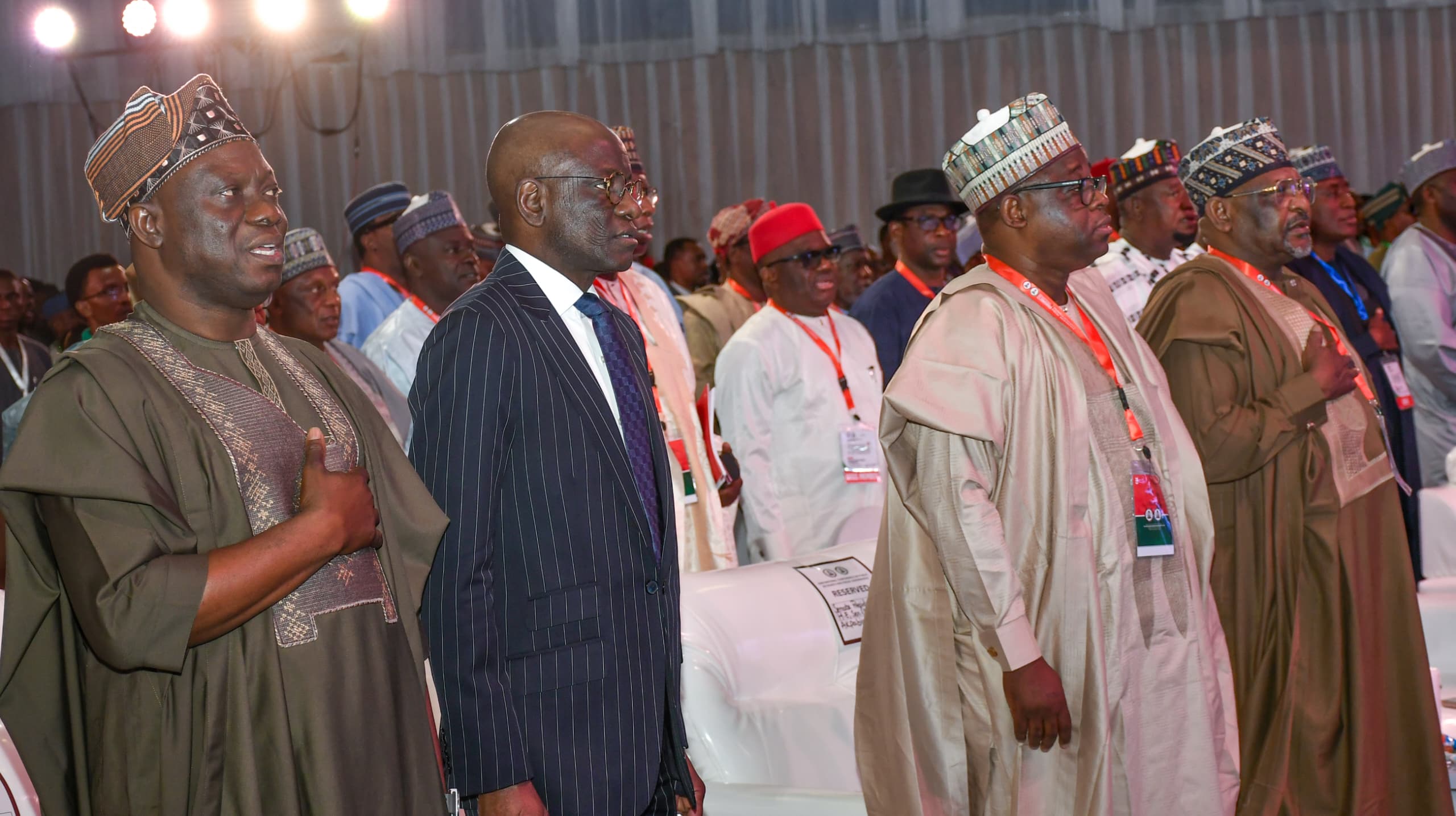
President Tinubu stated this at the opening of a National Conference on Public Accounts and Fiscal Governance, organized by the Public Accounts Committees (PACS) of the Senate and House of Representatives on Monday in Abuja.
Represented by the Minister of State for Finance, Dr. Doris Nkiruka Uzoka-Anite, According to him, the removal of subsidy, though painful, was necessary to free up fiscal space and redirect national resources to sectors that benefit the broader population.
He said: “In 2022 alone, Nigeria spent over 4 trillion naira on fuel subsidies, more than we allocated to capital expenditure. This was not only physically unsustainable, it was unjust. A subsidy that disproportionately benefited the affluent, encouraged smuggling, and bred inefficiency was neither equitable nor strategic.
“Since its removal, we have redirected those funds into targeted interventions, expanding our social safety nets, improving public transportation, and financing critical infrastructure projects. Most importantly, we have strengthened our fiscal buffers, making Nigeria more resilient to external shocks.”
He who described fiscal governance as “the lifeblood of national development,” emphasised that transparency, accountability, and sound management of public resources, is sacrosanct to the prosperity of any nation regardless of its natural wealth.
“For far too long, Nigeria’s economy has been burdened by structural inefficiencies, fiscal leakages, and an overreliance on oil revenues. But we are not here today to dwell on the challenges of the past. We are here to chart a new course,” he stated.
Highlighting other key reforms, he noted that the newly assented tax reform laws, will simplify compliance, expand the tax base, digitize collections, and harmonise multiple taxes to ease doing business in Nigeria.
“These reforms are designed to widen the tax base by integrating the informal sector, simplify compliance for small and medium-sized enterprises, digitize revenue collection to reduce human interference and eliminate leakages, and harmonize multiple taxes to make doing business easier in Nigeria,” he added.
Tinubu said the new tax system is “a governance imperative,” this is as he noted that Nigeria is laying the foundation for a self-sustaining economy that gradually moves away from dependence on oil revenues to a more diverse and inclusive revenue base.
The President also emphasised economic diversification as a top policy objective, naming agriculture, manufacturing, digital services, renewable energy, mining, and the creative economy as focal sectors receiving targeted investments and reforms.
He referenced new initiatives like the National Credit Guarantee Company, which aims to support local production, empower SMEs, and boost non-oil exports.
“These efforts go beyond mere economic metrics. They are creating jobs, fostering innovation, building economic resilience, and strengthening our national security and long-term stability,” Tinubu stated.
On monetary policy, Tinubu acknowledged the Central Bank’s efforts in stabilizing the naira, taming inflation, and coordinating effectively with fiscal authorities.
“There is better coordination now between the fiscal and monetary side, and we are determined to reduce inflationary pressures by addressing structural bottlenecks, particularly in food supply chains.”
The President affirmed that transparency and accountability are non-negotiable, citing steps taken to digitize public finance systems through platforms such as the Integrated Payroll and Personnel Information System (IPPIS), the Government Integrated Financial Management Information System (GIFMIS), and the Open Treasury Portal.
“These platforms ensure that public funds are traceable, public officers are accountable, and the Nigerian people are empowered with information. We must move from opacity to openness, from suspicion to confidence,” he declared.
Tinubu therefore called on the National Assembly, especially the Public Accounts Committees, to uphold their constitutional duty with “integrity, courage, and independence.”
“Oversight is not a political tool. It is a patriotic duty. Every project must be guided by value for money, and every budget must reflect the new priorities of our people,” he said.
The President also underscored the role of citizens, the media, civil society, and the judiciary in institutionalizing good governance.
“Nigerians must be empowered to ask questions, scrutinize public accounts, and demand accountability. Good governance is a shared responsibility,” he said.
President of the Nigerian Senate and Chairman of the National Assembly, Senator Godswill Akpabio, urged the Public Accounts Committees (PACs) of the National Assembly to assert their constitutional powers in enforcing transparency and accountability in government, warning against the growing trend of non-compliance with legislative summons.
Represented by Senator Abdul Ningi, Akpabio emphasised that Nigeria’s progress is inseparable from effective fiscal oversight, which is the central mandate of the PACs.
“The Public Accounts Committees are not just legislative creations, they are constitutional bodies empowered by Sections 80, 81, and 88 of the Constitution to act as watchdogs of public funds. They have the power to summon any individual, public or private, to account for the use of government resources,” he said.
Akpabio decried lack of responsiveness by some agencies and individuals to invitations from the legislature, and described it as an affront to democracy and the rule of law.
“Refusal to honour legislative invitations, especially from the PACs, is unacceptable. This trend must be stopped. Heads of agencies, including the Head of Service and others, must recognize the authority vested in the legislature by the 1999 Constitution as amended,” he stressed.
He added that without transparency, fiscal discipline, and integrity, no nation can achieve true development. He therefore challenged the PACs to rise to their constitutional mandate and reassert their relevance in national governance.
“It is your duty to track how revenues are collected, stored, appropriated, and implemented. Without accountability, there will be no prosperity. Without discipline, there will be no development,” he added.
Akpabio also drew attention to the challenges the legislature faces in executing oversight functions, particularly when dealing with complex institutions like the Central Bank of Nigeria (CBN), the Nigerian National Petroleum Company Limited (NNPC), and the Federal Inland Revenue Service (FIRS).
He called for greater support and capacity building to enable lawmakers carry out their duties effectively.
“The legislature is being incapacitated in many ways. We need expertise and tools, especially digital technologies, to carry out oversight over 250 million Nigerians. The task is enormous but must be done,” he said.
He praised the PACs for organizing the conference and encouraged delegates to use it as a platform for practical solutions.
“This conference should go beyond theory. Let it equip our lawmakers with the capacity, knowledge, and strategy to engage in effective fiscal oversight. Let it also signal to all public officials that impunity and opacity will no longer be tolerated.”
Akpabio reaffirmed the commitment of the National Assembly leadership to supporting the PACs, saying, “There is an understanding between you and the leadership of both chambers of the National Assembly. We are counting on you to deliver.”
Speaker of the House of Representatives, Rep. Tajudeen Abbas, raised alarm over Nigeria’s unresolved fiscal infractions, revealing that over ₦300 billion in public funds flagged by audit reports remain unrecovered.
Speaker Abbas, who was represented by House Leader, Rep. Julius Ihonbvere described the situation as unacceptable, and warned that fiscal responsibility cannot thrive where audit queries are routinely ignored without consequence.
“We have advocated for the timely implementation of audit recommendations and increased collaboration with anti-corruption bodies to ensure that those found wanting are held to account. In addition, we have advocated for mandatory compliance and sanctions for audit infractions, closing long-standing loopholes that allow MDAs to disregard audit queries with impunity,” he said.
He added that the House has moved from passive review to active enforcement, emphasising the importance of holding Ministries, Departments and Agencies (MDAs) accountable.
“Fiscal responsibility cannot thrive in the absence of consequences for mismanagement,” Abbas stated.
The Speaker further expressed concern that Nigeria’s public finance architecture is often weakened by non-compliance and delayed enforcement of audit recommendations.
To address this, he noted that the House has “worked on refining the PAC process to reduce delays in considering Auditor-General reports, while developing a structured follow-up mechanism to track compliance by MDAs.”
Beyond enforcement, the Speaker called for innovation and the deployment of technology in audit and accounting processes.
“The House is fully committed to supporting the integration of technology into public sector audit and accounting processes. We have championed the digitization of audit and financial reports, promoted the use of real-time expenditure tracking tools, and encouraged MDAs to adopt automated audit software,” he said.
Speaker Abbas noted that the 10th House of Representatives has made fiscal oversight a legislative priority and has deliberately elevated financial accountability “from mere procedural obligations to an active, results-driven process.”
According to him, the legislative arm has engaged in expanded committee work, direct interface with the Office of the Auditor-General, and follow-up on past audit findings.
“We have begun to institutionalize a culture where public fund management is not only monitored but measured against actual impact. This includes the timely review of Auditor-General’s reports to ensure swift legislative action and follow-up,” he added.
He emphasized that true transparency is not about elite bureaucratic processes but about empowering citizens.
“Fiscal transparency should no longer be confined to elite circles of technocrats and auditors; it must become a democratic right that empowers citizens to participate in shaping public policy.
“That is why the 10th House has prioritized the simplification and public accessibility of audit reports, making it easier for everyday Nigerians to engage meaningfully with government financial disclosures,” the Speaker added.
Abbas revealed that the House has organised public presentations and debates for every appropriation bill.
“The essence of inclusive budgeting policy is to ensure that the people whose mandate we hold have the opportunity to make input into the appropriation process, just like any other public hearing on our legislative processes in lawmaking,” he said.
He also called for nationwide standardization of audit mechanisms to ensure that no tier of government is left behind.
“The House of Representatives strongly supports a harmonized approach to fiscal accountability, one where audit methodologies, enforcement mechanisms, and compliance cultures are not fragmented, but standardized and mutually reinforcing,” he said.
The Speaker stressed the importance of involving state actors.
“It is therefore imperative that the State Houses of Assembly, Auditors-General, Commissioners of Finance, and PAC Chairpersons from across the country are made to be part of a conference of this nature,” he said.
He also emphasised the need for continuous performance monitoring and evaluation beyond budget passage.
“Over the last two years, the 10th House has expanded its post-budget engagements, introducing performance reviews, on-site inspections, and sectoral audits that assess the real-world translation of appropriated funds,” he said.
Chairman of the Senate Public Accounts Committee (SPAC), Senator Ahmed Wadada, called on Nigeria’s public institutions and leadership across sectors to recommit to a new era of fiscal integrity and responsible governance.
He said the era of fiscal recklessness must end.
Senator Wadada described fiscal governance as “the moral backbone of public service,” asserting that it is the determining factor “whether government revenue becomes national prosperity or lost opportunity.”
“As Chairman of the Senate Public Accounts Committee (SPAC), I consider it both a duty and a privilege to open this timely and vital discourse, one that sits at the heart of Nigeria’s economic stability, institutional integrity, and social transformation,” he said.
Against the backdrop of growing global economic uncertainty and declining domestic revenues, Wadada stressed the urgency of “reimagining Nigeria’s fiscal framework,” warning that public trust in government can only be rebuilt through transparency and measurable service delivery.
“The vision before us is clear: To establish a culture of fiscal discipline anchored on transparency, accountability, and citizen-focused service delivery,” he declared.
Wadada expressed regret over past fiscal missteps, including poorly monitored budgets and untracked funds.
“We have seen budgets passed without adequate oversight. We have witnessed funds released without measurable outcomes. And we have, too often, overlooked the voices of citizens in matters that directly affect their livelihoods,” he said.
He challenged all stakeholders, across the legislature, executive, civil society, and the private sector, to view public funds not as privileges, but as a “sacred trust.”
“We must uphold fiscal integrity not as a slogan, but as a standard. We must treat public funds not as privilege, but as sacred trust. And we must ensure every Naira counts, for education, health, infrastructure, security, and the future of generations unborn,” Wadada urged.
Referencing a recent audit report from the Office of the Auditor-General of the Federation, the Senator acknowledged lingering gaps in financial reporting and accountability among government agencies.
He said these gaps reinforce the need to strengthen Nigeria’s public financial management systems through stronger oversight and reforms.
“These observations serve as an important reminder of the need to continuously strengthen our public financial management systems. In this regard, the Public Accounts Committee of the Senate has intensified its oversight functions, initiated inclusive public hearings, and deepened engagement with key stakeholders, all aimed at fostering a culture of transparency, accountability, and responsible governance,” he said.
Senator Wadada affirmed that the 10th Senate, under the leadership of Senate President Godswill Akpabio, remains fully committed to open budgeting and prudent spending, and is working to review outdated fiscal legislation.
“We are building institutional synergy across arms of government to ensure that fiscal recklessness becomes a thing of the past,” he said.
He acknowledged the contribution of Nigeria’s international partners, especially in promoting anti-corruption frameworks and fiscal transparency.
“Your support has been critical in promoting transparency, budget reform, and anti-corruption mechanisms. We are eager to deepen those collaborations in the spirit of mutual accountability and shared global progress,” he said.
Wadada also emphasized Nigeria’s responsibility not only to its citizens but also to global standards.
“Nigeria must not only meet domestic expectations, it must fulfill international benchmarks in public finance, debt management, and open governance,” he said.
Chairman of the House of Representatives Public Accounts Committee (PAC), Rep. Bamidele Salam, called for a complete recalibration of Nigeria’s fiscal governance systems, urging all public officials to move beyond lip service and ensure that public funds are truly used for the public good.
Salam stressed that the conference must go beyond discussions to deliver concrete, measurable outcomes that will impact the lives of citizens.
“Making public funds work for public good is a mantra we must not only proclaim but must be seen to internalise and practice in all we do as public servants,” he said.
With the theme “Fiscal Governance in Nigeria: Charting a New Course for Transparency and Sustainable Development,” Salam described the gathering as a “significant milestone in our collective pursuit of transparency, accountability, and sustainable development in Nigeria.”
He noted that the quality of fiscal governance has a direct impact on the country’s future.
“We recognize that our nation’s progress is inextricably linked to the effectiveness of our fiscal governance systems.
“It is our collective responsibility to ensure that public resources are managed in a lawful, transparent, prudent, judicious, accountable, and efficient manner,” he said.
The lawmaker identified critical areas of reform that the conference will address, including “budget and procurement transparency, financial accountability, regulatory and legislative oversight; public engagement, and the role of the media and civil society in deepening accountability as well as promoting good governance.”
According to Salam, Nigeria’s fiscal future is under pressure from dwindling revenues, an exploding population, surging youth unemployment, and decades-long infrastructural deficits.
These challenges, he argued, make it urgent to “combat the ills of corruption, impunity and abuse of due process in public sector financial management.”
Salam acknowledged some of the ongoing fiscal reforms under President Bola Ahmed Tinubu’s administration through the Renewed Hope Agenda, but said more work needs to be done in strengthening financial reporting, auditing institutions, and aligning governance with the constitutional mandate.
“In the last two years of my stewardship as the Chair of this constitutional committee in the House of Representatives, I have seen the need, more than ever before, to address fundamental issues around the timeliness and quality of our financial reporting systems, the integrity of our budgeting and procurement process, the capacity of our supreme audit institution, and the successful implementation of our shared vision as contained in Chapter 2 of the 1999 Constitution as amended,” he stated.
He emphasised that as Africa’s biggest economy and the most populous Black nation, Nigeria must assume a leadership role on the continent’s economic emancipation by improving its public finance architecture and global transparency rankings.
“There is no way we can achieve this if we do not make concerted, conscious efforts to recalibrate our fiscal responsibility systems and improve on our global transparency index,” he said.
President of the African Organization of Public Accounts Committees (AFROPAC), Hon. Medard Lubega Sseggona, commended Nigeria for taking continental leadership in promoting fiscal transparency and sustainable public finance management, declaring that the country now stands as a strategic anchor in Africa’s accountability architecture.
“This forum is a clear demonstration of Nigeria’s commitment to strengthening public financial management and enhancing transparency in championing sustainable development. It speaks directly to the collective challenges we face across the continent in our shared aspirations.”
He lauded the Nigerian National Assembly for refocusing attention on accountability.
“Public Accounts Committees must now sit at the centre of the survival and credibility of our democracies. Our people demand transparency. They demand that public accounts serve the public good. And as parliamentarians, we must rise to that occasion—not just with words, but through robust action and institutional reform,” he said.
He noted that Nigeria’s choice to host the forthcoming West African Association of Public Accounts Committees (WAPAC) Conference later this year underscores its growing importance as a continental standard-bearer in fiscal oversight.
“We now see Nigeria as a strategic partner and anchor in this mission, especially as we prepare for the upcoming WAPAC Conference, which Nigeria will graciously host,” he said.
Hon. Sseggona urged Nigeria, and other African nations, to confront a recurring governance gap: the disconnect between intention and implementation.
“For Nigeria, the challenge is not lack of vision or policy. It is often the gap between intention and implementation. This forum presents a unique opportunity to bridge that gap,” he said.
To that end, he laid out four strategic pillars necessary to achieve genuine fiscal accountability and inclusive growth.
They are Open Budgeting and Real-Time Public Access; Strengthening Auditor Independence; Capacity Building; and Embracing Innovation.
He said digital tools such as procurement blockchain for contract management and digital audit assistants can revolutionize how we track variance and verify public expenditure.
“In public accounts, we are often referred to as post-mortem committees. But yours is a strategic institution. By ensuring fiscal transparency today, you safeguard sustainable development for tomorrow.”
He encouraged Nigerian legislators to remain “courageous in your duties, collaborative in your approach, and relentless in your pursuit of the public good.”
The Head of the Civil Service of the Federation, Mrs. Didi Esther Walson-Jack, affirmed the Civil Service’s full support for Nigeria’s ongoing fiscal reforms, describing the National Conference on Public Accounts and Fiscal Governance as a critical step toward strengthening accountability and service delivery across government institutions.
Walson-Jack said the event comes at a moment when transparency, fiscal discipline, and good governance are more urgent than ever.