Connect with us

News

Underage drinking: NAFDAC pushes tighter sachet alcohol regulation

Published

on

ADVERTISEMENT
Zoom Ad
ADVERTISEMENT
Zoom Ad

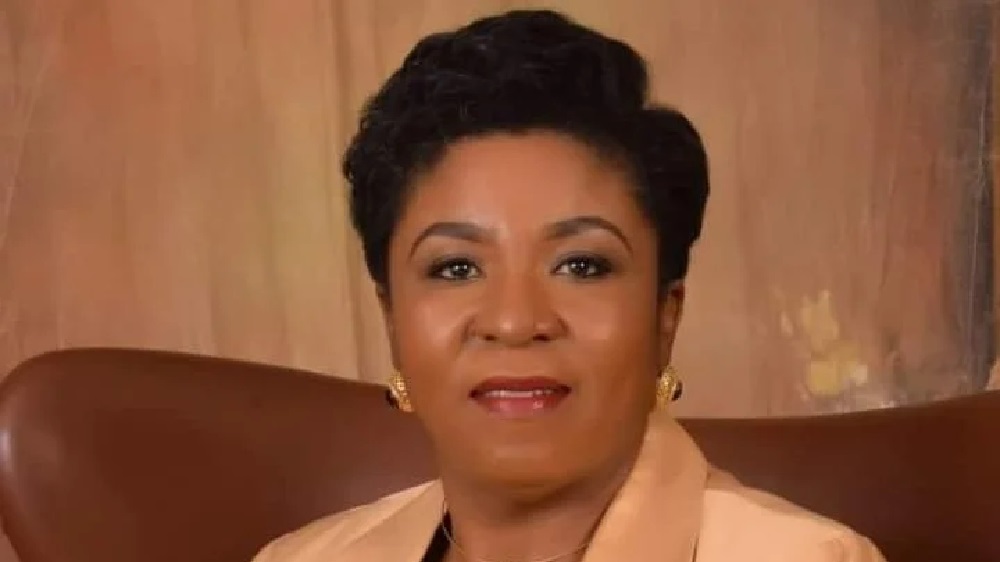
The Director General of the National Agency for Food and Drug Administration and Control (NAFDAC), Prof. Mojisola Adeyeye, has reiterated the need for stronger enforcement of age restrictions, regulation of packaging, and community participation to curb alcohol abuse among minors.


She said the issue should not be treated lightly, warning that underage drinking increases the risk of early addiction, road accidents, and wider social problems.

She said her concerns were supported by a national survey conducted by NAFDAC in collaboration with the Distillers and Blenders Association of Nigeria (DIBAN), which revealed high levels of alcohol access and consumption among minors and underage children nationwide.

The study, carried out by Research and Data Solutions Ltd, Abuja, between June and August 2021, surveyed 1,788 respondents in six States representing Nigeria’s six geopolitical zones.

Advertisement

Children under 13 were classified as minors, those aged 13–17 as underage, while adults were 18 and above.

According to her, additional qualitative data were obtained from 161 participants through focus group discussions and key informant interviews with retailers.

Findings, she said, showed that 54.3 percent of minors and underage children purchase alcohol for themselves, while 49.9 percent obtain it from friends and relatives, 45.9 percent at social gatherings, and 21.7 percent from parents’ homes.

According to her, sachets and PET bottles were the most common forms, with 47.2 percent of minors and 48.8 percent of underage children buying alcohol in sachets, while 41.2 percent of minors and 47.2 percent of underage children used PET bottles.

Advertisement

The survey indicated that glass bottles were procured by 27.6 percent of the underage, the DG said.

The highest access via sachets and PET bottles, according to her, was reported in Rivers (68 and 64.5 percent), Lagos (52.3 and 47.7 percent), and Kaduna (38.6 and 28.4 percent).

On consumption, she noted that the survey found that 63.2 percent of minors and 54.0 percent of underage children drink alcohol occasionally.

However, according to her, alarmingly, 9.3 percent of minors and 25.2 percent of underage children drink daily, while 11.3 percent of minors and 9.4 percent of underage children consume alcohol at least once a week.

Advertisement

Commenting on the findings, Adeyeye said, “Alcohol is one of the most widely used substances of abuse among youths, and it is a growing public health concern in Nigeria

“Access to alcohol by children can be limited if pack sizes that can be easily concealed are not available. A ban on small pack sizes (sachets and less than 200 ml bottles) can reduce the menace of underage drinking.

“Consumption of alcohol should raise alarm for parents, teachers, religious leaders, and the community at large,” she admonished.

Advertisement
Continue Reading
Advertisement

News

EFCC Arraigns Miyetti Allah Leader Bodejo Over Alleged $2.33m Money Laundering

Published

on

By

ADVERTISEMENT
Zoom Ad
ADVERTISEMENT
Zoom Ad

The Economic and Financial Crimes Commission (EFCC) has arraigned the leader of Miyetti Allah Kautal Hore, Bello Bodejo, before Justice Inyang Edem Ekwo of the Federal High Court, Abuja, for alleged fraud.

Bodejo was arraigned on a 12-count charge bordering on alleged money laundering to the tune of $2.33 million.

At the day’s proceedings, the prosecution counsel, Wahab Shittu, drew the attention of the court to a 12-count charge application dated June 24, 2026 and filed June 25, 2026, urging the court to allow the defendant to take his plea, to which the judge granted his request.

He pleaded not guilty to the charges, following which the prosecution counsel, Shittu, asked the court for a trial date and for the defendant to be remanded in the custody of the Nigeria Correctional Service.

Advertisement

Counsel for the defence, Ahmed Raji, however, prayed the court to admit his client to bail in respect of his bail application, filed on June 30, 2026.

The bail application was, however, opposed by the prosecution counsel, who drew the attention of the court to his counter-affidavit. He pointed out that the defendant is a public risk, as the Department of State Security Services (DSS) is on the lookout for him, and that being an influential person, he may manipulate the witnesses and the progress of the case.

Justice Inyang Ekwo ordered that he be remanded at the EFCC’s holding facility and adjourned the matter till July 20 for ruling on the bail application.

Count one of the charge reads: “That you, Bello Abdullahi Bodejo (male, adult), on or about the 11th day of January 2022, at Abuja, within the jurisdiction of this Honourable Court, did knowingly and wilfully, without lawful authority or excuse, accept a cash payment of the sum of One Hundred Thousand United States Dollars (USD $100,000.00) in physical currency from one Sa’idu Abubakar, a former Accountant-General of Bauchi State who is currently in the lawful custody of the Nigeria Police Force, which sum exceeded the statutory cash transaction threshold of Five Million Naira (N5,000,000.00), prescribed under Section 1(a) of the Money Laundering (Prohibition) Act, 2011 (as amended), without routing the said transaction through a financial institution as required by law, and you thereby committed an offence contrary to Section 16(1)(d) of the Money Laundering (Prohibition) Act, 2011 (as amended) and punishable under Section 16(2)(b) of the same Act.”

Advertisement

Count four reads: “That you, Bello Abdullahi Bodejo (male, adult), on or about the 7th day of February 2024, at Abuja, within the jurisdiction of this Honourable Court, did knowingly and wilfully, without lawful authority or excuse, accept a cash payment of the sum of Nine Hundred and Eighty Thousand United States Dollars (USD $980,000.00) in physical currency from one Sa’idu Abubakar, a former Accountant-General of Bauchi State, who is currently in the lawful custody of the Nigeria Police Force, which sum exceeded the statutory cash transaction threshold of Five Million Naira (N5,000,000.00) prescribed under Section 2(1)(a) of the Money Laundering (Prevention and Prohibition) Act, 2022, without routing the said transaction through a financial institution as required by law, and you thereby committed an offence contrary to Section 19(1)(d) of the Money Laundering (Prevention and Prohibition) Act, 2022 and punishable under Section 19(2)(b) of the same Act.”

Continue Reading

News

Insecurity: Senate Approves N403.1bn Police Trust Fund Budgets For 2025, 2026

Published

on

By

ADVERTISEMENT
Zoom Ad
ADVERTISEMENT
Zoom Ad

The Senate has approved a total of ₦403.1 billion for the Nigerian Police Trust Fund to strengthen policing and support the fight against terrorism, kidnapping, and other security challenges across the country for two consecutive years.

The upper chamber approved ₦170.1 billion for the Police Trust Fund’s 2025 fiscal year, as well as ₦233 billion for the 2026 fiscal year.

The approved 2026 budget covers personnel costs, capital projects, and overhead expenditures aimed at enhancing the operational capacity of the Nigeria Police Force (NPF).

Lawmakers expressed optimism that the funding will improve the provision of critical equipment, infrastructure, training and other resources needed to bolster security operations and address the country’s growing security concerns.

Advertisement

The move comes amid a rising spate of crime across Nigeria, with citizens calling for authorities to tighten security in the nation.

Tinubu Seeks Senate’s Approval For Criminal Justice Reform Bill

Meanwhile, President Bola Tinubu has transmitted a legislative proposal to the Senate seeking to reform the country’s criminal justice system through the repeal and reenactment of the Administration of Criminal Justice Act (ACJA).

The proposed legislation seeks to repeal the Administration of Criminal Justice Act, 2015, and replace it with the Administration of Criminal Justice Act, 2026, as part of efforts to strengthen the country’s criminal justice framework.

Advertisement

A key provision of the bill is the establishment of a criminal justice monitoring council to oversee the implementation of the law in courts within the FCT and other federal courts across the country.

In a communication to the Senate during plenary, President Tinubu said the proposed legislation is designed to address procedural gaps and long-standing challenges that have hindered the speedy dispensation of justice.

According to the President, the bill also seeks to align Nigeria’s criminal justice system with emerging developments by promoting the use of technology, introducing innovative measures and enhancing the effective implementation of the law by relevant institutions.

The proposed legislation is to undergo legislative consideration by the Senate Committee on Judiciary, Human Rights, and Legal Matters.

Advertisement
Continue Reading

News

US Releases List Of Countries No Longer Eligible For Visa Waiver

Published

on

By

ADVERTISEMENT
Zoom Ad
ADVERTISEMENT
Zoom Ad

The United States has updated statutory guidelines for its Visa Waiver Program (VWP), confirming that travelers who have visited or hold dual nationality with specific countries are no longer eligible to enter the country under the visa-free scheme.

The Visa Waiver Program typically allows citizens of participating nations to travel to the US for tourism or business for up to 90 days without obtaining a traditional visa. Eligible travelers must, however, secure approval through the Electronic System for Travel Authorization (ESTA) before departure.

Under structural changes maintained via the Visa Waiver Program Improvement and Terrorist Travel Prevention Act, certain travelers who would otherwise qualify for visa-free entry must instead apply for a standard visitor visa.

The restrictions target specific countries based on travel history or dual citizenship status.

Advertisement

The restrictions apply to nationals of participating Visa Waiver Program countries who have traveled to or been physically present in the following nations on or after March 1, 2011:

Iran, Iraq, Libya, North Korea, Somalia, Sudan, Syria, Yemen

Additionally, individuals who have traveled to or been present in Cuba on or after January 12, 2021, are similarly excluded from visa-free entry.

Limited exceptions exist for individuals who traveled to these regions strictly for diplomatic or military purposes in the service of a VWP-member government.

Advertisement

Citizens of Visa Waiver Program nations who also hold valid citizenship or dual nationality with any of the following countries are completely ineligible for an ESTA waiver:

Cuba, Iran, Iraq, North Korea, Sudan, Syria.

The updated guidance means that any affected traveler even when holding a passport from a primary Visa Waiver Program country like the United Kingdom, Japan, or an EU member state must apply for a standard Visitor (B) Visa through a US embassy or consulate before booking transit.

Travelers who remain fully eligible for the program face no changes but must maintain a valid ESTA approval, hold a biometric e-passport, and limit their stay to a maximum of 90 days.

Advertisement
Continue Reading

Trending

Copyright © 2024 Naija Blitz News