Connect with us

News

Edun Urges Developing Countries to Adopt Measures to Cushion Global Shocks

Published

on

ADVERTISEMENT
Zoom Ad
ADVERTISEMENT
Zoom Ad

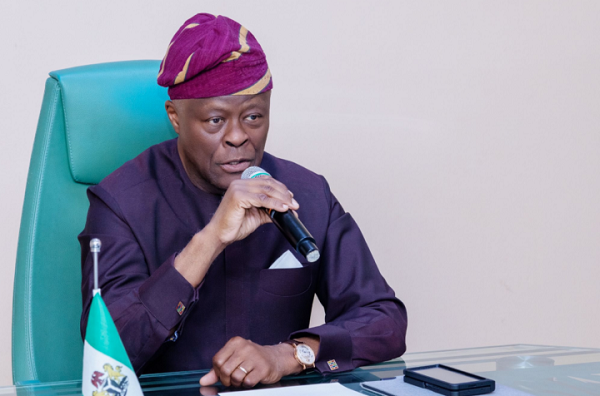
The Minister of Finance and Coordinating Minister of the Economy, Wale Edun, has called on developing countries to adopt proactive measures to mitigate the impact of global economic shocks.
Edun made this appeal during the G24 news conference held on the sidelines of the ongoing International Monetary Fund meeting in Washington, D.C.


He warned that premature or excessive interest rate hikes could undermine ongoing economic reforms, while delayed policy responses risk fuelling inflation.

According to him, Central Banks in developing economies play a critical role in navigating challenges such as energy crises and geopolitical tensions.

The minister noted that policy responses vary across countries, particularly between oil-producing and oil-importing nations. While countries like Nigeria may benefit from increased oil revenues, oil-importing countries face higher costs. However, both groups continue to grapple with inflationary pressures stemming from energy markets.

Advertisement

Edun stressed that even oil-exporting nations are not immune, as rising costs of gas, fertiliser, and food are being felt across economies, underscoring the far-reaching effects of the global energy crisis.

He emphasised the importance of building economic resilience, urging countries to utilise existing fiscal buffers and implement targeted, temporary relief measures for vulnerable populations, rather than reversing key reforms already in place.

Cautioning against a return to subsidy regimes, Edun stated that reforms such as fuel subsidy removal and foreign exchange liberalisation have strengthened Nigeria’s economic framework despite recent external shocks.

He further urged governments to prioritise support for the most vulnerable citizens, ensuring they can cope with rising living costs without jeopardising long-term structural reforms essential for sustainable growth.

Advertisement

Edun observed that positive oil price shocks could strengthen fiscal and external balances for exporting countries, creating room for responsible public investment. However, he stressed the need for disciplined macroeconomic management.

He cited the adoption of hedging strategies by some countries to stabilise oil revenues, noting that such measures enhance predictability and support long-term fiscal planning amid volatile global market conditions.

The minister also pointed out that while developing countries continue to expect support from advanced economies, declining overseas development assistance and rising debt servicing obligations are worsening their fiscal challenges.

According to him, debt servicing costs in many developing countries have now surpassed inflows from aid and investment, significantly limiting fiscal space and constraining efforts toward meaningful economic transformation.

Advertisement

Edun called on multilateral institutions to increase liquidity support and provide policy guidance to help developing nations manage current economic pressures and financial vulnerabilities more effectively.

He identified domestic resource mobilisation as a more sustainable path forward, advocating improved tax systems and stronger private sector participation to boost revenue and reduce dependence on external financing.

The minister also pushed for concessional financing and innovative risk management tools to lower borrowing costs, noting that high debt servicing burdens continue to hinder development and economic transformation across many developing countries.

On technology, Edun acknowledged that while the rise of Artificial Intelligence (AI) may initially widen inequality, it also presents opportunities to enhance revenue mobilisation through automation and digitalisation.

Advertisement

He added that improving tax-to-Gross Domestic Product (GDP) ratios would depend significantly on technology adoption, including AI, to boost efficiency, transparency, and overall revenue generation.

Edun expressed concern over slowing global trade growth, noting that fragmentation and supply chain disruptions are prompting developing economies to focus more on domestic production and regional integration.

Also speaking, the Director of the G-24 Secretariat, Iyabo Masha, highlighted that supply-side constraints, particularly in oil production, respond weakly to monetary policy. She therefore urged Central Banks to adopt a cautious, data-driven approach to decision-making.

Masha further called on multilateral institutions to intensify support, especially in reducing borrowing costs and addressing debt-related challenges. She also reaffirmed the importance of a rules-based global trading system in promoting inclusive economic growth.

Advertisement

Efe Ovuakporie
Head Information and Public Relations Unit
Continue Reading
Advertisement

News

‘Not same Abu-Bilal Al-Minuki killed in 2024’ – DHQ clarifies identity of dead ISWAP commander

Published

on

By

ADVERTISEMENT
Zoom Ad
ADVERTISEMENT
Zoom Ad

The Defence Headquarters has clarified the recent public discussions surrounding the neutralisation of a prominent terrorist commander, Abu-Bilal Al-Minuki.

A collaborative operation with the United States Africa Command on May 16, 2026, led to the killing of Bilal Al-Minuki.

Following the development, certain media outlets referenced a similar operation from 2024, which involved the elimination of a terrorist commander with the same name.

This has understandably raised questions regarding the identity of the individual who was recently neutralised.

Advertisement

In a statement signed by Somalia Uba, Director of Defence Information, the DHQ said: “It is crucial to note that in the North East region and throughout the Lake Chad Basin, the use of similar or identical names, aliases and nom de guerres is prevalent among ISWAP and Boko Haram terrorists.

“This practice is a deliberate part of their indoctrination strategy, aimed at obscuring identities. This fact has been corroborated over the years during counter-terrorism operations in Northeast Nigeria.

“The Abu-Bilal Al-Minuki who was eliminated on May 16, 2026, has been positively identified through human intelligence and technical surveillance as a senior global operative within the Islamic State network, possessing direct connections to international terrorist coordination, funding and operations across the Sahel. Thus, there is no ambiguity regarding his identity.”

The statement added that the strike represents a significant achievement in the country’s counter-terrorism initiatives.

Advertisement

It said the Armed Forces of Nigeria, in collaboration with the United States, remain dedicated to dismantling terrorist networks and will continue to disseminate verified information through official channels.

It called on the general public and the media to rely solely on authorised sources to prevent confusion arising from coincidental name similarities.

Continue Reading

News

Aiyedatiwa’s preferred aspirants disqualified from APC Reps primaries in Ondo

Published

on

By

ADVERTISEMENT
Zoom Ad
ADVERTISEMENT
Zoom Ad

Three aspirants of the All Progressives Congress, APC, who were anointed as consensus candidates by Governor Lucky Aiyedatiwa of Ondo State for House of Representatives seats have been disqualified by the party.

The three aspirants endorsed by Aiyedatiwa, who have been screened out, were identified as Tajudeen Adefisoye (Idanre/Ifedore federal constituency), Victor Ategbole (Akoko South-East/South-West federal constituency) and Samuel Arowele (Owo/Ose federal constituency).

Others not cleared along with the governor’s preferred aspirants are Seun Ajongbolo (Akoko South-East/South-West federal constituency), Morufu Ibrahim, Oyeniyi Oseni ((Akoko North-East/North-West) and Olaleye Adedipe (Akoko North-East/North-West).

With the reasons for the disqualification of the aspirants not revealed in a statement issued on Saturday by the National Publicity Secretary of the party, Felix Morka, some aspirants in the state have kicked and condemned the endorsement of the anointed aspirants.

Advertisement

Meanwhile, there was large turnout of APC members on Saturday during the direct primaries conducted across the 203 wards of the state.

In Akur metropolis, party members arrived at the designated wards in their numbers around 8:00 am with the officials of the party doing a headcount of everyone.

At Wards 4, 5, and 8, members of the party were seen queuing behind the poster of the aspirants they are supporting.

Meanwhile, there was an uproar in some of the wards as party faithful lamented that electoral officials were not on the ground to take record of the exercise.

Advertisement
Continue Reading

News

Six suspected ISWAP bomb makers killed in premature IED explosion in Borno

Published

on

By

ADVERTISEMENT
Zoom Ad
ADVERTISEMENT
Zoom Ad

Six suspected Islamic State West Africa Province members, including a bomb expert, were killed early Friday when an improvised explosive device detonated prematurely in Marte Local Government Area.

Security sources told Zagazola Makama that the blast occurred around 7:00 a.m. on May 16, 2026, at Jubilaram while the group was assembling the device. The team was led by Abu Umar, identified as a bomb expert, who died in the explosion along with five other militants. Three others were reportedly injured.

Intelligence assessments say the deceased were part of ISWAP’s IED cell operating along the Marte–Kerenoa–Wulgo axis in the Lake Chad Basin. The explosion destroyed the site, located between Arinna Maimasallaci and Arinna Ciki, and is expected to temporarily disrupt the group’s bomb-making operations in the area.

Military sources said the incident could weaken ISWAP’s capability along key routes in the Marte axis. Authorities are considering follow-up air and ground operations to exploit the disruption.

Advertisement
Continue Reading

Trending

Copyright © 2024 Naija Blitz News