By Gloria Ikibah


The House of Representatives of Nigeria is weighing fresh legislation aimed at providing stronger legal support for Nigeria’s national decarbonisation programme, as part of wider efforts to deepen the country’s climate transition and speed up the move towards a low-carbon economy.
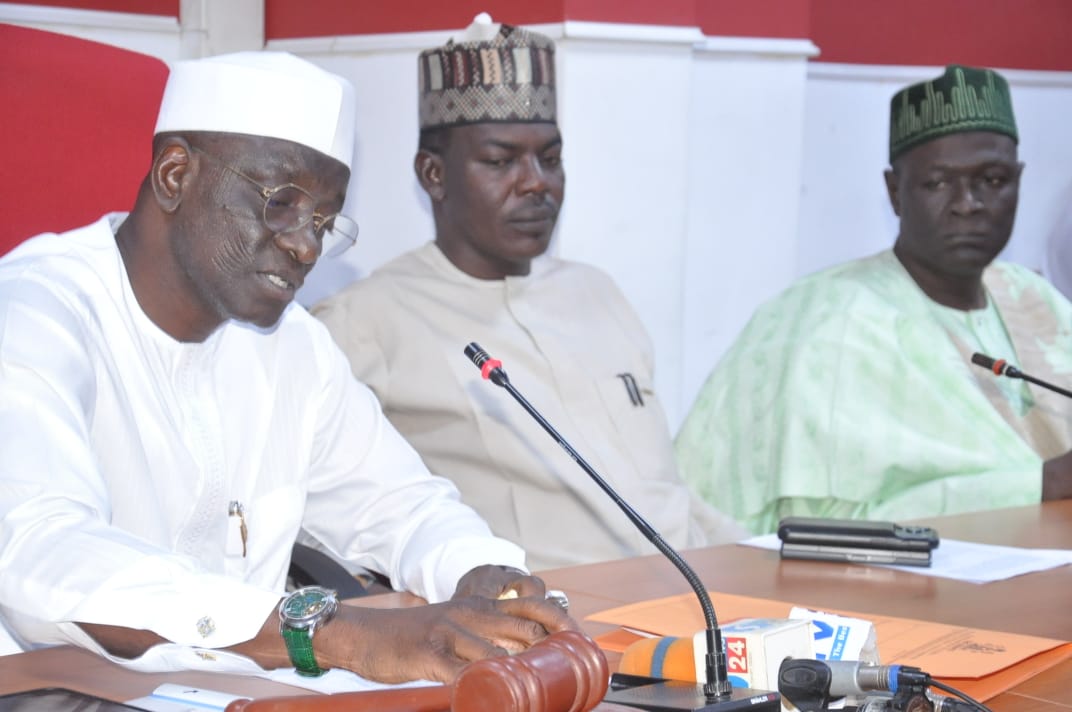
Chairman House Committee on Mandatory National Decarbonisation, Rep. Sesi Whingan, disclosed this durjng a media parley in Abuja on Wednesday, after a technical roundtable that brought together key stakeholders to examine Nigeria’s decarbonisation agenda. 
He explained that while Nigeria already operates under the Climate Change Act 2021, the proposed National Decarbonisation Bill is intended to strengthen existing policies and provide a more comprehensive framework for the country’s climate governance efforts.
According to him, the bill has already passed its first and second readings in the House and is expected to move to the next stage of the legislative process, with a public hearing anticipated before the end of the month.
The proposed legislation is also expected to reinforce the role of the National Council on Climate Change and bring greater coordination to the different energy transition policies and emission-reduction initiatives currently being implemented across several sectors of the Nigerian economy.
“We decided to bring all relevant stakeholders into one room, and currently we are working on a bill known as the National Decarbonisation Bill,” Whingan said.
“This bill is designed to complement what the National Council on Climate Change is already doing. It has already gone through the first and second readings in the House, and hopefully before the end of the month we will move towards the public hearing stage.
“Our plan is to continue engaging stakeholders to see how we can consolidate the different government policies and programmes and incorporate them into a workable and achievable framework.”
Rep. Whingan explained that participants at the roundtable included representatives from the organised private sector, the oil and gas industry, environmental advocacy groups, energy experts and other actors involved in climate governance at both federal and state levels.
He emphasised that adequate funding and policy clarity would be critical to achieving the objectives of Nigeria’s decarbonisation agenda, noting that investors require a stable and predictable framework to support long-term investments in clean energy and low-carbon technologies.
“We all agreed that there is a need for strong collaboration between the executive and the legislature so that investors, both within and outside the country, can clearly understand the direction Nigeria is taking in its decarbonisation efforts,” he said.
The Chairman further stressed that the decarbonisation campaign must go beyond policy discussions at the federal level and actively involve state governments and grassroots communities across the country.
To deepen national engagement on the initiative, he disclosed that the committee plans to convene a National Carbon Summit in June, which will bring together representatives from the 36 states and the 774 local government areas.
The summit, he said, is expected to provide a broader platform for discussions on how Nigeria can effectively implement a national decarbonisation strategy while balancing economic growth and environmental sustainability.
“There is no way we can achieve significant progress if local communities are not involved. We must move beyond conversations at the top and take the programme down to the grassroots,” he stated.
Whingan explained that the committee was set up to review Nigeria’s existing climate laws and policies while also examining the country’s emission levels across key sectors of the economy. The exercise, he noted, is aimed at identifying the institutional, financial and technological structures required to implement a compulsory nationwide decarbonisation programme.
He said the committee has been engaging with ministries, government agencies, state governments, industries, civil society groups and international partners as part of efforts to ensure that the proposed framework reflects global standards in climate governance.
The panel, he added, is also examining possible challenges, risks and socio-economic implications that could arise from implementing a national decarbonisation policy.
According to him, the ongoing consultations with stakeholders, along with the planned public hearing, are intended to ensure that diverse perspectives are reflected in shaping a practical, inclusive and effective legislative framework for Nigeria’s decarbonisation agenda.
“Our mandate includes reviewing existing climate laws and policies, auditing Nigeria’s emission profile and sectoral reduction plans, and consulting widely with stakeholders to determine the institutional and technological requirements for a nationwide decarbonisation programme,” Whingan added.