
News
Send Your Kid To School or get jailed – Gombe govt cautions parents


- /home/naijuinz/public_html/wp-content/plugins/mvp-social-buttons/mvp-social-buttons.php on line 27
https://naijablitznews.com/wp-content/uploads/2025/09/Screenshot_20250922-184935.jpg&description=Send Your Kid To School or get jailed – Gombe govt cautions parents', 'pinterestShare', 'width=750,height=350'); return false;" title="Pin This Post">
- Share
- Tweet /home/naijuinz/public_html/wp-content/plugins/mvp-social-buttons/mvp-social-buttons.php on line 72
https://naijablitznews.com/wp-content/uploads/2025/09/Screenshot_20250922-184935.jpg&description=Send Your Kid To School or get jailed – Gombe govt cautions parents', 'pinterestShare', 'width=750,height=350'); return false;" title="Pin This Post">


By Kayode Sanni-Arewa
The Gombe State government says it would send parents and guardians to jail for not sending their children to schools.
Babaji Babadidi, Chairman, Gombe State Universal Basic Education Board, SUBEB, said this on Monday at the inauguration of the 2025/2026 School Enrolment Campaign at Amada in Akko Local Government Area of the state.
He said that defaulting parents could face a two-month jail term under Section 19(2) of the SUBEB Amendment Law 2021.
Babadidi said the measure was necessary to ensure that every child has access to quality basic education.
“Every parent should ensure that his child or ward attends and completes primary, junior and senior secondary education.
“Any parent, who contravene Section 19(2) of the law commits an offence and is liable, upon conviction, to pay a fine or serve a one-month prison sentence.
“Subsequent convictions also attract a substantial fine or imprisonment for a term of two months,” he said.
Babadidi said prior to this enrolment campaign, the state government adopted a carrot approach by providing free education.
“However, if we fail to meet our target of enrolling 400,000 students into primary schools this session, we will revert to the stick approach by enforcing the law.”
The Commissioner for Education, Prof. Aishatu Maigari, said the state has over 700,000 out-of-school children.
According to Maigari, the North-East region accounts for 15 per cent of Nigeria’s 18.2 million out-of-school children.
“We cannot sit and fold our arms while our children remain out-of-school. We will ensure every child is enrolled. Every child will receive quality education, and also learn a trade, which does not necessarily mean working for the government.
“An educated person can become an employer of labour through skills and entrepreneurship acquired in school,” she said.

…move follows discovery of 1,000 vehicles using forged diplomatic, government identification documents
By Gloria Ikibah
The Ministry of Foreign Affairs and the Federal Road Safety Corps (FRSC) have agreed to strengthen cooperation in a renewed effort to tackle the growing misuse of diplomatic number plates and protect the integrity of Nigeria’s diplomatic system.
The decision was reached during a meeting between the spokesperson of the Ministry of Foreign Affairs, Kimiebi Imomotimi Ebienfa, and senior officials of the FRSC at the Corps’ National Headquarters on Monday in Abuja.
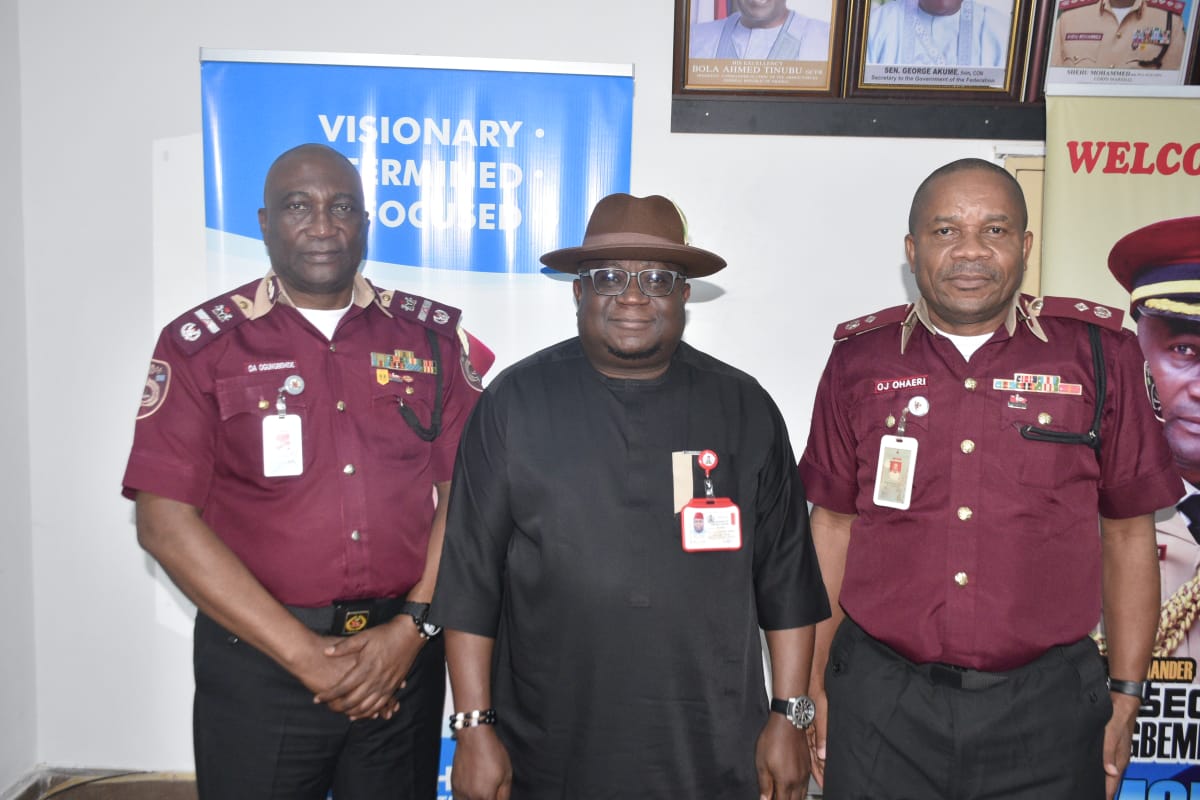
The discussions, which took place during a courtesy visit to the Corps Public Education Officer and spokesperson of the FRSC, Deputy Corps Commander Osondu Ohaeri, as well as a meeting with Assistant Corps Marshal Operations, Olusegun Ogungbemide, focused on emerging security concerns linked to the proliferation of fake diplomatic number plates and other official vehicle identification documents.
During the engagement, Ebienfa disclosed that the ministry was already intensifying efforts to curb the unlawful use of ambassadorial titles and diplomatic credentials by individuals with no official status.
Mr Ebienfa informed that the Ministry is currently campaigning against the illegal use of Ambassadorial titles by unauthorized persons and some of such persons also use fake diplomatic passports and vehicle number plates.
The meeting also reviewed the outcome of recent enforcement operations conducted by the FRSC across several states aimed at identifying and confiscating illegally acquired diplomatic and government number plates.
According to the Corps, the operations uncovered widespread abuse involving forged registration documents, fake diplomatic plates and unauthorised government vehicle identification.
“The operations, conducted in several states of the Federation, resulted in the interception of one thousand vehicles found to be using fake diplomatic plates, unauthorized government plates, cloned registration documents, and other forms of vehicle identification obtained through fraudulent means”, he said.
Officials of both institutions expressed concern that the abuse of diplomatic identification systems poses serious security risks and damages Nigeria’s international standing.
To address the worrisome development, the two institutions expressed concern that the misuse of diplomatic number plates not only undermines the integrity of Nigeria’s diplomatic privileges and immunities regime but also constitutes a significant national security threat capable of facilitating criminal activities, identity concealment, and other unlawful acts.
They also warned that the practice undermines globally accepted diplomatic protocols and could weaken confidence in Nigeria’s diplomatic framework.
Both agencies agreed that such practices tarnish Nigeria’s international image and undermine established diplomatic norms.
As part of the new collaboration, the Ministry and the FRSC agreed to enhance information sharing, strengthen verification procedures for diplomatic vehicles and accreditation records, and develop a more effective monitoring system for the issuance and use of diplomatic number plates.
The agencies are also exploring technology-driven solutions that would enable real-time verification of diplomatic vehicles through integration of accreditation records and vehicle registration databases.
The two institutions also agreed to explore the establishment of improved verification mechanisms linking diplomatic accreditation records with vehicle registration databases to facilitate real-time authentication of diplomatic vehicles and prevent unauthorized use of diplomatic identities and privileges.
The Ministry commended the FRSC for its enforcement efforts and reaffirmed its commitment to working with security and law enforcement agencies to protect the credibility of Nigeria’s diplomatic institutions.
In the coming months, both organisations are expected to undertake additional consultations and public awareness campaigns to educate stakeholders on the lawful use of diplomatic number plates and the consequences of offences such as forgery, impersonation and unlawful possession of diplomatic documents.
The Ministry reiterated that diplomatic number plates remain the exclusive preserve of accredited diplomatic missions, international organisations and recognised diplomatic personnel, stressing that diplomatic privileges and immunities must never be transferred, sold or exploited by unauthorised individuals.
It also urged members of the public to report suspected cases of misuse of diplomatic number plates and diplomatic identification documents to the relevant authorities as part of efforts to safeguard Nigeria’s diplomatic credibility, national security and international reputation.
News
Tinubu Commissions Court of Appeal Judges’ Quarters, Urges States to Strengthen Judicial Infrastructure(Photos)

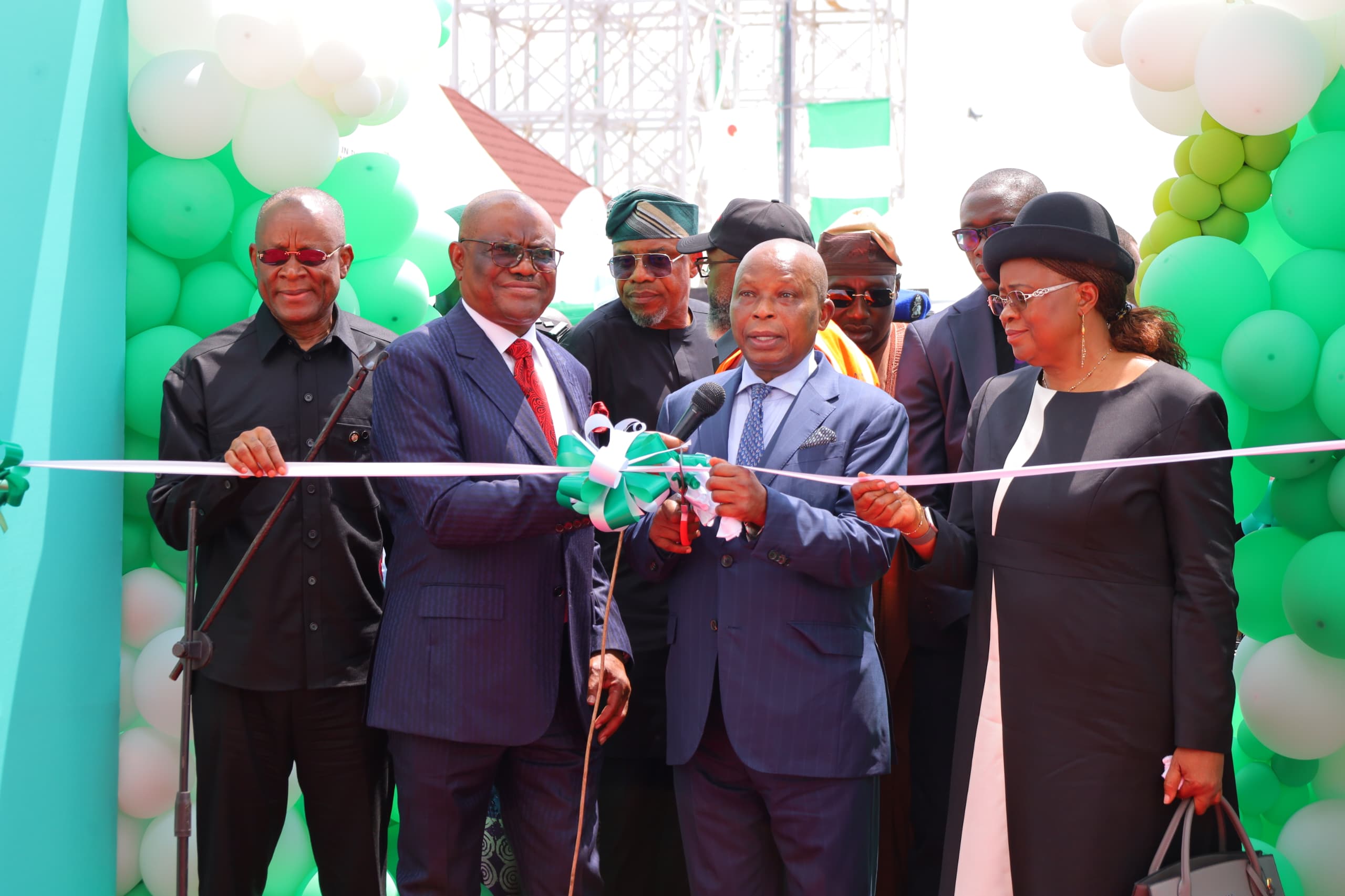
President Bola Ahmed Tinubu on Tuesday reaffirmed his administration’s commitment to judicial independence and institutional reforms as he commissioned the newly completed 10-unit Court of Appeal Judges’ Quarters in Katampe District, Abuja, describing the project as a strategic investment in the rule of law and democratic governance.
Represented by the Attorney General of the Federation and Minister of Justice, Lateef Fagbemi (SAN), the President said the housing estate formed part of a series of judicial infrastructure projects being inaugurated to mark the third anniversary of his administration, stressing that a functional justice system requires more than laws and judicial officers.
“We gather on this important occasion for the commissioning of the 10th Court of Appeal Judges’ Quarters here in Katampe. This event is part of a series of judicial infrastructure projects being commissioned over a three-week period to commemorate the third anniversary of this administration,” Tinubu said.
The President noted that the project was a special intervention by the Federal Government, separate from the judiciary’s statutory budgetary allocations, which he said had also increased significantly under his administration.
“Today’s event is much more than the unveiling of physical infrastructure; it is a tangible demonstration of the Federal Government’s enduring commitment to the welfare, independence, efficiency and dignity of the judiciary,” he said.
“A strong and effective justice sector requires not only sound laws and competent judicial officers, but also the infrastructure and support systems necessary to enable the judiciary to perform its constitutional responsibilities without hindrance.”
Tinubu explained that the provision of modern residential accommodation for judges was aimed at enhancing judicial independence, efficiency and service delivery, emphasizing that the welfare of judicial officers should be viewed as a national investment.
“The welfare of judicial officers is a strategic investment in the rule of law. When judges are provided with secure accommodation and conducive working environments, the entire nation benefits,” he stated.
The President also disclosed plans for further expansion of judicial infrastructure within the district, revealing that additional land had been earmarked for judges of the National Industrial Court, the Code of Conduct Bureau, the Federal High Court and the High Court of the Federal Capital Territory.
“With all these developments, this area could easily be declared the ‘Judiciary Boulevard,” he said.
Tinubu commended the Minister of the Federal Capital Territory (FCT), Barr. Nyesom Wike, for executing the project efficiently.
“I wish to commend my dependable, hardworking and diligent Minister of the FCT, Barr. Nyesom Wike, CON, and his team for the efficiency with which this directive was implemented,” he said.
The President further challenged state governments to emulate the Federal Government by investing in judicial infrastructure and welfare.
“The responsibility of supporting the judiciary does not rest solely with the Federal Government. State governments have a corresponding obligation to ensure their respective judicial sectors are adequately funded, properly equipped and provided with the infrastructure necessary for effective service delivery,” he added.
In his remarks, the Minister of the Federal Capital Territory (FCT), Barr. Nyesom Wike urged governors across the country to take greater responsibility for the development of federal judicial institutions located within their states, arguing that the courts primarily serve the citizens of the host states.
“Governors, I say this: if there is a federal judicial division in a state, that governor knows those courts are serving their own citizens. The Federal High Court, the Court of Appeal, the National Industrial Court they do not render services to neighbouring states; they serve the host state,” he said.
Drawing from his experience as Governor of Rivers State, Wike recalled how he facilitated the establishment of a National Industrial Court division and judges’ accommodation to save litigants from travelling to Bayelsa State.
“When I visited the President of the Industrial Court, he said move to have an Industrial Court in Port Harcourt, Rivers State was stalled by lack of infrastructure. He added that there will be an Industrial Court in Rivers State if I will be willing to provide the necessary infrastructure.
“I immediately replied, ‘I am willing. Give me the designs.’ We took the designs, built the court and provided accommodation. Today, our people no longer face the logistical hazards of travelling to Bayelsa to have their cases heard,” he recounted.
The minister dismissed criticisms that such interventions could compromise judicial independence, insisting that providing infrastructure for judges strengthens rather than weakens the judiciary.
“Taking care of these institutions does not cost us more than we can afford, and it directly guarantees the true independence of the judiciary,” he said.
Wike disclosed that President Tinubu personally encouraged him to prioritize judicial welfare and infrastructure.
“Mr. President told me directly: ‘Do not bother; go ahead and do whatever is necessary to improve the welfare of judges and justices,’” he revealed.
President of the Court of Appeal, Hon. Justice Monica Bolna’an Dongban-Mensem, described the project as a milestone in the quest to provide a secure and dignified environment for judicial officers.
She noted that while judicial proceedings occur in courtrooms, the quality of justice delivered is often influenced by the environment in which judges live and reflect.
“These quarters constitute an extension of the intellectual, contemplative space essential to judicial work,” she said.
According to her, secure housing protects judicial officers from undue influence and reprisals, safeguards the integrity of judicial processes, and helps attract and retain experienced judges.
“Building a judiciary fit for the next 50 years requires sustained investment in modern facilities, technological advancement and judicial welfare,” Dongban-Mensem stated.
She expressed appreciation to President Tinubu and Wike for supporting the judiciary, praying that the estate would become a model for replication across other Court of Appeal divisions nationwide.
Earlier, the Executive Secretary of the Federal Capital Development Authority (FCDA), Richard Dauda, disclosed that the project formed part of a larger 40-unit judges’ housing development in Katampe District.
Dauda said the contract, awarded to Messrs. Details to Dots Development Nigeria Limited in September 2024, had been completed according to specifications.
He explained that the estate comprises 10 fully furnished five-bedroom duplexes with detached boys’ quarters, an event centre with a minimum capacity of 150 persons, a neighbourhood shop, recreational facilities, asphalt-paved roads, water supply systems, electricity infrastructure, standby generators, perimeter fencing and a secured gatehouse.
The commissioning comes barely a day after the inauguration of the new Court of Appeal complex in Abuja, underscoring the administration’s renewed focus on judicial infrastructure as part of broader governance reforms.
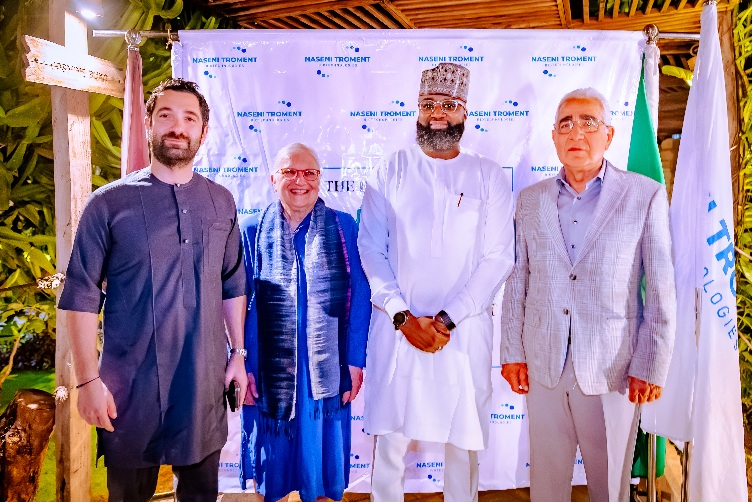
NaseniBy Gloria Ikibah
The National Agency for Science and Engineering Infrastructure (NASENI), has restated its commitment to strengthening Nigeria’s healthcare sovereignty through local manufacturing of medical diagnostic technologies.
The Executive Vice Chairman and Chief Executive Officer of NASENI, Khalil Suleiman Halilu, affirmed this while hosting participants of the Harvard University-led Science of Defeating Malaria programme at a closing dinner in Abuja, following their visit to the NASENI-TROMENT Biotechnologies Factory, where they commended the facility’s role in advancing disease control and healthcare innovation in Africa.
The delegation, led by Professor Dyann F. Wirth of Harvard University and comprising about 85 global health professionals, scientists and policymakers, toured the state-of-the-art facility and described it as a significant step towards combating malaria and other infectious diseases across the continent.
Speaking at the dinner, the NASENI boss noted that the commendation further validated the vision behind the NASENI-TROMENT Biotechnologies Factory, a strategic project initiated 18 months ago to reduce Nigeria’s dependence on imported diagnostic kits and strengthen local healthcare manufacturing capacity.
He explained that the facility is designed to produce up to 600 million diagnostic kits annually, enough to meet about 80 per cent of Nigeria’s diagnostic testing needs while creating opportunities for export to other African countries and global markets.
The factory manufactures rapid diagnostic tests (RDTs) and in-vitro diagnostic (IVD) products under the N-CheckUP brand for diseases and conditions including malaria, hepatitis B and C, HIV, typhoid, syphilis, COVID-19, pregnancy and blood glucose monitoring.
According to Halilu, the project aligns with NASENI’s broader mandate of deploying science, technology and innovation to address national challenges, create jobs and build industrial capacity.
He expressed appreciation to Professor Wirth and members of the Harvard delegation for their recognition of the progress made at the facility and reaffirmed NASENI’s commitment to developing innovative solutions that improve lives and position Nigeria as a leading healthcare manufacturing hub in Africa.
The Science of Defeating Malaria programme, which was held in Abuja from June 7 to 13, brought together global experts committed to advancing strategies for malaria elimination and strengthening public health systems worldwide.

FG, FRSC Join Forces to Crack Down on Fake Diplomatic Number Plates

Tinubu Commissions Court of Appeal Judges’ Quarters, Urges States to Strengthen Judicial Infrastructure(Photos)

NASENI Reiterates Commitment to Healthcare Innovation




-

 News22 hours ago
Just in: Kwara traditional ruler reportedly dies in kidnappers hideout after demand of N21m ransom
-

 News17 hours ago
Nigerian Ports Record Global Leap as Apapa, Tin Can Gain World Bank Recognition
-

 News24 hours ago
Price of petrol expected to drop to N900 per litre as US-Iran opens way for Strait of Hormuz
-

 News23 hours ago
Finally, US-Iran deal announced with end to military warefare
-

 News12 hours ago
Sokoto under siege as bandits bar farmers from farms impose new levies
-
 Politics22 hours ago
Hours after Abuja Court ruling, another Court in Owerri rules against deregistration of party
-

 News12 hours ago
Sad! Nigerian pilgrim dies in auto crash while returning from Holy Mosque in Saudi Arabia
-

 News12 hours ago
How troops rescued Gen Rabe’s wife after being shot by bandits — Sources