Connect with us

News

Tanker drivers’ strike won’t affect our operations, says Major marketers

Published

on

ADVERTISEMENT
Zoom Ad
ADVERTISEMENT
Zoom Ad


By Francesca Hangeior
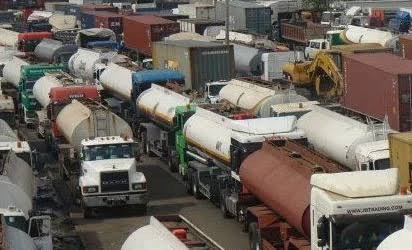
Members of the Major Energies Marketers of Nigeria said it would be illegal to negotiate and fix the cost of lifting fuel with members of the National Association of Transport Owners.


Reports had it that the tanker drivers on Monday parked their trucks, refusing to lift fuel over high cost of operations.

The NARTO President, Yusuf Othman, had in a letter to truck drivers who are members of other unions and associations, said NARTO had made several efforts to secure negotiations for appropriate and commensurate freight rates for its operations from all authorities concerned in the industry, especially the major marketers, without any positive result.

However, the major marketers said the decision of NARTO to stop transporting fuel may not have much effect on its members, some of whom now have separate transporters.

Advertisement

The Executive Secretary of the MEMAN, Clement Isong, said the association does not have the power to negotiate the cost of transporting fuel, adding that the law does not permit that.

Isong stated that members of MEMAN have negotiated the cost of lifting products with transporters of choice, saying that is what the law allowed.

Reacting to the claim that NARTO had tried to negotiate with MEMAN, he replied: “That is not exactly true, the law does not permit us, NARTO and MEMAN, to negotiate transport rates.

“All my members negotiated with all their transporters and arrived at different rates based on their strength and capacity. That is what the Petroleum Industry Act wants; it wants us to compete. So, in a world in which my transporters have found a way of transporting at a lower cost, for example by using CNG as their fuel, I have an advantage over the other marketer, because my transporter is cheaper, that’s what the law envisages. It envisages competition to bring down prices.

Advertisement

“If what I demand from my transporter are brand new trucks of certain category, then I should expect I will not pay the same thing with a marketer who doesn’t demand brand new trucks from his transporters. It just depends on your business model. We are all competing in the market.”

Isong added, “We are not expected to sit down with NARTO to negotiate and agree prices. If we do that, we’ve broken the law. My members have negotiated with their transporters and have agreed with their transporters.

“In fact, some of my members even own their own trucks. They don’t need to negotiate. They run their own transport. that’s what competition does”.
Advertisement
Continue Reading
Advertisement

News

Senate Panel Queries ₦210 Trillion in NNPC Accounts, Orders Refund and Forensic Audit

Published

on

By

ADVERTISEMENT
Zoom Ad
ADVERTISEMENT
Zoom Ad

The Chairman of the Senate Public Accounts Committee, Senator Ahmed Wadada Aliyu, has raised serious concerns over inconsistencies in the financial statements of the Nigerian National Petroleum Company Limited (NNPC) spanning 2017 to 2023, directing the company to account for and refund a combined ₦210 trillion flagged in its books.

Briefing journalists in Abuja on the ongoing inquiry, Wadada said the committee’s investigation—ongoing since May 2025—has uncovered significant discrepancies in the company’s audited financial statements, particularly in accrued expenses and sundry receivables.

According to him, the committee discovered that NNPC reported ₦103 trillion as accrued expenses in 2022 without providing adequate breakdowns or supporting documentation.
“The explanations provided by NNPC management were inconsistent and unsatisfactory,” Wadada told reporters.
He explained that the company initially claimed the amount covered retention fees, legal fees and audit fees, but failed to provide a detailed breakdown when requested by the committee.

“When pressed further, the management changed its explanation, stating that the accrued expenses represented cash calls owed to joint venture partners. However, the cash call regime ended in 2016, making that claim questionable,” he said.

The Senate panel also flagged ₦107 trillion recorded as sundry receivables, noting that the oil company could not identify the debtors linked to the figure.

“The company could not provide the identities of the debtors responsible for the ₦107 trillion receivables. In some instances, the receivables were linked to defunct banks,” Wadada stated.

Beyond these figures, the committee identified several other financial irregularities in the records of NNPC and its subsidiary, the National Petroleum Investment Management Services (NAPIMS).

Among the findings were ₦3.8 trillion in subsidy costs allegedly duplicated in the books of both NNPC and NAPIMS, as well as ₦5 trillion in direct production costs charged by NAPIMS despite the agency not being directly involved in crude oil production.

The committee also queried ₦5.9 billion reportedly spent on incorporation expenses, noting that both NNPC and NAPIMS appeared to have charged the same expenses separately.

“These financial entries raise serious accountability concerns and have therefore been rejected by the committee,” Wadada said.

Consequently, the panel directed NNPC to refund ₦210 trillion, representing the combined value of the ₦103 trillion accrued expenses and ₦107 trillion sundry receivables.

The committee further demanded that the company refund production costs that were charged against crude oil revenues without adequate justification.

As part of the investigation, the panel announced plans to summon former NNPC executives, including former Group Chief Executive Officer Mele Kyari, as well as Umar Ajia and Bala Wunti, alongside external auditors involved in preparing the company’s financial statements.

“They will be invited to appear before the committee to provide explanations regarding the infractions identified in the financial reports,” Wadada said.

He added that the committee would also commence a forensic audit of NNPC’s financial statements from 2017 to 2023 in line with Section 85 of the Constitution.

According to the lawmaker, the investigation is part of the Senate’s oversight responsibility to ensure transparency and accountability in the management of public resources.

“The objective of this exercise is to enhance public fund generation and ensure proper utilization of national resources,” Wadada said.

He added that the committee’s work aligns with the economic reform agenda of Bola Ahmed Tinubu, noting that the administration’s Renewed Hope governance agenda prioritizes transparency and fiscal responsibility.
“Our mandate is to ensure that every kobo due to the Nigerian people is properly accounted for,” Wadada said.

Continue Reading

News

 Securing Credible Elections in 2027: What Nigerians Must Do.

Published

on

By

ADVERTISEMENT
Zoom Ad
ADVERTISEMENT
Zoom Ad
By Amb. Anderson Osiebe.
As Nigeria gradually approaches the 2027 general elections, the conversation around credible elections has once again taken center stage.
Elections remain the most powerful instrument through which citizens express their democratic will, determine leadership, and shape the future of their nation.
However, Nigeria’s electoral history has been punctuated by concerns ranging from voter apathy and electoral violence to vote buying, manipulation of results, and declining trust in institutions.
If the 2027 elections must stand out as credible, transparent, and widely accepted, responsibility must not rest on one institution alone. It must be a collective commitment involving the electoral body, political actors, civil society, the media, and most importantly, the Nigerian electorate.
The Role of INEC.
The Independent National Electoral Commission (INEC) remains the backbone of Nigeria’s electoral system. Its preparedness, independence, and transparency will determine public confidence in the electoral process.
INEC must begin early preparations by strengthening logistics, improving voter register integrity, and ensuring that technologies introduced to improve transparency, such as the Bimodal Voter Accreditation System (BVAS) and electronic transmission of results function effectively and without interference.
Equally important is the need for the commission to remain firmly independent. Electoral credibility suffers when citizens perceive the commission as being influenced by political authorities. INEC must therefore demonstrate transparency in its operations, communicate clearly with the public, and hold electoral officers accountable where misconduct occurs.
The Responsibility of the Electorate.
Nigerian voters themselves carry enormous responsibility for the credibility of elections. One of the biggest threats to Nigeria’s democracy is voter apathy. Many citizens complain about poor governance yet fail to participate actively in the electoral process.
For elections to be credible, Nigerians must first register to vote, collect their Permanent Voter Cards (PVCs), and turn out massively on election day. Citizens must also reject vote buying, which has increasingly become a dangerous trend in Nigerian politics.
When voters exchange their votes for small amounts of money or material benefits, they inadvertently empower leaders who lack competence or accountability.
Protecting the sanctity of the ballot must therefore become a civic duty.
Political Parties and Internal Democracy.
Political parties are the gatekeepers of Nigeria’s democracy. Unfortunately, internal democracy within many parties remains weak, with candidate imposition, opaque primaries, and disregard for party members’ voices.
To secure credible elections in 2027, political parties must reform their internal processes. Transparent primaries, merit-based candidate selection, and respect for party rules will not only strengthen democracy but also produce candidates with legitimacy and credibility.
Parties must also commit to issue-based campaigns rather than ethnic or religious rhetoric that often fuels division and violence.
Candidates must uphold Democratic Values.
Political candidates themselves must see elections as a contest of ideas rather than a battle to be won at all costs. The desperation to win power at any cost often leads to electoral violence, intimidation of voters, and manipulation of the system.
Candidates should focus on presenting clear policy alternatives, engaging voters respectfully, and accepting the outcome of credible elections. When disputes arise, they must pursue legal channels rather than inciting unrest.
Leadership in a democracy must come with a deep respect for the will of the people.
The Role of Civil Society and Election Observers.
Civil society organizations and election observers play a critical role in safeguarding electoral credibility. Through voter education, independent monitoring, and public reporting, these groups help ensure transparency and accountability.
Domestic observer groups must be adequately trained and deployed nationwide, while international observers can provide additional credibility to the process. Their reports often shape global perceptions of Nigeria’s democratic progress.
However, beyond observation, civil society must intensify voter education efforts to ensure citizens understand their rights and responsibilities during elections.
The Media as a Democratic Watchdog.
The Nigerian media must continue to act as a watchdog of the electoral process. Accurate reporting, investigative journalism, and fact-checking will help expose irregularities and combat misinformation.
At the same time, the media must avoid becoming platforms for propaganda or misinformation that could inflame tensions during elections.
Responsible journalism will be crucial in ensuring that Nigerians receive credible information about candidates, policies, and electoral procedures.
Security Agencies and Electoral Integrity.
Security agencies also have a vital role to play in ensuring peaceful elections. Their duty is to protect voters, election officials, and electoral materials without intimidation or partisanship.
Professional conduct by security personnel will help create a safe environment where citizens can exercise their democratic rights without fear.
A Collective Responsibility.
Credible elections cannot be achieved through institutional reforms alone. They require a national culture that respects democratic principles and the sanctity of the ballot.
Nigeria’s democracy is still evolving, and the 2027 elections present another opportunity to strengthen public trust in the electoral system.
Every stakeholder, from electoral officials to ordinary citizens must play their part in safeguarding the integrity of the process.
If Nigerians commit collectively to transparency, accountability, and participation, the 2027 elections can mark a significant step forward for the country’s democratic journey.
Amb. Anderson Osiebe, Executive Director, HallowMace Foundation, Public Policy Expert and an Administrator Writes from Abuja – Nigeria.
Continue Reading

News

Wike Pledges More Projects for Kuje, Cautions Chairman elect Against ‘Away Leadership’

Published

on

ADVERTISEMENT
Zoom Ad
ADVERTISEMENT
Zoom Ad

The Minister of the Federal Capital Territory (FCT), Nyesom Wike, has pledged more infrastructure projects for Kuje Area Council, warning the incoming council chairman against abandoning the people after assuming office.

Wike gave the assurance on Thursday during a thank-you visit to Kuje Area Council to appreciate residents for their support in the recent council elections.

Addressing traditional rulers, political leaders and residents, the minister said the Federal Government would continue to deliver projects to the area in recognition of the support given to President Bola Ahmed Tinubu and candidates aligned with his administration.

He emphasised that politics should be a covenant between leaders and the people, stressing that elected officials must fulfil their promises.

“Politics should be a contract between those elected and the people who elected them. It is not where our people vote for you and at the end of the day you disappear,” Wike said.

The minister noted that his visit to Kuje was part of President Tinubu’s directive that government officials must return to communities to appreciate their support rather than take it for granted.

According to him, the administration had already delivered key projects requested by the people of the council.

Wike recalled that during a previous town hall meeting in Kuje, traditional rulers had requested the completion of the road from Airport Junction to Kuje and the dualisation of the Kuje Garage Road.

He said the Garage Road project had already been completed and commissioned, while the Airport Road to Kuje project, being handled by Arab Contractors, had returned to site and was expected to be completed before the third anniversary of President Tinubu’s administration.

“We did not only award the Garage Road; it has been completed and commissioned. The contractor handling the Airport Road to Kuje has also returned to site and assured us the road will be ready for inauguration during the President’s third anniversary,” he said.

Wike further disclosed that the 16-kilometre Kuje–Gwagwalada road, being constructed by Gilmor Engineering Nigeria Limited, was progressing steadily and could be ready for commissioning by June.

He assured residents that additional projects would commence once the newly elected chairman assumes office.

“By the time your chairman is sworn in, we will sit with the traditional rulers and decide which of the roads you mentioned we will start first,” he said.

The minister also cautioned the incoming council chairman against distancing himself from the people after assuming office, stressing that leadership at the grassroots level requires constant engagement with residents.

“Don’t be an away chairman. Be a home chairman. When you were campaigning, you were always at home. Now that you have won, do not run away from your people,” Wike warned.

He added that power and money often change people quickly, urging the incoming chairman to remain humble and committed to the welfare of the people.

“Power and money are two things that can change a man within seconds. But I believe you will not abandon your people,” he said.

Wike expressed satisfaction with the outcome of the council election in Kuje, describing the results as a reflection of the people’s confidence in the administration.

Earlier, the outgoing Chairman of Kuje Area Council, Abdullahi Sabo, thanked the minister for visiting the council to appreciate residents for their peaceful conduct before and after the elections.

He described Wike as a unifier and bridge builder whose leadership had accelerated development across the FCT.

Sabo also urged residents to support the incoming administration to ensure continuity of development in the council.

In his remarks, the Chairman-elect of Kuje Area Council, Danladi Samuel Shekwolo, expressed gratitude to the minister for supporting his campaign and pledged to deliver the dividends of democracy to the people.

He also appealed to the minister to consider constructing key roads linking Kuje to neighbouring communities, including Gwagwa, Rubochi and Kebi, to boost economic activities in the council.

The chairman-elect assured residents that his administration would work closely with the FCT Administration to improve infrastructure and strengthen development in the area council.

Continue Reading

Trending

Copyright © 2024 Naija Blitz News