News
5-Point Agenda For New CJN by Eminent Nigerian Lawyers
- /home/naijuinz/public_html/wp-content/plugins/mvp-social-buttons/mvp-social-buttons.php on line 27
https://naijablitznews.com/wp-content/uploads/2024/08/Screenshot_20240822-212004.png&description=5-Point Agenda For New CJN by Eminent Nigerian Lawyers', 'pinterestShare', 'width=750,height=350'); return false;" title="Pin This Post">
- Share
- Tweet /home/naijuinz/public_html/wp-content/plugins/mvp-social-buttons/mvp-social-buttons.php on line 72
https://naijablitznews.com/wp-content/uploads/2024/08/Screenshot_20240822-212004.png&description=5-Point Agenda For New CJN by Eminent Nigerian Lawyers', 'pinterestShare', 'width=750,height=350'); return false;" title="Pin This Post">
…By Ernest Ojukwu, SAN; Sam Erugo, SAN; Chidi Anselm Odinkalu; and; Mbasekei Martin Obono

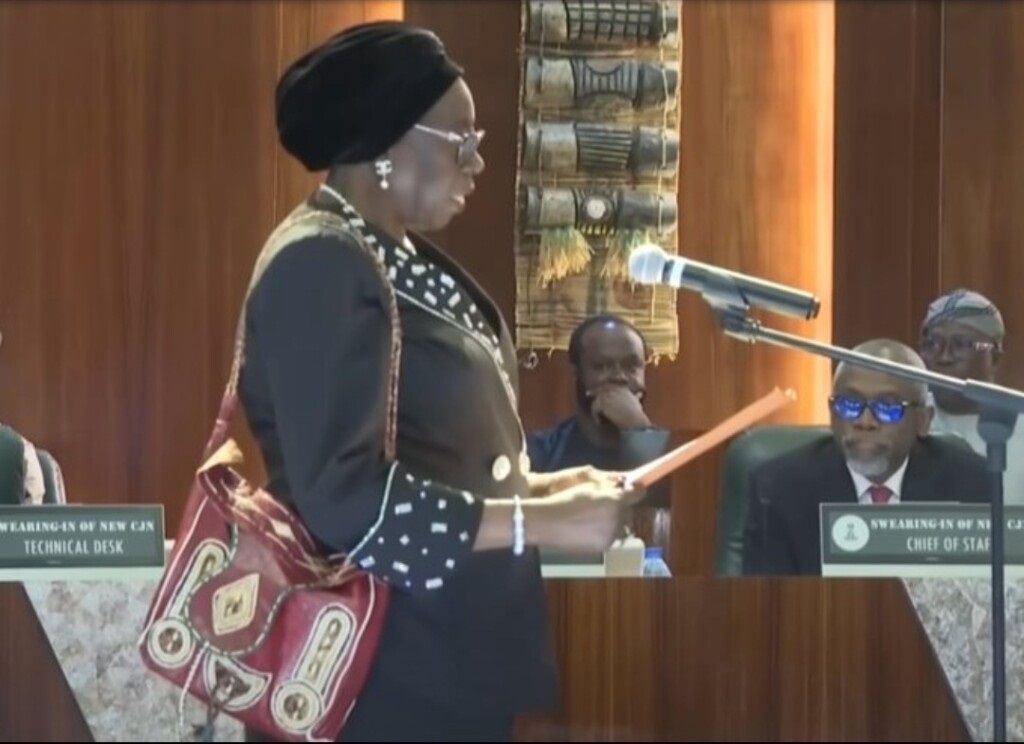
Amid the greatest crisis of judicial authority since Nigeria’s independence in 1960, President Bola Ahmed Tinubu on 23 August 2024 swore in an Acting Chief Justice of Nigeria (CJN). For the new Chief Justice, this challenge is also an opportunity to articulate an agenda for reform that can restore public trust in the judiciary. Such an agenda must address the following:
(a) ensuring merit-based judicial appointments;

(b) addressing the problem of abuse of interim injunctions, ex-parte orders, and conflicting judgements;
(c) enhancing judicial discipline and accountability;
(d) addressing the crisis of political cases, election petitions, and judicialisation of politics; and
(e) reform of the Supreme Court.
1.JUDICIAL APPOINTMENTS*
The National Judicial Council (NJC), which oversees judicial appointments and is led by the CJN, has been severely criticised for mishandling judicial appointments. In 2020, for instance, it authorised 15 vacancies for the Federal Capital Territory High Court but nominated 34 for appointment.
The NJC has also been accused of retrenching its Procedural Rules for judicial appointments, thereby undermining merit-based appointments; compromising judicial integrity; and breeding a loss of confidence in the judiciary.
Against this background, it is of the utmost importance that the new CJN commits explicitly to a policy of restoring integrity and merit to judicial appointments through the introduction of transparent processes of advertisement of vacancies; nomination of candidates, interviews, short-listing, and selection.
2.CONFLICTING JUDGEMENTS AND ABUSE OF INTERIM INJUNCTIONS
Rule 3 (3.5) of the Judicial Code of Conduct provides that “a Judicial Officer must avoid the abuse of the power of issuing interim injunctions, ex parte.” Although the standards governing interim injunctions are very well established in Nigeria, these are often either disregarded or abused without consequences.
Equally, courts of co-ordinate jurisdiction routinely issue conflicting orders that seem almost calculated to damage the institution of the judiciary.
It is suggested that:
(a)Priority should be accorded to monitoring and reporting interim or ex parte orders by trial judges. There should also be clear consequences attached to a breach of the Judicial Code of Conduct.
(b)Judicial appraisals should be both quantitative and qualitative. Accordingly, they should proactively address evidence of ethical deficits in the work or output of judges, focusing on adherence to ethical guidelines and the quality of judicial decisions.
(c)There should be clear Practice Directions on the management of jurisdictional overlaps. The structure and scope of such overlaps should be discussed at the All Nigerian Judges Conference and the Practice Directions should be uniform across all the court systems in the country.
(d)The NJC should establish a central database or easily searchable platform for judges to share information on ongoing cases.
3.DISCIPLINE AND ACCOUNTABILITY
Preserving the dignity and integrity of the judiciary hinges on upholding discipline and accountability which is in turn essential for preserving the institutional authority of the judicial branch. If the judiciary lacks credibility, its authority suffers irredeemably.
Tragically, this eventuality may already be upon us. A recent survey by the United Nations Office of Drugs and Crime (UNODC) and the National Bureau of Statistics (NBS) finds the judiciary as the recipient of the highest per capita rates of bribery, ahead of both the Nigeria Police Force and the Nigerian Customs Service.
The damage that this does to the institutional credibility and authority of the judiciary is incalculable. To reverse this, it is suggested that:
(a)Disciplinary processes within the judiciary should be both prompt and decisive and dispositions should be calibrated to be proportionate to the seriousness of the misconduct found.
(b)Reports on disciplinary investigations by the NJC should routinely be transmitted to law enforcement agencies for follow-up.
(c)The CJN should initiate public consultation leading within six months to an announcement of measures designed to address the escalating patterns of judicial corruption as documented by the UNODC-NBS Corruption in Nigeria Report 2024.
4.ELECTION PETITIONS AND POLITICAL CASES
Political cases and election petitions now increasingly threaten the foundations of fairness on which the judicial system should be anchored. Of 248 judgements issued by the Supreme Court in the last judicial year, 74 or about 30% were “political cases.”
At a similar occasion only two years ago, his predecessor reported that the court’s portfolio of 269 appeals disposed of included 139 civil appeals, 102 criminal appeals, and 28 “political cases.”
The volume of election petitions has become an adverse charge on the credibility of the judiciary and an intolerable burden on both judges and non-political court users alike.
Underlying this burden is a judiciary that has installed itself as the sole dispenser of electoral mandates, with judges routinely substituting their views for the votes of the people contrary to the considered recommendations of two presidential panels on electoral reform led respectively by former Supreme Court Justice, Bolarinwa Babalakin in 1986 and by former Chief Justice Mohammed Lawal Uwais in 2008. It is suggested that:
(a)The Chief Justice should initiate reform of the election dispute resolution system to ensure the implementation of the Babalakin Commission and Uwais Panel recommendations concerning the need for Courts to respect and not subvert the will of the people in elections.
(b)The category of “political” cases should be reviewed and court systems should be encouraged to establish Alternative Dispute Resolution (ADR) mechanisms for political disputes.
(c)Consideration should be given to utilizing retired senior judges for the administration of election dispute resolution, so that serving judges may be preserved for regular court work.
(d)Election petitions should be disposed of before inauguration. The current practice whereby candidates are sworn in despite pending petitions against them facilitates judicial capture.
5.REFORMING THE SUPREME COURT
The Supreme Court is overburdened and its Justices are paying for this with their lives. In the 30 months from the beginning of 2021 to the middle of 2023, three Justices of the Supreme Court tragically died in service.
This period coincided with a revolt by Justices against the conditions of work and judicial well-being at the Supreme Court. These two developments underscore very clearly the urgent need for reform of the Supreme Court.
As the apex court, the Supreme Court should settle the most rarefied questions of law and legal policy in Nigeria.
Instead, it is burdened with inconsequential appeals and crippled by priority to political cases.
The result is a court with an ungovernable docket which also endangers the constitutional promise of fair trial “within a reasonable time.”
Structural and procedural enhancements needed to improve the efficiency and effectiveness of the Supreme Court will include:
(a)The National Assembly should review and re-enact the Supreme Court Act and amend the Constitution to limit the kinds of cases or appeals that can be introduced to the Supreme Court.
(b)The full digitization of the Supreme Court is overdue. Judgements should be publicly available on the day they are delivered and it should be possible to do filings at the court remotely.
(c)The Court needs to implement a structured system of judicial clerkships which would help to relieve Justices of some of the tedium of research and writing.
CONCLUSION
Far from being exhaustive, this five-point agenda only highlights pressing priorities for the incoming CJN. There remain important issues, such as the question of whether the NJC has continuing relevance; what should be its composition (if it continues to exist), and whether or not it should continue to co-exist as it presently does with the Federal Judicial Service Commission (FJSC).
As the African Commission on Human and Peoples’ Rights declared in 2009: “Courts need the trust of the people to maintain their authority and legitimacy. The credibility of the courts must not be weakened by the perception that they can be influenced by any external pressure.”
Success in judicial reform will depend on engaging a broad constituency of stakeholders, especially citizens, civil society, and court users. By fostering a collaborative approach to judicial reform, the CJN can construct the foundations for reclaiming public trust.
The measures suggested here can reverse inefficiencies; retrench renegades from the system; and reposition the judiciary as an institution fit for the changing landscape of a complex political economy.
By implementing these changes, the new CJN can rebuild public confidence; put the judiciary on track towards credibility; and guarantee a legacy that will be evergreen at the end of her tenure.
Prof. Ernest Ojukwu, SAN is former Deputy Director-General of the Nigerian Law School
Prof. Sam Erugo, SAN is former Dean of Law, Abia State University
Prof. Chidi Anselm Odinkalu, former Chair of Nigerian National Human Rights Commission teaches at the Fletcher School of Law and Diplomacy at Tufts University
Mbasekei Martin Obono, a lawyer, is Executive Director of TAP Nitiative, a Citizens’ Advocacy Organisation
News
BUA Cement distributes N108m farm inputs to 211 Sokoto farmers
BUA Cement Plc has distributed agricultural inputs valued at over N108 million to 211 farmers from its host and resettled communities in Sokoto State under its Resettlement and Sustainable Livelihood Restoration Programme.
The initiative is targeted at farmers affected by the company’s quarry operations and is aimed at restoring livelihoods, improving agricultural productivity and supporting food production.
Speaking at the distribution ceremony, the Managing Director of BUA Cement Plc, Engr. Yusuf Binji, said the programme reflects the company’s commitment to sustainable community development and economic empowerment.
Represented by the Assistant Director of Corporate Services, Alhaji Sada Suleiman, Binji said the intervention was designed to help resettled community members rebuild their livelihoods through agriculture.
“We believe that supporting agriculture is one of the most effective ways of empowering rural households and improving their economic well-being,” he said.
According to him, the company is focused on creating sustainable opportunities for affected communities beyond compensation and resettlement.
He added that the intervention would help improve beneficiaries’ incomes while contributing to increased food production in Sokoto State and across the country.
The company’s Director of Health, Community, Safety and Environment, Engr. Ali Gumel, urged beneficiaries to make effective use of the farm inputs, noting that they had received training on their proper application.
He said the company expects the inputs to translate into higher crop yields, improved household incomes and sustainable agricultural development.
Also speaking, the Programme Manager of the Sokoto State Agricultural Development Programme (SADP), Alhaji Abubakar Danmaliki, described the initiative as an example of effective collaboration between the private and public sectors in promoting rural development.
He said the programme would support farmers in recovering from the challenges associated with resettlement while boosting agricultural output.
Danmaliki added that beneficiaries would continue to receive extension services and technical support to encourage the adoption of improved farming practices.
The company’s Social Performance Specialist, Alhaji Rabiu Maska, said the package included NPK, urea and liquid fertilisers, improved maize, sorghum, cowpea and groundnut seeds, as well as pesticides, herbicides and other farm inputs.
According to him, the intervention was tailored to meet the farming needs of the beneficiaries and improve their harvests.
Some of the beneficiaries commended BUA Cement for the support, describing it as timely in view of rising production costs.
They pledged to utilise the inputs for the intended agricultural purposes to maximise the benefits of the programme.
News
Gombe LG Polls: APC Sweeps All Seats
The All Progressives Congress (APC) has emerged victorious in all the 24 chairmanship seats and 240 councillorship positions contested in Saturday’s local government elections in Gombe State.
Chairman of the Gombe State Independent Electoral Commission (GOSIEC), Abdullahi Garba Talasse, who announced the results on Saturday in Gombe, declared that the ruling party won in all the local government councils and Local Council Development Areas (LCDAs) where elections were conducted.
Talasse described the successful conduct of elections in the newly created LCDAs as a milestone in the state’s democratic development, noting that Gombe had expanded from 11 local government councils with 114 councillors to 24 councils and LCDAs with 240 councillors.
He said the commission worked closely with the State House of Assembly to secure the legal backing required for elections to be held in the LCDAs.
“We did not struggle for the enabling law in vain. Today, we have successfully conducted elections across the 24 councils and LCDAs, which is a significant achievement for the state,” he said.
The GOSIEC chairman attributed the poor showing of opposition parties to their limited participation in the polls.
According to him, the African Congress (AC) fielded candidates in only three chairmanship contests, while the Democratic Liberation Alliance (DLA) contested in six councils.
He added that the New Nigeria People’s Movement (NRM), Youth Party (YP) and Zenith Labour Party (ZLP) each sponsored candidates in three chairmanship elections.
For councillorship positions, Talasse said AC contested in eight wards, while DLA, NRM, YP and ZLP each fielded candidates in 11 wards.
“That explains why some parties recorded zero votes in several areas because they did not participate across all the councils and wards,” he said.
Talasse explained that although chairmanship results were declared at the various local government collation centres, the commission considered it necessary to present a statewide summary to journalists, observers and the public.
“From the results before the commission, APC has won all the 24 chairmanship seats and all the 240 councillorship positions,” he declared.
He commended political parties, election observers, civil society organisations, security agencies and other stakeholders for contributing to the peaceful conduct of the elections.
The GOSIEC chairman also appreciated party leaders, government officials, non-governmental organisations and other guests from across the country who monitored the exercise, describing their participation as crucial to the success of the electoral process.
News
Ex-President Obasanjo Blames Greed, Carelessness For Global Warming
Former President of Nigeria, Olusegun Obasanjo, has attributed global warming to human greed, selfishness, and reckless exploitation of the environment, warning that such actions continue to disrupt the natural balance of the ecosystem.
Obasanjo made the remarks in Kano during an event organised in honour of former President of the Nigerian Bar Association, Abubakar Mahmoud, and his Environment and Sustainability Initiative and Trust Fund.
Speaking at the event, Obasanjo acknowledged the reality and growing impact of climate change, stressing that human activities remain a major driver of global warming.
“God created our world in balance, but we, as human beings, out of selfishness and carelessness, have done more harm than good to our environment, and we need to do more in the safekeeping of our environment,” the former president said.
Obasanjo also revealed that he has personally planted more than 3.5 million trees as part of efforts to combat climate change, stressing that protecting the environment is a collective responsibility and a global public good.
The Kano State Government commended the initiative and pledged its support to ensure its sustainability.
The Commissioner for Environment and Water Resources, Dahiru Hashim, described the initiative as a significant step towards environmental protection and sustainable development.
“In recognition of this laudable initiative, the Kano State Government has approved the donation of 10,000 seedlings for the Mahmoud Environmental and Sustainable Trust,” Hashim said.
In his remarks, Abubakar Mahmoud said the initiative seeks to promote environmental sustainability and preserve the ecosystem for the benefit of both present and future generations.
“I started a small project that has grown into something quite formidable, providing protection to villages around and to preserving various species of plants,so what we are trying to do is to continue with this legacy,” he said.
The event attracted several dignitaries, including the vice presidential candidate of the Nigeria Democratic Congress (NDC), Rabiu Kwankwaso, former chairman of the Independent National Electoral Commission (INEC), Attahiru Jega, officials of the Kano State Government, and other stakeholders.
Participants at the event called for deliberate and collective action to address climate change and environmental degradation.
-
Foreign5 hours agoVenezuela’s earthquake death toll hits 1,430, ‘worst in 123 years’
-
News5 hours agoLagos Begins Unique ID Registration For Public, Private School Students
-
News5 hours agoNDC Vice Chairman, Assembly Candidate, Others Defect to APC After Court Nullifies Party Registration
-
News5 hours ago‘My Wife Sent Love Messages To Her Lover, Threatened Me With Knife For Dating Two Of My Church Members’
-
News16 hours agoJust in: Police rescue five abductees in Ogun
-
Metro5 hours agoPolice Rescue 11 Abducted Farm Workers In Edo After ‘Gun Duel’ With Kidnappers
-
News5 hours agoOyo Gov Lifts Curfew in 10 LGAs, Reassures Residents on Security
-
News16 hours agoIreland Opens Fully Funded Master’s Scholarship For Nigerians

Warning: Undefined variable $user_ID in /home/naijuinz/public_html/wp-content/themes/zox-news/comments.php on line 49
You must be logged in to post a comment Login