Connect with us

Foreign

Suspense mounts as Macron prepares to name new France PM

Published

on

ADVERTISEMENT
Zoom Ad
ADVERTISEMENT
Zoom Ad

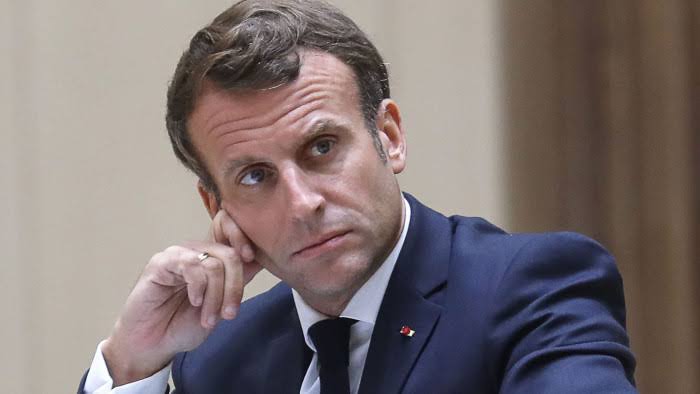
French President Emmanuel Macron was expected Thursday to name a new prime minister a week after MPs toppled the government, with politicians across the spectrum holding their breath while he conducts a day visit to Poland.


Macron had promised to name a replacement government chief within 48 hours after meeting party leaders at his Elysee Palace office Tuesday, participants said.

But he remains confronted with the complex political equation that emerged from July’s snap parliamentary poll: how to secure a government against no-confidence votes in a lower house split three ways between a leftist alliance, centrists and conservatives, and the far-right National Rally (RN).

Greens leader Marine Tondelier urged Macron on Thursday to “get out of his comfort zone” as he casts around for a name.

Advertisement

“The French public want a bit of enthusiasm, momentum, fresh wind, something new,” she told France 2 television.

Former prime minister Michel Barnier, whose government had support only from Macron’s centrist camp and his own conservative political family, was felled last week in a confidence vote over his cost-cutting budget.

His caretaker administration on Wednesday reviewed a bill designed to keep the lights of government on without a formal financial plan for 2025, allowing tax collection and borrowing to continue.

Lawmakers are expected to widely support the draft law when it comes before parliament on Monday.

Advertisement

Sources close to the government said the announcement was expected when the president returns Thursday evening from his trip to Poland. But Macron has in the past often taken longer than expected with such decisions.

– ‘Look to the future’ –

At issue in the search for a new prime minister are both policies and personalities.

Mainstream parties invited by Macron on Tuesday, ranging from the conservative Republicans to Socialists, Greens and Communists on the left, disagree deeply.

Advertisement

One totemic issue is whether to maintain Macron’s widely loathed 2023 pensions reform, seen by centrists and the right as necessary to balance the budget but blasted by the left as unjust.

On the personality front, Macron’s rumoured top pick, veteran centrist Francois Bayrou, raises hackles on both the left — leery of continuing the president’s policies to date — and on the right, where he is personally disliked by influential former president Nicolas Sarkozy.

“It’s jammed” as Macron looks for a deal with Socialists and Greens to avoid a new no-confidence vote, a person close to him told AFP, adding that a pact could be “a vain hope”.

Another senior figure in Macron’s camp said informal talks with the two parties on Wednesday had not been conclusive.

Advertisement

Beyond Bayrou, prime ministerial contenders include former Socialist interior minister and prime minister Bernard Cazeneuve, serving Defence Minister and Macron loyalist Sebastien Lecornu, and former foreign minister Jean-Yves Le Drian.

But a name could still emerge from outside the pack, as happened with Barnier in September.

Those in circulation “are names that have been around for years and haven’t seduced the French. It’s the past. I want us to look to the future,” Greens boss Tondelier said.

– Far right ‘not unhappy’ –

Advertisement

While the suspense over Macron’s choice endures, the parties shut out from Tuesday’s talks are trying to paint those trying to find a way forward as weak.

The Socialists’ openness to cooperation has been denounced by their nominal ally Jean-Luc Melenchon, figurehead of the hard-left France Unbowed (LFI) — the other heavyweight force in the broad New Popular Front (NFP) left alliance.

“No coalition deals! No deal not to vote no confidence! Return to reason and come home!” Melenchon urged on Tuesday.

Hardline attitudes are not necessarily vote-winners, with just over two-thirds of respondents to an Elabe poll published Wednesday saying they want politicians to reach a deal not to overthrow a new government.

Advertisement

But confidence in the elite is limited, with around the same number saying they did not believe the political class could reach agreement.

In a separate poll from Ifop, RN figurehead Marine Le Pen was credited with 35 percent support in the first round of a future presidential election — well ahead of any likely opponent.

She has said she is “not unhappy” her far-right party has been left out of the horse-trading around government formation, appearing for now to benefit from the chaos rather than suffer blame for bringing last week’s no-confidence vote over the line.

AFP
Advertisement

Foreign

Iran accuses US of violating ceasefire over past 48 hours

Published

on

By

ADVERTISEMENT
Zoom Ad
ADVERTISEMENT
Zoom Ad

Iran’s foreign ministry on Tuesday accused the United States of violating a fragile ceasefire during the past 48 hours in the southern coastal province of Hormozgan, without specifying the incident.

“The US terrorist army, continuing its illegal and unjustified actions since the ceasefire … has, in the past 48 hours, committed a gross violation of the ceasefire in the Hormozgan region,” the ministry said in a statement.

The US Central Command said forces had on Monday attacked missile sites and boats it said were trying to lay mines in the Gulf, while Iran’s Revolutionary Guards said it had fired at US aircraft attempting to enter the country’s airspace.

AFP

Advertisement
Continue Reading

Foreign

Iran president orders internet restored after war suspension

Published

on

By

ADVERTISEMENT
Zoom Ad
ADVERTISEMENT
Zoom Ad

Iranian President Masoud Pezeshkian has ordered the restoration of international internet access in Iran, which had been suspended since the United States and Israel launched attacks against the country, local media reported Monday.

“The decree aimed at restoring internet access to its pre-January state was communicated to the Ministry of Communications by the president,” Iranian news agencies Tasnim and Fars reported.

Authorities shut down the internet during large-scale anti-government protests that peaked in early January, then suspended it again on February 28 at the start of the Middle East war.

Since then, the population has only had access to domestic platforms and websites.

Advertisement

AFP

Continue Reading

Foreign

Trump says Iran deal ‘largely negotiated’ including reopening Strait of Hormuz

Published

on

By

ADVERTISEMENT
Zoom Ad
ADVERTISEMENT
Zoom Ad

US President Donald Trump says an agreement with Iran has been “largely negotiated” and details will be announced soon.

The deal would include the reopening of the Strait of Hormuz, he said on Saturday, without giving further details.

Iranian foreign ministry spokesman Esmaeil Baqaei earlier told state television that US and Iranian positions had been converging in the last week, but warned that did not mean agreements would be reached on key issues and accused the Americans of “contradictory statements”.

On social media, Trump said he had a “very good call” with the leaders of Saudi Arabia, the United Arab Emirates, Qatar, and others about a “Memorandum of Understanding pertaining to PEACE”.

Advertisement

“An agreement has been largely negotiated, subject to finalization between the United States of America, the Islamic Republic of Iran, and the various other Countries, as listed,” Trump said.

“Final aspects and details of the deal are currently being discussed, and will be announced shortly.”

He also said he had a call on Saturday with Israeli Prime Minister Benjamin Netanyahu, which “went very well”.

The president has not given any further details on the deal, but has insisted any agreement would “absolutely” prevent Iran from obtaining a nuclear weapon.

Advertisement

Later, Pakistan’s Prime Minister Shehbaz Sharif said: “I congratulate President Donald Trump on his extraordinary efforts to pursue peace,” and said the phone call had been “very useful and productive”.

Pakistan has been helping to negotiate a peace deal, serving as an intermediary.

“We hope to host the next round of talks very soon,” he wrote in the statement on X.

The US and Israel launched wide-ranging strikes on Iran on 28 February, sparking conflict across the Middle East. Iran responded by launching attacks on Israel and US-allied states in the Gulf.

Advertisement

A ceasefire in Iran was agreed in early April, and since then Washington and Tehran have engaged in talks over a long-term peace deal.

Speaking to state television on Saturday, Iranian foreign ministry spokesman Esmaeil Baqaei also described a “memorandum of understanding”, saying Iran’s intention was to reach an agreement “in the form of a framework, consisting of 14 points”.

Baqaei said they were in the process of finalising the memorandum, so further talks could be held within 30 to 60 days “and ultimately a final agreement can be reached”.

The new sense of momentum comes after the mood appeared to have soured in Washington, with anonymous officials briefing US media on Friday that the administration was preparing for a fresh round of military strikes, although no final decision had been made.

Advertisement

On Friday, the president posted on Truth Social that he would not attend his son Donald Jr’s wedding this weekend so he could remain in Washington DC “during this important period of time”.

Last week, Trump had said the truce was on “massive life support” after rejecting Tehran’s demands, labelling them “totally unacceptable”.

The US has blockaded Iranian ports since 13 April.

On Saturday, US Central Command (Centcom) said it had redirected 100 vessels, disabled four, and allowed 26 humanitarian aid ships to pass since the blockade began.

Advertisement

Centcom commander Admiral Brad Cooper said its forces had been “highly effective” in “allowing zero trade into and out of Iranian ports which has squeezed Iran economically”.

Meanwhile, Iran has claimed military control of an area around the Strait of Hormuz, and has said all transit through the strait “requires coordination with and authorisation from the Persian Gulf Strait Authority”.

The US and Gulf allies have repeatedly rejected Iranian attempts to assert control over the strait, and the US has told ships not to comply with Iran’s rules.

Advertisement
Continue Reading

Trending

Copyright © 2024 Naija Blitz News