Economy
CBN appoints 16 new directors in major shake-up
- /home/naijuinz/public_html/wp-content/plugins/mvp-social-buttons/mvp-social-buttons.php on line 27
https://naijablitznews.com/wp-content/uploads/2024/02/CBN.jpg&description=CBN appoints 16 new directors in major shake-up', 'pinterestShare', 'width=750,height=350'); return false;" title="Pin This Post">
- Share
- Tweet /home/naijuinz/public_html/wp-content/plugins/mvp-social-buttons/mvp-social-buttons.php on line 72
https://naijablitznews.com/wp-content/uploads/2024/02/CBN.jpg&description=CBN appoints 16 new directors in major shake-up', 'pinterestShare', 'width=750,height=350'); return false;" title="Pin This Post">
The Central Bank of Nigeria (CBN) has appointed 16 new directors across key departments in a significant leadership shakeups.

These appointments affect crucial areas such as Monetary Policy department, Trade and Exchange Department, Banking Supervision, Payment Systems and Consumer Protection among others.
This new appointments are coming at a time when regulators are tightening oversight on banks and financial technology firms as it declared last week as well as the final leg of the banking sector recapitulation exercise.

A source at the CBN told The Nation that “the very best were selected as such, no one will complain about the process because they all were appointed from within the system.”
This restructuring signals broader changes at the apex bank.
With the latest appointments, the CBN is strengthening its focus on compliance, consumer protection, and financial sector stability, especially in the face of increasing fraud risks and regulatory actions and other critical areas.
One of the most notable appointments is that of Dr. Olubukola Akinwunmi Akinniyi as Director of Banking Supervision.
His new role places him at the center of banking oversight, a crucial function as Nigeria’s financial institutions prepare to support President Bola Tinubu’s ambition of building a $1 trillion economy.
Another key change is in payment system supervision. The CBN has split the Payments System Management Department into two distinct units—one focused on policy and the other on supervision.
Yusuf Rakiya Opeyemi has been appointed Director of the newly created Payment System Supervision Department, reflecting the CBN’s commitment to tackling rising fraud and ensuring stronger regulatory oversight.
Industry stakeholders had criticised the former structure, which housed payment supervision and policy under a single team, as a bottleneck to effective regulation.
Consumer protection is another area where the CBN is making significant changes. Aisha Isa-Olatinwo has been named Director of Consumer Protection, a department that has faced criticism over unresolved disputes between banks and their customers.
With a background in audits, Olatinwo is expected to take a stricter stance on financial institutions that fail to address customer complaints.
The newly appointed directors include Mal. Abdullahi Hamisu (Banking Services); Dr. OJumu Adenike Olubunmi (Medical Services); Mr. Makinde Kayode Olanrewaju (Procurement & Support Services); Mrs. Jide-Samuel Omoyemen Avbasowamen (Information Technology); Mrs. Sike Rita Ijeoma (Financial Policy and Regulation); Dr. Victor Ugbem Oboh (Monetary Policy); Mr. Nakorji Musa (Trade and Exchange); Dr. Vincent Monsurat Modesola (Strategy Management and Innovation); Mr. Farouk Mujtaba Muhammad (Reserve Management); Dr. Adetona Sikiru Adedeji (Currency Operations and Branch Management); Mr. Hassan Ibrahim Umar (Development and Finance Institutions Supervision); Mr. Solaja Mohammed-Jamiu Olayemi (Other Financial Institutions Supervision) and Dr. Okpanachi Usman Mose (Statistics).
All the appointments took effect from March 3, 2025.
The new leadership team is expected to play a critical role in shaping Nigeria’s financial sector as the CBN enforces stricter regulations and aims for greater efficiency in monetary policy and financial stability.
Economy
CBN Forex Intervention Trigger New Changes In Dollar To Naira Exchange Rate May 13, 2026
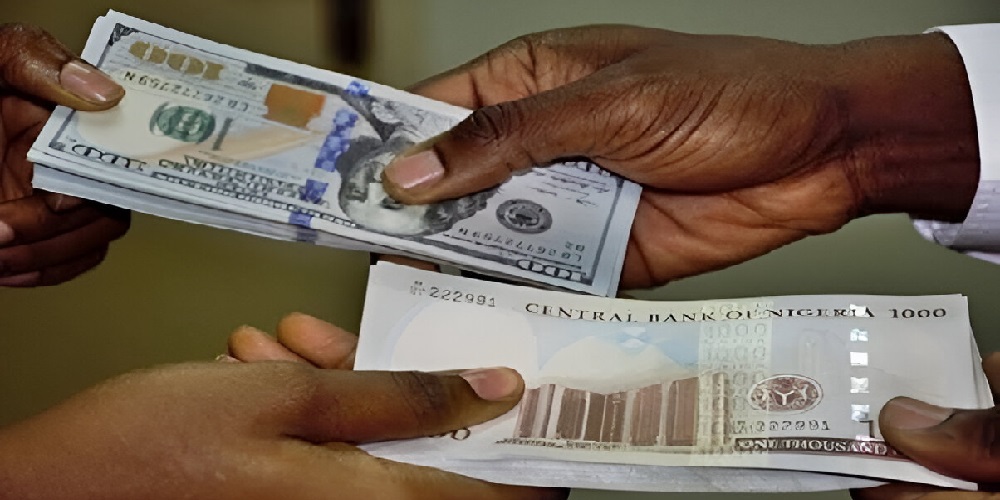
The Nigerian naira traded within a relatively stable range on Wednesday, May 13, 2026, as the Central Bank of Nigeria (CBN) continued interventions in the foreign exchange market.
Market analysts linked the recent stability to improved dollar inflows from exporters, foreign investors, and oil companies. In addition, the narrowing gap between the official and parallel market rates has boosted confidence in the forex market.
Meanwhile, traders said demand for foreign exchange remains high due to import payments, foreign tuition fees, medical expenses, and travel-related transactions.
Nigeria Exchange Rates – Wednesday, May 13, 2026
Currency Official Market Rate (₦) Parallel / Black Market Rate (₦) Mid-Market / Indicative Rate (₦)
US Dollar (USD) ₦1,355 – ₦1,365 ₦1,395 – ₦1,410 ₦1,360
Euro (EUR) ₦1,470 – ₦1,490 ₦1,590 – ₦1,630 ₦1,525
British Pound (GBP) ₦1,710 – ₦1,740 ₦1,850 – ₦1,900 ₦1,790
Chinese Yuan (CNY) ₦188 – ₦192 ₦195 – ₦202 ₦190
Japanese Yen (JPY) ₦9.7 – ₦10.1 ₦10.4 – ₦10.8 ₦10.0
Canadian Dollar (CAD) ₦995 – ₦1,020 ₦1,050 – ₦1,085 ₦1,015
Swiss Franc (CHF) ₦1,480 – ₦1,510 ₦1,560 – ₦1,610 ₦1,520
Saudi Riyal (SAR) ₦360 – ₦365 ₦372 – ₦380 ₦364
UAE Dirham (AED) ₦365 – ₦370 ₦378 – ₦385 ₦368
Market Insight
Financial analysts believe the recent appreciation of the naira reflects stronger forex liquidity and improving investor confidence in Nigeria’s official FX market.
However, experts warned that inflation, global oil prices, and external economic pressures could still affect the naira in the coming weeks.
Important Notice
Exchange rates may vary depending on location, transaction volume, and market conditions. Therefore, rates quoted by banks and Bureau de Change operators could differ slightly during the day.
Economy
Nigeria meets 99.2% of OPEC crude oil production in April
The Nigerian Upstream Petroleum Regulatory Commission (NUPRC) has revealed that in April 2026, Nigeria met 99.2% of its Organization of Petroleum Exporting Countries (OPEC) crude oil production quota of 1.5mb/d.
This was revealed in the X handle of the commission, which stressed that the output rose to 1.48b/d of crude oil and 174,873b/d of condensate.
The total crude oil and condensate production, according to NUPRC, was 1.66mb/d.
“Nigeria’s production increased in the month of April to 1,488,540 barrels of crude oil and 174,873 barrels of condensates totaling 1, 663, 413 barrels per day. This implies that Nigeria met 99.2% of its 1.5mbpd OPEC quota of crude oil.”
The report revealed the that the figure also represents a 7.58% increase when compared to the month of March. NUPRC said the peak production in April was 1.85mbpd while the lowest production for the month was 1.46mbpd.
Economy
See Black Market Dollar To Naira Exchange Rate Today 12th May 2026
Dollar To Naira Exchange Rate
The Black Market Dollar-to-Naira Exchange Rate for 12th May 2026 Can Be Accessed Below.
NOTE: The exchange rate changes hourly. It depends on the volume of dollars available and the Demand. This means…you can buy or sell 1 dollar at a certain rate, and the price can change (high or low) within hours.
The official naira black market exchange rate in Nigeria today, including the Black Market rates, Bureau De Change (BDC), and CBN rates.
Please note that the exchange rate is subject to hourly fluctuations influenced by the supply and demand of dollars in the market.
What’s the dollar to naira black market today, 12th May 2026?
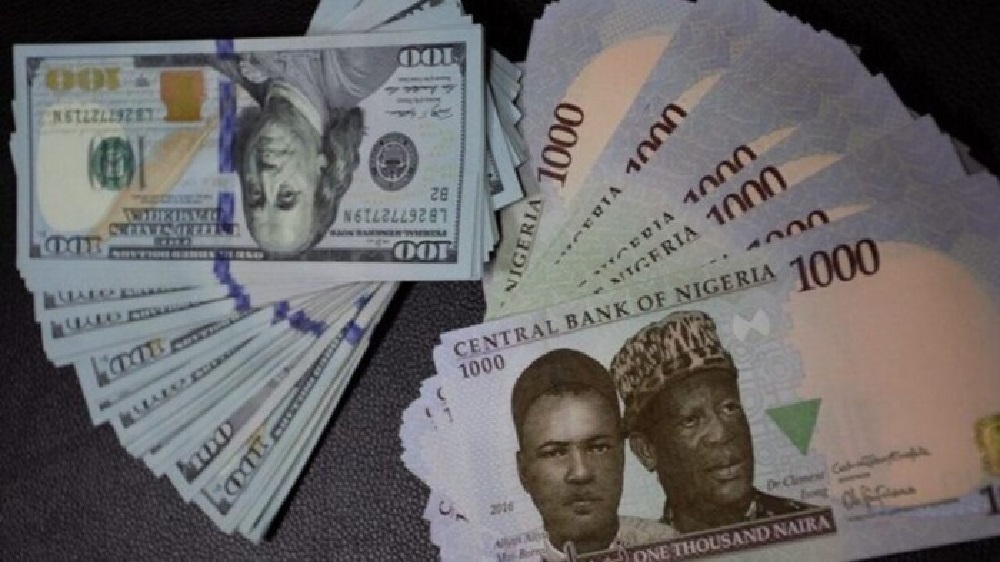
The exchange rate for a dollar to naira at Lagos Parallel Market (Black Market) players sell a dollar for ₦1400 and buy at ₦1387 on Tuesday, 12th May, 2026, according to sources at Bureau De Change (BDC).
Please note that the Central Bank of Nigeria (CBN) does not recognize the parallel market (black market), as it has directed individuals who want to engage in Forex to approach their respective banks
Dollar to Naira Black Market Rate Today
Dollar to Naira (USD to NGN) Black Market Exchange Rate Today
Selling Rate ₦1400
Buying Rate ₦1387
Dollar to Naira CBN Rate Today
Dollar to Naira (USD to NGN) CBN Rate Today
Highest Rate ₦1375
Lowest Rate ₦1367
Disclaimer:NEWSRAIN NIGERIA does not set or determine forex rates. The official NAFEX rates are obtained from the FMDQOTC website. Parallel market rates (black market rates) are obtained from various sources, including online media outlets. The rates you buy or sell forex may be different from what is captured in this article.
-
Entertainment13 hours agoSad: Real cause of death of popular movie star, Ekubo finally revealed
-
News22 hours agoBREAKING: Popular Nollywood actor, Alex Ekubo is dead
-
Entertainment7 hours agoNollywood poster boy Alexx Ekubo had a prepared will before his demise
-
Entertainment12 hours agoEmeka Rollas, Kate Henshaw, Others Mourn as Details Emerge on How Alexx Ekubo Died at 40
-
News12 hours agoFG orders varsities to suspend drug offenders
-
News22 hours agoElectricity Costs May go up Again as NERC Defends Tariff Review Plan
-
Metro12 hours agoPastor Fails To Resurrect From Death After Instructing Church Members To Bury Him Alive
-
Health12 hours agoMore Hantavirus cases may emerge in coming weeks — WHO

Warning: Undefined variable $user_ID in /home/naijuinz/public_html/wp-content/themes/zox-news/comments.php on line 49
You must be logged in to post a comment Login