Economy
Foreign reserves falls by $1.3bn, CBN confirms
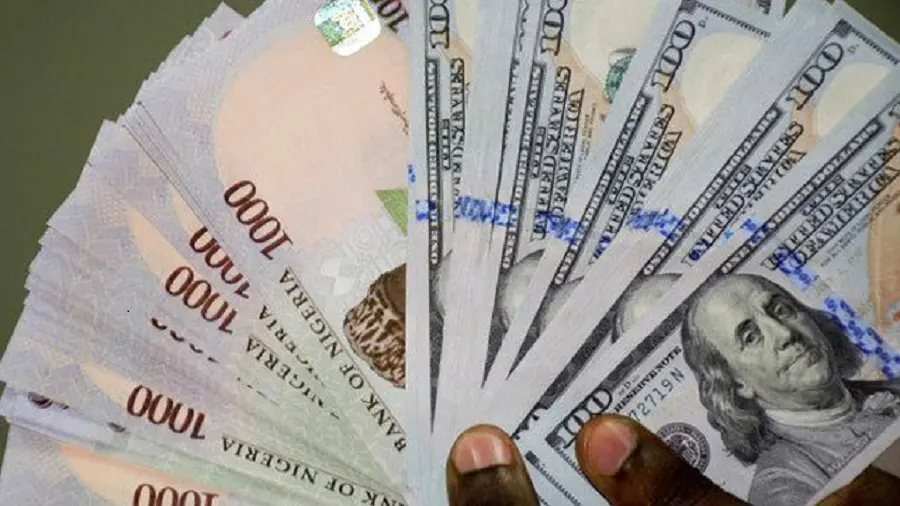
Nigeria’s foreign exchange reserves fell by $1.31bn in February 2025, reflecting sustained external pressures amid the recent appreciation of the naira.

Data from the Central Bank of Nigeria showed that reserves declined from $39.72bn on January 31, 2025, to $38.42bn on February 28, 2025, representing a 3.3 per cent drop within the month.
The decline in February was slightly higher than the $1.16bn drop recorded in January, highlighting the continued strain on the country’s external reserves.

The steady depletion of reserves has raised concerns amid rising speculations that the apex bank’s sustained interventions in the foreign exchange market, aimed at bridging liquidity gaps and stabilising the naira, have come at the cost of reducing external reserves.
Despite this, the local currency strengthened significantly against major foreign currencies in February, suggesting that the CBN’s efforts have had some positive impact in restoring confidence in the market.
Nigeria’s reserves recorded a consistent decline throughout February, with no single day of increase.
At the beginning of the month, reserves stood at $39.60bn on February 3, dropping to $39.54bn on February 4, signalling the start of a downward trend.
By February 7, reserves had fallen to $39.04bn, slipping further to $39.27bn on February 10.
The downward trajectory persisted into the second week of the month, with reserves standing at $39.15bn on February 12 and declining to $38.88bn by February 17.
By the third week of February, reserves had weakened further, dropping to $38.72bn on February 19 and $38.69bn on February 21.
As the month drew to a close, reserves had further declined to $38.41bn on February 28, reflecting a continuous downward trend throughout the month.
The fall in reserves has been attributed to multiple factors, including Nigeria’s heavy dependence on imports, which exerts pressure on foreign exchange reserves.
The country remains highly reliant on imports of industrial goods and food supplies, leading to high FX outflows.
Although oil prices have rebounded in recent months, Nigeria’s oil production challenges, crude theft, and pipeline vandalism have constrained forex inflows from the oil sector, limiting the CBN’s ability to shore up reserves.
The depletion of external reserves has also raised concerns over Nigeria’s capacity to meet external debt obligations.
The country holds significant foreign debt, and a further decline in reserves could weaken its ability to make timely debt repayments, potentially increasing borrowing costs.
A lower reserve level could also affect Nigeria’s credit rating and investor confidence, making it more expensive for the government to access international capital markets.
Despite the steady decline in reserves, the naira made notable gains against major foreign currencies in February, marking its strongest performance since the beginning of the year.
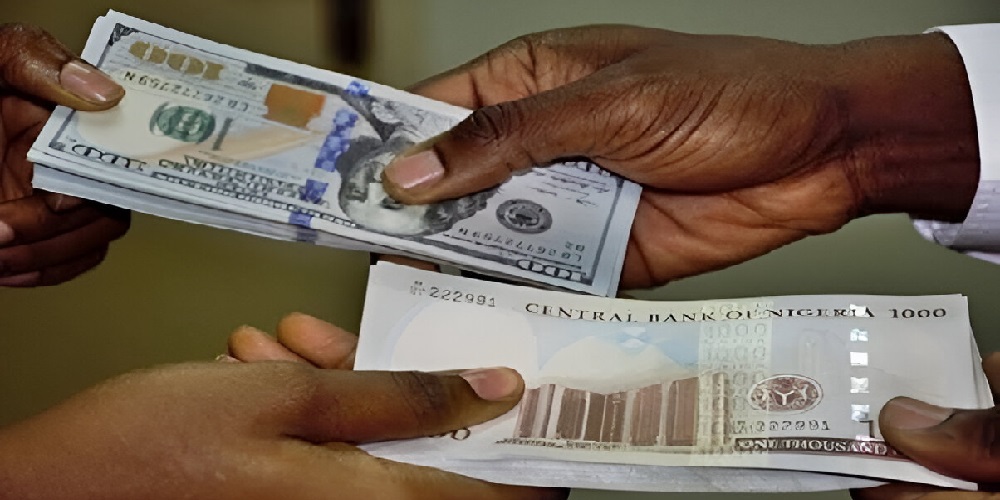
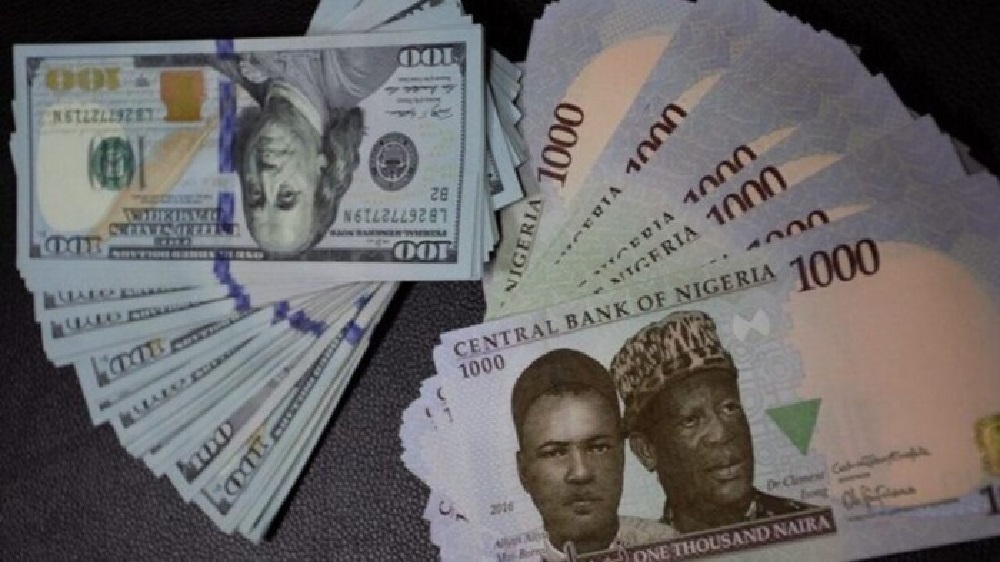
By the end of the month, the naira appreciated against the US dollar, closing at N1,540/$ from N1,620/$ at the start of the month, reflecting a 7.41 per cent gain.
It also strengthened against the British pound, rising from N2,000/£ to N1,910/£, marking a 4.50 per cent increase. Similarly, the naira appreciated against the euro, improving from N1,660/€ to N1,550/€, showing a 6.34 per cent gain.
The official exchange rate followed a similar trend, stabilising above N1,500/$ in the final weeks of February.
Data from the Nigerian Autonomous Foreign Exchange Market showed that the naira closed at N1,496/$ at the official window, narrowing the gap between the official and parallel market rates.
The convergence of the official and parallel market exchange rates indicates that Nigeria may be moving towards a unified forex market, reducing the speculation and arbitrage that have previously contributed to forex volatility.

Economy
See Black Market Dollar To Naira Exchange Rate Today 20th April 2026
The Black Market Dollar-to-Naira Exchange Rate for 20th April 2026 Can Be Accessed Below.
IMPORTANT NOTE: The exchange rate changes hourly. It depends on the volume of dollars available and the Demand. This means…you can buy or sell 1 dollar at a certain rate, and the price can change (high or low) within hours.
The official naira black market exchange rate in Nigeria today, including the Black Market rates, Bureau De Change (BDC), and CBN rates.
Please note that the exchange rate is subject to hourly fluctuations influenced by the supply and demand of dollars in the market.
What’s the dollar to naira black market today, 20th April 2026?
The exchange rate for a dollar to naira at Lagos Parallel Market (Black Market) players sell a dollar for ₦1400 and buy at ₦1390 on Monday 20th April, 2026, according to sources at Bureau De Change (BDC).
Please note that the Central Bank of Nigeria (CBN) does not recognize the parallel market (black market), as it has directed individuals who want to engage in Forex to approach their respective banks.
Dollar to Naira Black Market Rate Today
Dollar to Naira (USD to NGN) Black Market Exchange Rate Today
Selling Rate ₦1400
Buying Rate ₦1390
Dollar to Naira CBN Rate Today
Dollar to Naira (USD to NGN) CBN Rate Today
Highest Rate ₦1348
Lowest Rate ₦1340
Disclaimer:NEWSRAIN NIGERIA does not set or determine forex rates. The official NAFEX rates are obtained from the FMDQOTC website. Parallel market rates (black market rates) are obtained from various sources, including online media outlets. The rates you buy or sell forex may be different from what is captured in this article.
Economy
CBN, FMDA introduce the Nigerian Overnight Financing Rate
The Central Bank of Nigeria (CBN) in collaboration with the Financial Markets Dealers Association (FMDA) has introduced the Nigerian Overnight Financing Rate (NOFR).
The new initiative is a standardized benchmark, aimed at enhancing transparency, strengthening monetary policy transmission, and deepening Nigeria’s money market.
The introduction of the NOFR was made known in a statement issued on Sunday by the Director, Corporate Communications of the CBN, Mrs. Hakama Sidi Ali.
The apex bank explained that the NOFR was developed to align Nigeria with global best practices in short-term interest
rate benchmarks.
Moreover, it said the initiative is expected to improve price discovery and transparency, while promoting consistent pricing of money market instruments.
“It will enhance the effectiveness of monetary policy, support financial innovation, boost investor confidence, and strengthen risk management across the financial system,” the CBN said.
The introduction of NOFR positions Nigeria alongside leading global benchmarks such as SOFR in the United States, SONIA in the United Kingdom, €STR in the Eurozone, and TONA in Japan.
Also, it complements African benchmarks such as the JIBAR in South Africa.
The CBN added that the benchmark was adopted after a stakeholder engagement session held on February 27, 2026, with market participants formally endorsing the initiative.
It further disclosed that following the subsequent regulatory approval, NOFR is now in use, with the CBN serving as the benchmark administrator.
“The bank will ensure governance, transparency, and regular publication of the rate,” the statement stated.
Economy
Naira Slumps At Official FX Market
The Nigerian naira depreciated slightly against the United States (US) dollar, trading at N1,343.6398 per dollar at the Central Bank of Nigeria (CBN) official foreign exchange window on Friday, 17th April, 2026.
According to the data on the CBN’s official platform, the naira traded at the Nigerian Foreign Exchange Market (NFEM) rate of N1,343.6398/$per dollar and closed at N1,342.5000 per dollar.
When compared with the previous trading rate, the Nigerian currency traded at N1342.3037 on 16th April, 2026. With this, the Nigerian currency depreciated slightly by a minimum of N1.3.
At the parallel market, the naira-to-dollar exchange rate for the buying rate didn’t change while the selling rate increased by N3 when compared to that of the previous trading rate.
According to Aboki FX , the Naira-to-dollar exchange rate at the black market on Friday, 17th April, 2026, was N1,395 and N1,405 per dollar for buying and selling rate respectively.
-
News18 hours agoHow Tinubu Sacked Finance Minister Wale Edun Weeks After Hon. Alex Mascot Exposed ‘Missing’ N1.15tr
-
News18 hours agoYul Edochie Under Attack Over Disparaging Post Against Peter Obi
-
News18 hours agoOkowa Accuses Ned Nwoko of Misleading Anioma People Over State Creation Proposal
-
Entertainment18 hours agoDavido Bags Political Appointment
-
Health18 hours agoCross River reports outbreak of Covid-19, activates response centre
-
Foreign18 hours agoTrump Extends Ceasefire To Give Iran More Time To Negotiate
-
News13 hours agoAdelabu ready to quit as Power Minister after meeting with Tinubu
-
Metro18 hours agoSoldiers Arrest Suspected IPOB Leader Over K!lling Of Delta Police Officer

You must be logged in to post a comment Login