Connect with us

Economy

Nigeria’s international trade hit N36.6tn in Q4 2024 – NBS

Published

on

ADVERTISEMENT
Zoom Ad
ADVERTISEMENT
Zoom Ad

Nigeria’s total merchandise trade recorded significant growth in the fourth quarter of 2024, driven by a sharp rise in imports and steady export performance.


According to the latest Foreign Trade in Goods Statistics report released by the National Bureau of Statistics on Saturday, total trade for the period stood at N36.6tn, representing a 68.3 per cent increase from the corresponding quarter in 2023 and a 2.2 per cent rise from the third quarter of 2024.

Despite maintaining a trade surplus, the country’s trade balance declined significantly.

The surplus for the quarter stood at N3.42tn, reflecting a 34.9 per cent drop from the previous quarter.

Advertisement

The decline was largely attributed to the continued increase in imports and a marginal drop in export earnings.

The NBS report stated, “Nigeria’s total merchandise trade stood at N36,604.83bn in Q4 2024. This represents an increase of 68.32 per cent compared to the value (N21,747.40bn) recorded in the corresponding period of 2023 and a rise of 2.20 per cent over the value recorded in the preceding quarter (N35,818.35bn).”

Total exports in Q4 2024 were valued at N20.01tn, marking a 57.7 per cent increase compared to the same period in 2023.

However, exports declined by 2.55 per cent from the N20.54tn recorded in the previous quarter

Advertisement

Crude oil continued to dominate Nigeria’s exports, accounting for 68.87 per cent of total exports with a value of N13.78tn.

This represented a 33.7 per cent increase from Q4 2023 and a 2.8 per cent rise from Q3 2024. Other key exports included liquefied natural gas, petroleum gases, superior quality cocoa beans, and urea, which contributed significantly to Nigeria’s non-oil export revenue.

The Netherlands emerged as Nigeria’s largest export destination, receiving N2.09tn worth of goods, representing 10.44 per cent of total exports.

France followed with N1.91tn, while Spain recorded N1.74tn. India and Indonesia were also among the top five export partners, with N1.60tn and N1.41tn in trade, respectively.

Advertisement

These five countries collectively accounted for 43.7 per cent of Nigeria’s total exports during the period.

Total imports in Q4 2024 rose sharply to N16.59tn, reflecting an 83.2 per cent increase from the N9.05tn recorded in Q4 2023. Compared to the previous quarter, imports increased by 8.57 per cent from N15.28tn.

However, mineral product imports declined, falling from N5.84tn in Q3 2024 to N4.92tn in Q4 2024, indicating a reduced reliance on imported mineral fuels.

Agricultural imports reached N1.09tn in Q4 2024, representing a 53.4 per cent rise from the same period in 2023.

Advertisement

Raw material imports surged to N2.11tn, marking a 118.2 per cent year-on-year increase. Manufactured goods imports recorded the highest growth, reaching N8.47tn, an increase of 113.3 per cent from Q4 2023.

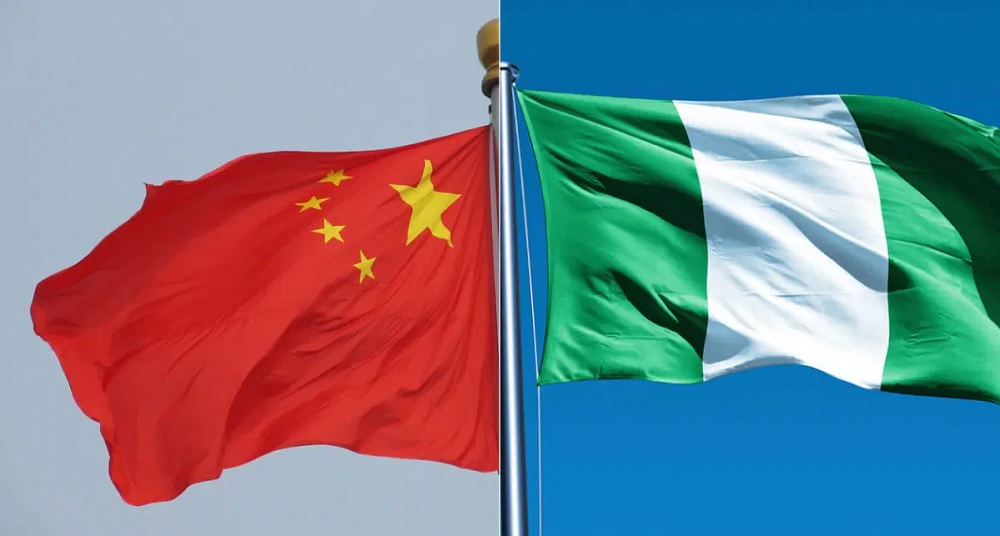
China remained Nigeria’s top import source, accounting for N4.61tn or 27.8 per cent of total imports. India followed with N1.90tn, while Belgium, the United States, and France contributed N1.39tn, N1.06tn, and N601.28bn, respectively.

The agricultural sector recorded strong growth in Q4 2024, with total agricultural exports valued at N1.54tn, reflecting a 232 per cent increase from the same period in 2023.

Superior quality cocoa beans were the most exported agricultural product, accounting for N836.2bn.

Advertisement

Standard quality cocoa beans followed at N269.3bn, while sesamum seeds were valued at N202.9bn.

Other notable agricultural exports included natural cocoa butter at N104.6bn and shelled cashew nuts at N30.8bn.

Europe remained the dominant market for Nigeria’s agricultural exports, accounting for N986.7bn, while Asia received N474.4bn worth of agricultural products.

The Netherlands and Malaysia were the top buyers of Nigerian cocoa beans, while China and Japan imported significant quantities of sesamum seeds.

Advertisement

Total exports in the solid minerals sector were valued at N60.7bn, reflecting a 69.2 per cent increase year-on-year but a 21.9 per cent decline from Q3 2024.

Cement clinkers and tin ores were the dominant solid mineral exports, with major trading partners including Cameroon and China.

Imports of solid minerals, mainly plasters from Egypt and Tunisia, were valued at N111.8bn during the quarter.

Manufactured goods exports stood at N494.2bn, marking a 110.3 per cent increase year-on-year but a 52.5 per cent decline from Q3 2024.

Advertisement

The top manufactured goods exports included unwrought aluminum alloys, dredgers, and cathodes. Most of Nigeria’s manufactured goods exports were shipped to Africa, followed by Asia and Europe.

Meanwhile, manufactured goods imports surged to N8.47tn, with aircraft parts from France and photovoltaic cells from China among the most imported items.

Trade with African countries remained robust, with total exports valued at N2.04tn, while imports from the continent stood at N514.96bn, representing just 3.1 per cent of total imports. South Africa, Ivory Coast, and Senegal emerged as Nigeria’s top trading partners within Africa.

Within ECOWAS, Nigeria exported goods worth N1.18tn, while imports from the region were valued at N77.1bn. Ivory Coast ranked as Nigeria’s largest ECOWAS export destination, followed by Senegal, Togo, Ghana, and Benin Republic.

Advertisement

The most exported products to ECOWAS included petroleum oils, electrical energy, and cigarettes, while crude palm oil and petroleum bitumen were the most imported products from the region.

The report indicated that 98.8 per cent of Nigeria’s exports in Q4 2024 were transported by sea, with Apapa Port handling 89.6 per cent of total outbound shipments.

Air and road transport accounted for minimal shares of total exports. On the import side, maritime transport remained dominant, accounting for 90.2 per cent of inbound shipments. Apapa Port continued to serve as Nigeria’s major entry point for imports.
Advertisement
Continue Reading
Advertisement
Click to comment

Warning: Undefined variable $user_ID in /home/naijuinz/public_html/wp-content/themes/zox-news/comments.php on line 49

You must be logged in to post a comment Login

Leave a Reply

Economy

NCC unveils incentives for local smartphone production

Published

on

By

ADVERTISEMENT
Zoom Ad
ADVERTISEMENT
Zoom Ad

The Nigerian Communications Commission (NCC) has unveiled a package of incentives aimed at encouraging the local manufacture of smartphones, tablets and other telecommunications equipment as part of efforts to make digital devices more affordable and expand access to technology across the country.

Chairman of the NCC Governing Board, Chief Idris Ibikunle Olorunnimbe, said the Commission was taking a more active role in driving industrial growth by creating an enabling environment for investors to establish device manufacturing plants in Nigeria.

He said the initiative would be backed by policy measures, including tax holidays and streamlined customs processes, to lower production costs and boost local manufacturing capacity.

According to Olorunnimbe, effective regulation remains essential to ensuring consumers have access to quality and affordable digital devices.

Advertisement

“Regulation and market integrity are what make a market affordable in the first place. They are the precondition for it. A phone is only truly cheap if it is real, if it is safe, if it connects properly, and if it carries a warranty the buyer can rely on,” he said.

He observed that while Nigeria has recorded significant improvements in telecommunications coverage, the high cost of smartphones continues to limit digital participation for many citizens.

The NCC chairman said reducing the cost of devices would complement ongoing investments in network infrastructure and help bridge the country’s digital divide.

He also called for a shift from the traditional model of outright phone purchases, saying more flexible financing arrangements would make devices accessible to a larger segment of the population.

Advertisement

“Retire the assumption that a Nigerian must buy a phone outright, in one payment, on the day. That is not how it works anywhere else in the world,” he added.

As part of the broader strategy, Olorunnimbe said locally manufactured smartphones, routers and MiFi devices would be integrated into the Commission’s digital inclusion initiatives.

He explained that the devices are expected to come with built-in links to educational platforms under the NCC’s zero-rated education programme, allowing students and other users to access learning materials without incurring data charges.

The devices will also feature direct access to key government digital services, including civic registration, tax administration and e-health platforms, to improve citizens’ access to essential public services.

Advertisement

According to him, the initiative is designed not only to expand internet access but also to ensure that digital connectivity translates into better educational opportunities, improved public service delivery and greater economic participation.

The NCC said the policy reflects its commitment to promoting indigenous technology development while supporting Nigeria’s drive towards a more inclusive and self-reliant digital economy.

Continue Reading

Economy

SEE Black Market Dollar To Naira Exchange Rate Today 24th June 2026

Published

on

ADVERTISEMENT
Zoom Ad
ADVERTISEMENT
Zoom Ad

See Exchange Rate As Naira Gains 0.07%

The Black Market Dollar-to-Naira Exchange Rate for 24th June 2026 Can Be Accessed Below.

NOTE: The exchange rate changes hourly. It depends on the volume of dollars available and the Demand. This means…you can buy or sell 1 dollar at a certain rate, and the price can change (high or low) within hours.

The official naira black market exchange rate in Nigeria today, including the Black Market rates, Bureau De Change (BDC), and CBN rates.

Advertisement

Note that the exchange rate is subject to hourly fluctuations influenced by the supply and demand of dollars in the market.

What’s the dollar to naira black market today, 24th June 2026?

The exchange rate for a dollar to naira at Lagos Parallel Market (Black Market) players sell a dollar for ₦1395 and buy at ₦1385 on Wednesday, 24th June, 2026, according to sources at Bureau De Change (BDC).
Please note that the Central Bank of Nigeria (CBN) does not recognize the parallel market (black market), as it has directed individuals who want to engage in Forex to approach their respective banks.

Dollar to Naira Black Market Rate Today
Dollar to Naira (USD to NGN) Black Market Exchange Rate Today
Selling Rate ₦1395
Buying Rate ₦1385
Dollar to Naira CBN Rate Today
Dollar to Naira (USD to NGN) CBN Rate Today
Highest Rate ₦1375
Lowest Rate ₦1365

Advertisement
Continue Reading

Economy

SEE Dollar to Naira exchange rate today, June 23, 2026

Published

on

ADVERTISEMENT
Zoom Ad
ADVERTISEMENT
Zoom Ad

The Nigerian naira traded at relatively stable levels against the United States dollar on Tuesday, June 23, 2026, across both the official and parallel foreign exchange markets, as market participants continued to monitor liquidity conditions and foreign exchange demand.

Latest data from the Nigerian Foreign Exchange Market (NFEM) showed that the naira exchanged at approximately ₦1,366.41 per dollar at the official market. The NFEM rate, which is published by the Central Bank of Nigeria, represents the volume-weighted average exchange rate for the day.

The official exchange rate has remained within the ₦1,350-₦1,370 range in recent weeks, supported by improved liquidity and sustained foreign portfolio inflows into local assets.

In the parallel market, also known as the black market, the dollar traded at around ₦1,400 for buying and between ₦1,410 and ₦1,420 for selling, depending on location and dealer quotations.

Advertisement

The spread between the official and parallel market rates remained relatively narrow compared with previous years, reflecting ongoing reforms aimed at improving transparency and efficiency in Nigeria’s foreign exchange market.

Currency traders said demand for dollars from importers, travellers and businesses remained steady, although the naira has benefited from increased confidence in the foreign exchange market and improved dollar supply.

Analysts noted that exchange rates could continue to fluctuate in response to changes in foreign exchange inflows, global oil prices and domestic economic conditions.

As of the prevailing rates, $100 would exchange for about ₦136,641 at the official NFEM window, while the same amount could fetch between ₦141,000 and ₦142,000 in the parallel market.

Advertisement

Foreign exchange rates remain subject to intraday movements and may vary across banks, bureaux de change operators and other market participants.

Continue Reading

Trending

Copyright © 2024 Naija Blitz News