News
How To Get A Police Tinted Glass Permit In Nigeria
- /home/naijuinz/public_html/wp-content/plugins/mvp-social-buttons/mvp-social-buttons.php on line 27
https://naijablitznews.com/wp-content/uploads/2025/06/Tinted-Glass-1000x600.jpg&description=How To Get A Police Tinted Glass Permit In Nigeria', 'pinterestShare', 'width=750,height=350'); return false;" title="Pin This Post">
- Share
- Tweet /home/naijuinz/public_html/wp-content/plugins/mvp-social-buttons/mvp-social-buttons.php on line 72
https://naijablitznews.com/wp-content/uploads/2025/06/Tinted-Glass-1000x600.jpg&description=How To Get A Police Tinted Glass Permit In Nigeria', 'pinterestShare', 'width=750,height=350'); return false;" title="Pin This Post">
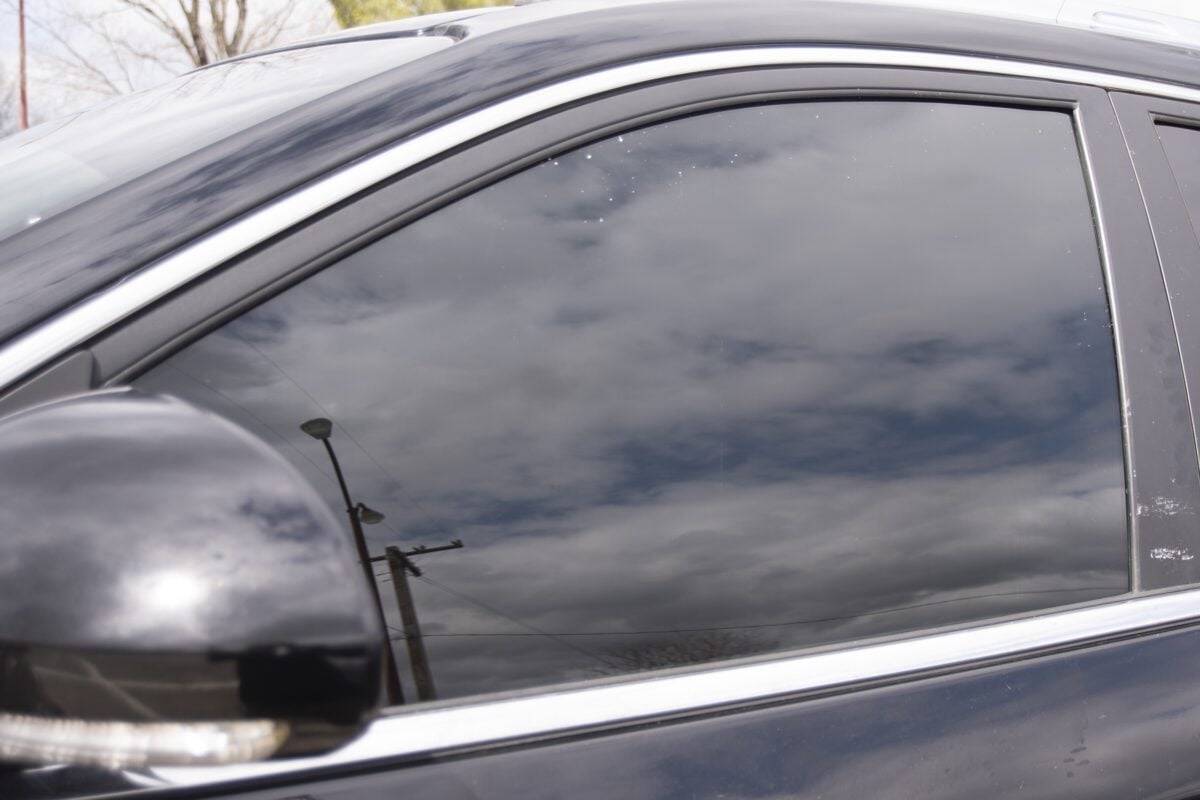
Are you driving a vehicle with factory-fitted tinted windows in Nigeria? You may need an official tinted glass permit issued by the Nigeria Police Force to avoid fines, delays, or harassment at checkpoints. In this comprehensive 2025 guide, you’ll learn how to apply for the permit online and what documents you need to get it approved — legally and for free.

Driving without a police-approved tinted glass permit is a punishable offense, and offenders may face seizure of vehicles or arrest under the current enforcement regulations.
Who Needs a Tinted Glass Permit in Nigeria?

If your vehicle comes with factory-fitted tinted windows or windshields, the law requires that you obtain a Police Tinted Glass Permit before driving on Nigerian roads. This applies to:
Private car owners
Company vehicle operators
Government vehicle users
Note: Aftermarket tints (non-factory installed) are typically not eligible for a permit unless justified for medical or security reasons.

Requirements for Police Tinted Glass Permit (2025)
Before applying, ensure you have the following:
National Identification Number (NIN)
Vehicle registration documents
(Proof of ownership, insurance, and vehicle license)
Driver’s license
A passport photograph
A valid means of identification (e.g., National ID card, passport, or voter card)
Step-by-Step: How to Apply for the Tinted Glass Permit Online
Follow these simple steps to get your permit approved quickly:
Step 1: Visit the Official Police Portal
Go to the Nigeria Police Tinted Permit Portal using a browser on your phone or computer and sign up using valid email.
Step 2: Fill the Application Form
Click on “Apply for Tinted Permit” and input your details:
Full Name
Email Address
Phone Number
Vehicle details (Make, Model, Plate Number, Chassis Number)
Step 3: Upload Required Documents
Submit scanned or clear photos of:
Proof of vehicle ownership
Insurance certificate
Driver’s license or National ID
Passport photo
Pro Tip: Ensure all uploaded documents are in clear, readable format (PDF or JPEG) to avoid rejection.
Step 4: Submit and Print Acknowledgment
After submission, you’ll get a tracking/application number and a printable acknowledgment slip. This will also be sent to your email.
Step 5: Physical Verification at the Police Command
TJ News Nigeria reports that the next step is to visit the nearest Police State Command Headquarters or any designated CSP (Commissioner of Police) office with:
The original documents
Printed acknowledgment slip
Your vehicle (for inspection)
A police officer will inspect your car to confirm that the tint is factory-fitted and determine if your application meets the requirements.
Step 6: Approval and Collection of Permit
If your application is approved:
You will be issued an official Tinted Glass Permit Certificate
The permit contains your name, vehicle details, and an official authorization number
Keep this certificate in your vehicle at all times to avoid delays during road checks.
Important Things to Know
The permit is FREE of charge. Any request for payment is illegal.
The Police reserve the right to reject applications without valid justification.
Unauthorized tinted glasses can lead to:
Vehicle impoundment
Court prosecution
Fines or imprisonment under Nigerian traffic laws

News
Ekiti APC Primary: Lawmaker Urges Party to Enforce Electoral Act Over Candidate’s Eligibility
By Gloria Ikibah
A member of the House of Representatives, Rep. Kolawole Akinlayo, has urged the leadership of the All Progressives Congress (APC) to strictly apply the provisions of the Electoral Act in resolving the controversy surrounding the party’s primary election for Ekiti North Federal Constituency II.
Akinlayo, who represents Moba/Ilejemeje/Ido Osi Federal Constituency in the House, made the appeal while speaking with journalists in Abuja on Sunday, following a petition he submitted to the APC National Chairman and the party’s National Assembly Appeal Committee over the outcome of the primary election held on 16 May.
The lawmaker argued that compliance with Section 88(1) of the Electoral Act, 2026, as well as the APC Constitution, is essential to safeguarding the credibility of the party’s internal democratic process ahead of the 2027 general elections.
He maintained that the rule of law should take precedence over political considerations, warning that any departure from the Electoral Act could weaken confidence in the party’s candidate selection process and expose the APC to avoidable legal disputes.
Akinlayo also challenged the eligibility of the aspirant declared winner of the primary, Kunle Ibrahim, contending that he did not meet the legal requirements to contest the election.
According to the lawmaker, Ibrahim was still serving as a Special Assistant in the Office of the Secretary to the Government of the Federation at the time the primary was conducted and remained on the government payroll until May 2026.
He insisted that the party should carefully review the facts surrounding the matter and ensure that its final decision is consistent with both the Electoral Act and its own constitution to protect the integrity of the nomination process.
Akinlayo argued that Ibrahim’s participation violated Section 88(1) of the Electoral Act, 2026, which provides that:
“A political appointee at any level shall not be a voting delegate or be voted for during party conventions, congresses or primaries of any political party for the purpose of the nomination of candidates for any election.”
Citing the Supreme Court’s decision in Tukur v. Mustapha (2023), the federal lawmaker contended that political appointees seeking elective office must first resign their appointments before participating in party primaries.
“The purported winner is not qualified to participate in the primary election by virtue of Section 88(1) and his participation, in the eyes of the law, is a nullity ab initio,” he argued.
Beyond the issue of eligibility, Akinlayo alleged that the primary election was marred by widespread irregularities in several wards across the constituency.
Akinlayo further alleged that the primary election was marred by widespread irregularities, including the absence of voter accreditation in some polling areas, inflated vote figures in others, voter suppression and disruption of the exercise in locations where he claimed to enjoy significant support.
He also accused certain local government and party officials of compromising the integrity of the process by serving as returning officers despite having vested interests in the outcome of the election.
Citing the alleged violations, the lawmaker called on the APC leadership to apply the relevant provisions of the Electoral Act by disqualifying Kunle Ibrahim from the contest on the grounds of ineligibility and recognising him as the lawful winner, having emerged second in the primary.
As an alternative, he urged the party’s National Assembly Appeal Committee to cancel the results from the affected wards and order a fresh primary election restricted to aspirants who meet the legal requirements.
The dispute has emerged as one of the earliest major internal challenges facing the APC ahead of the 2027 general elections, with the party expected to conclude its appeal process before forwarding the names of its candidates to the Independent National Electoral Commission (INEC).
The controversy has also renewed attention on Section 88 of the Electoral Act, 2026, which reflects provisions contained in the Electoral Act, 2022 concerning the participation of political appointees in party primaries. The issue has repeatedly come before the courts, with the Supreme Court affirming in Tukur v. Mustapha that political appointees must resign their appointments before contesting or participating in party primaries as either aspirants or delegates.
The decision of the APC’s appeal panel is expected to determine who eventually flies the party’s flag in the 2027 House of Representatives election for Ekiti North Federal Constituency II.
News
Saudi Arabia ‘s Aramco Helicopter Crashes, Kills 14
A helicopter crash in Saudi Arabia killed 14 Saudi citizens on Sunday, the kingdom’s official press agency reported, adding that the aircraft belonged to state oil giant Aramco.
The Saudi Press Agency, citing an official at the energy ministry, reported the helicopter crashed in Ras Tanura in the country’s east.
“The accident claimed the lives of all 14 passengers, all Saudi citizens,” the agency said, adding that an investigation was under way to determine the cause of the crash.
Aramco says it operates more than 60 aircraft, including helicopters serving more than 300 heliports in Saudi Arabia, making it one of the largest corporate fleets in the region.
The deadly accident comes as oil-rich Gulf nations seek to ramp up their output following Iranian attacks and the closure of the Strait of Hormuz, a vital waterway for the export of oil and gas.
The Gulf monarchy did not indicate the incident was in any way connected to a hostile attack.
During the Middle East war, Iranian attacks had targeted energy facilities in the Gulf.
Ras Tanura is home to one of the largest refineries in the Middle East, with a capacity of 550,000 barrels per day, and is critical to Saudi Arabia’s energy sector.
The refinery has been targeted several times, notably during an Iranian drone attack at the beginning of the conflict, which caused a fire and forced a partial shutdown.
Riyadh said in April that the weeks-long attacks had disrupted several production operations at key facilities, with refineries in Ras Tanura as well as Jubail, Yanbu and Riyadh targeted.
Saudi Arabia, the world’s leading crude exporter, produces a little over 10 million bpd.
AFP
News
SAD! Bandits’ bomb hits vehicle, kills one, injures many in Sokoto
An Improvised Explosive Device, IED, planted by alleged bandits along the Kurawa–Sabon Birni road in Sokoto State on Sunday hit a vehicle, killing one person and injuring many passengers.
The incident raised fresh concerns over the growing use of explosive devices by criminal groups operating in parts of the North-West.
The vehicle was said to be conveying passengers from surrounding communities to Sabon Birni when it ran over the explosive device, triggering a blast that severely damaged the vehicle and left several occupants injured.
A security analyst based in the area, Bashir Guyawa, disclosed the incident in a post on his Facebook page.
Guyawa described the incident as another reminder of the persistent security challenges confronting communities along the border axis.
He said the vehicle was on a routine passenger trip when the explosion occurred.
“The vehicle was conveying passengers early this morning on their way to Sabon Birni when the unfortunate incident happened,” he wrote.
-
News16 hours agoNDLEA operatives pin down N12.3bn Loud at Lagos port (Photos)
-
News24 hours agoLagos Begins Unique ID Registration For Public, Private School Students
-
News24 hours agoNDC Vice Chairman, Assembly Candidate, Others Defect to APC After Court Nullifies Party Registration
-
News15 hours agoFinally, Oyo Govt Lifts Curfew In 10 LGAs
-
Foreign24 hours agoVenezuela’s earthquake death toll hits 1,430, ‘worst in 123 years’
-
News24 hours ago‘My Wife Sent Love Messages To Her Lover, Threatened Me With Knife For Dating Two Of My Church Members’
-
Sports15 hours agoSee fixtures as nine African nations make FIFA World Cup knockout stage
-
News15 hours agoLady attempts Guinness Record with 144-Hour Bible reading in Port Harcourt