
News
ECOWAS @ 50: Leaders Project Hope, Unity Amidst Challenges

- /home/naijuinz/public_html/wp-content/plugins/mvp-social-buttons/mvp-social-buttons.php on line 27
https://naijablitznews.com/wp-content/uploads/2025/05/IMG-20250530-WA0035-736x600.jpg&description=ECOWAS @ 50: Leaders Project Hope, Unity Amidst Challenges', 'pinterestShare', 'width=750,height=350'); return false;" title="Pin This Post">
- Share
- Tweet /home/naijuinz/public_html/wp-content/plugins/mvp-social-buttons/mvp-social-buttons.php on line 72
https://naijablitznews.com/wp-content/uploads/2025/05/IMG-20250530-WA0035-736x600.jpg&description=ECOWAS @ 50: Leaders Project Hope, Unity Amidst Challenges', 'pinterestShare', 'width=750,height=350'); return false;" title="Pin This Post">


By Gloria Ikibah
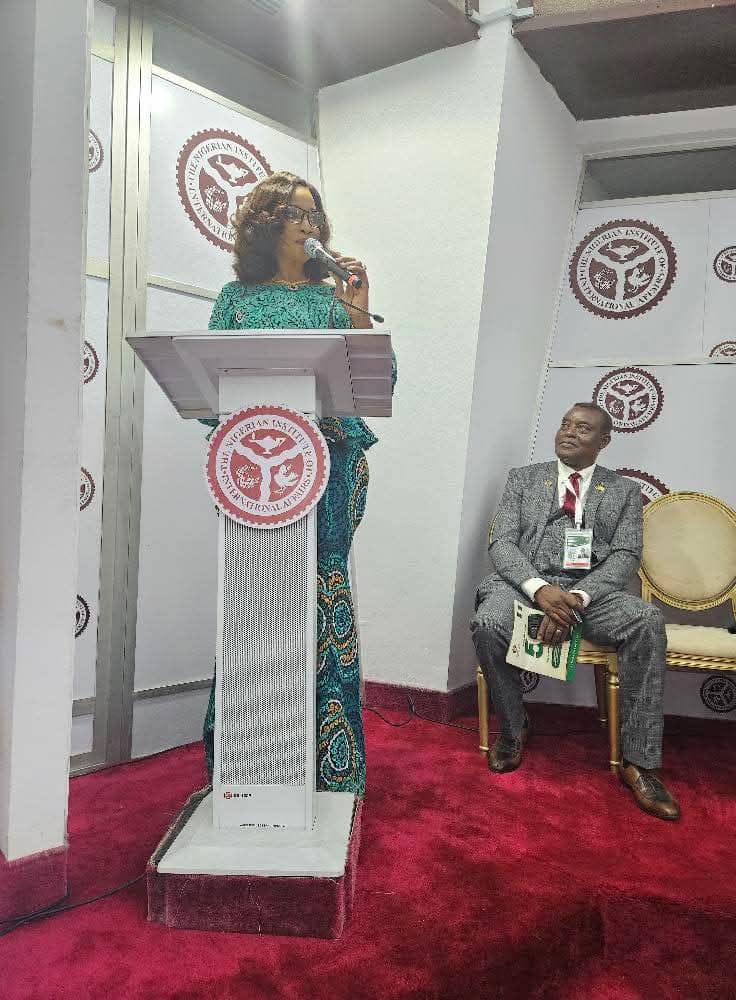
A powerful gathering of West African statesmen, diplomats, and scholars struck a hopeful chord for the future of the Economic Community of West African States (ECOWAS), as the organisation marked its 50th anniversary in Lagos on Thursday.
Speaking at a high-level roundtable organised by the Nigerian Institute of International Affairs (NIIA), Nigeria’s Minister of State for Foreign Affairs, Ambassador Bianca Odumegwu-Ojukwu, expressed confidence that the golden jubilee would open a new chapter for regional integration.
“This milestone presents an opportunity for renewal, a reaffirmation of our collective resolve to advance peace, unity, and sustainable development in West Africa,” she declared.
The conference, themed “ECOWAS, An African Model @ 50: Resilience and Future Prospects,” was chaired by General Yakubu Gowon (rtd.), Nigeria’s former Head of State and a founding architect of ECOWAS. Gowon, who remains the sole surviving founding leader of the bloc, called for optimism and dialogue, noting that despite the recent withdrawals of Burkina Faso, Mali, and Niger to form the Alliance of Sahel States (AES), “there remains room for reconciliation and reintegration.”
Adding intellectual weight to the discussions was Prof. Bolaji Akinyemi, former Minister of External Affairs, who delivered the keynote address, echoed Gowon’s sentiments, stating that the departures, though concerning, need not be permanent fractures.
“History teaches us that regional bodies survive turbulence when leaders act with vision and flexibility,” he noted.
Other speakers included President of ECOWAS, Dr. Alieu Touray; his predecessor, Dr. Ibn Chambas; former Guinean Prime Minister, Lansana Kouyate; and the Vice Chairperson of the African Union Commission, Selma Malika Haddadi.
The forum saw robust discussions on regional security, economic integration, and the political future of ECOWAS.
Odumegwu-Ojukwu paid homage to the founders of the organization, lauding their foresight in fostering unity in the region. She also commended the contributions of the day’s speakers, calling their insights “a reaffirmation of the enduring relevance of the ECOWAS vision.”
Despite current challenges, the tone of the event was far from pessimistic. The consensus among participants was clear: ECOWAS, while tested, remains a vital platform for regional cooperation—and its brightest days may still lie ahead.

News
Marwa visits injured NDLEA officers in hospital, promises them of justice, full support(Photos)

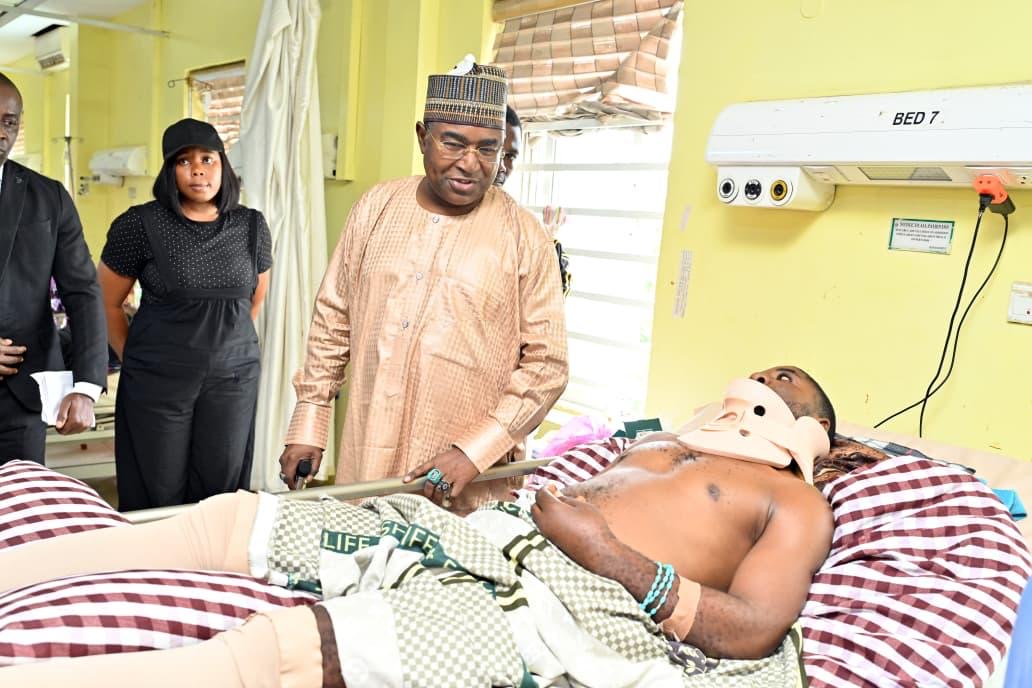
The Chairman/Chief Executive Officer of the National Drug Law Enforcement Agency (NDLEA), Brig. Gen. Mohamed Buba Marwa (Rtd), has paid a get-well visit to two gallant officers of the Agency currently receiving treatment at the National Hospital in Abuja.
The officers: Ayegh Dooyun Zachariah and Shehu Jamil Ibrahim, sustained severe injuries following a violent mob attack on them during a raid on a notorious drug joint in the Dawaki area of the Federal Capital Territory (FCT), Abuja, on Friday, 15th May 2026.
During his visit to their bedsides on Monday 25th May, Marwa sympathized with the injured officers and extended the support of the entire NDLEA management. He assured them that the Agency will take full responsibility for their welfare, ensuring they receive the highest standard of medical care until they are fully recovered and back on their feet.
“The Agency will leave no stone unturned in ensuring that those responsible for this cowardly attack are arrested, and brought to justice. An attack on our officers is an attack on the state, and it will not go unpunished,” Marwa stated while assuring the officers that they will get justice.
He commended the duo for their exceptional bravery, unalloyed commitment to duty, and outstanding professionalism displayed during the high-risk Dawaki operation. He emphasized that their sacrifices in the ongoing fight against substance abuse and illicit drug trafficking remain invaluable to the nation.
To further motivate the officers and recognize their heroism, the NDLEA boss’ visit was backed by the immediate roll-out of incentives including the presentation of official Letters of Commendation personally signed by the Chairman/Chief Executive Officer, alongside other support packages to aid their swift recovery.
He also praised the Agency’s medical team and their counterparts at the National Hospital for their prompt response and proper care that have since stabilised the injured officers.
Marwa assured the public that the NDLEA remains resolute in its mission to dismantle drug cartels and sanitize communities across the country, undeterred by violent resistance from criminal elements.

Airline Operators of Nigeria, AON, has faulted the Nigerian Civil Aviation Authority, NCAA, over its earlier decision to withhold services from 11 domestic airlines pending the settlement of their outstanding financial obligations.
Director of Finance and Accounts of NCAA, Olufemi Odukoya, in a memo dated May 22, 2026, obtained by Vanguard, had listed the affected airlines as Air Peace Limited, Ibom Air Limited, Arik Air Limited, United Nigeria Airlines, Umza Air, NGeagle Airline, Max Air Limited, Caverton Helicopters, Overland Airways, Rano Air and ValueJet.
While the NCAA has temporarily suspended the directive, AON, in a statement, disclosed that all services rendered by NCAA to domestic airline operators were fully paid for in advance on a cash-before-service basis.
AON, however, clarified that what the NCAA described as outstanding charges relates to the five per cent Ticket Sales Charge, TSC, which is different from regulatory service fees.
They also urged Federal Government to amend the Civil Aviation Act to empower the NCAA to directly collect appropriate fees and charges from passengers, saying the measure should take effect from June 1, 2026.
The statement reads: “The AON wishes to make it clear that all cost recovery services rendered by the NCAA to domestic airline operators are paid for fully in advance on a cash-before-service basis.
“For clarity, the NCAA issues an invoice for every regulatory service it provides, whether for the validation of crew operating licences, aircraft inspections, documentation renewals, or any other service within its regulatory mandate. Operators are then required to settle all such invoices in advance, and compliance is strictly observed before the NCAA renders any regulatory service.
“In practice, no domestic airline in Nigeria receives NCAA regulatory services without first making the full payment of invoices issued to it by the NCAA. This long-standing policy and procedure remains firmly in place. Consequently, suggestions that domestic airline operators are indebted to the NCAA for regulatory services are factually inaccurate.
“What the NCAA refers to as ‘outstanding charges’ relates solely to the five percent (five per cent) Ticket Sales Charge, TSC, a Tax imposed by the NCAA on passengers for no services rendered to passengers and not in consonance with the dictates of international aviation. This is entirely different from regulatory service fees.
“The AON also notes that several member airlines maintain dedicated accounts, from which the NCAA draws down its monthly remittances, until the force majeure caused by the Iran -Israel/USA conflict, that had put a lot of financial pressures on airlines worldwide.
“Notwithstanding this arrangement, the AON had formally appealed to the federal government through the office of Honourable Minister of Aviation & Aerospace Development, to suspend the payment of all statutory charges temporarily, as an interim measure to assist airlines in managing their cash flows during the current period of severe financial stress caused by the increase in the cost of Jet Al.
“As an interim response, President Bola Tinubu graciously granted a 30 per cent concession, while waiting for the government decision on the other aspects of the AON intervention request. While the AON acknowledges and appreciates this gesture, we had appealed for a meeting with Mr. President to discuss further reliefs, a request that is yet to be granted.
“The AON reiterates its position that the NCAA is a regulatory body, not a revenue-generating agency. The NCAA does not fund any aspect of our businesses or render any direct service to passengers.
“Each and every service it provides to airline operators are fully paid for in advance before such is rendered. In view of the above, the AON calls on federal government to urgently amend the Civil Aviation Act to empower the NCAA to collect whatever appropriate fees and charges are due directly from passengers or whoever else, without routing such through the domestic airlines. We request this to take effect from June 1, 2026.
“This will relieve domestic airlines of the financial burden of acting as collection agents for the NCAA, since airlines currently bear banking transfer charges and other transaction costs in the process of transmitting funds to the NCAA.
“The five per cent Ticket Service Charge in question was introduced over 45 years ago under the Government of General Gowon by the then Federal Civil Aviation Authority, FCAA, and its continued relevance has not been reviewed ever since.
“The FCAA was at the time an arm of the Civil Aviation Department, CAD, housed in Marina under the Ministry of Transportation. As the CAD was not a ministry-level aviation unit, it had limited budgetary resources.
“The Gowon regime of the 1970s had built airports in all 12 States of the federation and these airports required maintenance and operational budgets that were not provided for in the sector’s budget hence the introduction of the five per cent TSC.
“Notably, Nigeria Airways, the only domestic airline operating at the time, did NOT pay the five per cent TSC. Only foreign Airline carriers were required to pay.
“Importantly and worthy of note is the fact that the FCAA has since over time evolved into the NCAA, NAA, and NIMET. The NAA in turn evolved into the present-day FAAN and NAMA.
“Meanwhile, the aviation industry was deregulated in 1982, allowing for indigenous entrepreneurs to compete in the market, resulting in the new entrant private airlines that have remained the mainstay of the industry and the backbone of the Nigerian economic renaissance.
“With the creation of each of these agencies, separate taxes, fees, charges, and levies were introduced for the Nigerian Airline operators to cover their respective services.
“Meanwhile, the five per cent TSC, which was originally a policy instrument was surreptitiously introduced into the legislation by the NCAA, despite the vehement opposition from the AON and other industry stakeholders.
“Domestic airlines, in addition to this five per cent TSC, still pay separately ànd directly for services provided by the various industry agencies, including the NCAA itself.
“It is important to note that the five per cent TSC is an ad valorem tax applied to an airline’s gross earnings, not profits. The global aviation industry operates at a profit margin of between 1.5 per cent and 2.5 per cent at best. International standard and best practice provides that aviation should be a cost-recovery sector of strategic importance. In Nigeria, however, the industry is being subjected to unsustainable financial pressures, in the guise of imposed taxes, fees, charges and levies.
“The AON uses this occasion to once again draw the attention of the Federal Government to the unsustainable burden of these multiple taxes, fees, charges and levies arbitrarily imposed on domestic airline operators. We make payments to the Nigerian Airspace Management Agency, NAMA, the Federal Airports Authority of Nigeria, FAAN, and several other service providers and statutory bodies.
“The financial impact of these taxes, fees, charges and levies is adverse, burdensome and excruciating, especially at this precarious period, when the entire world has been exposed to the exogenous shocks of the Iran – Israel / USA crisis.”
The Joint Admissions and Matriculation Board, JAMB, has fixed Saturday, 13th June, 2026, for the conduct of the UTME mop-up examination for all candidates who presented themselves and were biometrically verified for the 2026 Unified Tertiary Matriculation Examination, UTME, but were unable to sit the examination for one reason or another.
Recall that the 2026 UTME was conducted between 23rd and 29th April, 2026. However, some centres experienced technical challenges which made it impossible for several candidates to take the examination. In addition, some results were subsequently withdrawn over examination infractions, while some candidates who presented themselves for the examination could not be verified biometrically. All such candidates have been listed for the mop-up examination.
The board, in a statement on Monday evening by its spokesperson, Fabian Benjamin, said, ”The mop-up examination represents the final phase of the annual UTME exercise and serves as an opportunity to address all outstanding examination challenges involving candidates who duly presented themselves but encountered difficulties in taking the examination.”
“Candidates in this category are advised to begin printing their Examination Notification Slips from Saturday, 6th June, 2026.”
According to JAMB, “Affected candidates are hereby urged to print their Examination Notification Slips, familiarise themselves with their examination centres, and make all necessary arrangements ahead of the examination date, as there will be no further opportunity for any candidate to sit the 2026 UTME after this mop-up exercise.”

Marwa visits injured NDLEA officers in hospital, promises them of justice, full support(Photos)

Just in: Atiku tops in ADC 2027 Presidential Primary, Amaechi, Hayatu-Deen trail

Police arrest four over Hajj fraud in Kebbi


-

 News20 hours ago
Sad: Bandits Kidnap 300-Level Varsity Student In Katsina, Demand N20M Ransom
-
 News23 hours ago
APC sets May 25 deadline for 2027 primary elections results submission
-

 News20 hours ago
2027: ADC threatens to drag to court Atikui if he withdraws from presidential race
-

 News19 hours ago
“You do for me, I do for you,” no be so, FCT minister Wike tells Kado residents (Video)
-

 Sports7 hours ago
Nigeria vs Zimbabwe – date, time, venue and where to watch
-

 News23 hours ago
2027: Ogbeide-Ihama hails Tinubu’s reemergence as APC presidential flag bearer
-

 News13 hours ago
SEDC Launches Venture Capital Drive to Unlock South-East Business Growth
-
 Metro7 hours ago
One hospitalised as container collapses on bus in Lagos
Warning: Undefined variable $user_ID in /home/naijuinz/public_html/wp-content/themes/zox-news/comments.php on line 49
You must be logged in to post a comment Login