By Gloria Ikibah


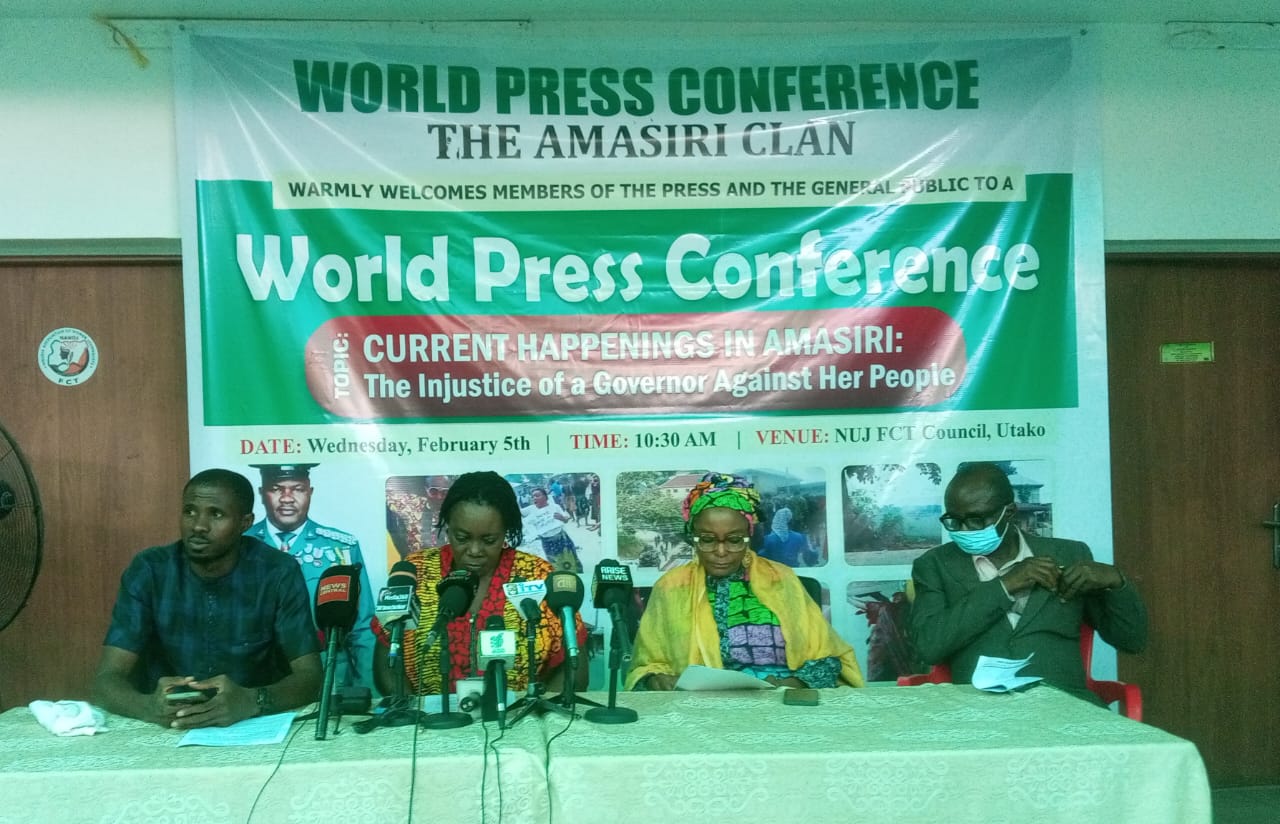
A fierce war of words has erupted over the troubled community of Amasiri, as Princess Joy Omagha Idam has issued a strongly worded rebuttal to Hon. Chinedu Ogah, challenging his dismissal of genocide allegations linked to the military intervention in the area.
In a press statement released on Tuesday, the publisher of Weekenders Magazine accused the federal lawmaker of downplaying what she described as the “lived reality of an entire community” ravaged by violence, displacement and prolonged restrictions. 
Addressing Hon. Ogah directly, Princess Idam wrote:
“Your recent dismissal of the genocide allegations concerning the military invasion of Amasiri necessitates a clear and factual response. The people of Amasiri have endured grave hardship arising from the handling of the communal crisis under the administration of Francis Ogbonna Nwifuru.”
“To describe the suffering, displacement, loss of lives, destruction of homes, prolonged curfews, and closure of schools and hospitals as ‘baseless’ or ‘spurious’ is to diminish the lived reality of an entire community.”
The crisis in Amasiri has remained a matter of intense debate, with conflicting narratives emerging about the scale of casualties and the nature of the state’s response. Princess Idam insisted the genocide allegation was not politically motivated.
“The allegation of genocide was not made for political theatrics. It arises from observable patterns of actions and inactions that have disproportionately impacted Amasiri.
“When security interventions lead to civilian casualties, mass displacement, economic strangulation, and prolonged trauma without transparent accountability, citizens have every right to question governance decisions”, she stated.
She posed a series of pointed questions regarding investigative panels allegedly set up to probe the crisis:
“Were the findings made public? Why the rush to delineate Amasiri? What became of the numerous petitions filed by Amasiri over the years that reportedly received no response? Were victims consulted? Were perpetrators held accountable irrespective of affiliation? Why did the measures imposed appear punitive to one side of the conflict?”
Challenging assertions that calm has returned, she asked:
“You state that peace has ‘largely returned.’ Which peace? When over a million people have reportedly fled their homes and residents cannot move freely, can that truly be described as peace?”
According to her, genuine peace must extend beyond the absence of gunfire.
“True peace is not merely the absence of open clashes; it is the presence of justice, restitution, and restored trust in leadership.”
While acknowledging government development initiatives, she maintained they do not negate community grievances.
“Development cannot substitute for justice.
“Scholarship programmes, infrastructure projects and empowerment initiatives may be commendable, but they do not invalidate the grievances of a community that believes it has been unfairly treated — particularly one said to be among the highest revenue contributors to the state,” she said.
Princess Idam called for independent scrutiny of the crisis, urging authorities to open official records and maps for external review.
“Rather than dismiss concerned voices, a more constructive path would be to invite independent observers, civil society organisations, human rights bodies, and the National Boundary Commission to review official maps and documentation relating to the disputed areas”
She outlined what she described as the minimum owed to the people of Amasiri, and acknowledged the relaxation of the curfew, but argued that restrictions remain deeply disruptive.
“An independent investigation. Public accountability. Fair and transparent conflict resolution. Restoration of destroyed properties reportedly worth billions. Guarantees against disproportionate use of force. Immediate demarcation of disputed areas.
“Partial relief is not enough. Schools and hospitals remain closed. Security forces, if deployed, should secure educational institutions and healthcare facilities to enable children to return to school and medical services to resume”, she noted.
Princess Idam further cited reports of more than 30 deaths and widespread displacement, alleging that Amasiri remains “largely deserted”, even as some economic activities continue.
She also drew comparisons with other communal conflicts in the state, questioning whether identical sanctions were imposed elsewhere. Rejecting claims that her intervention is politically driven.
“In prior land disputes involving other communities, were schools shut down? Were hospitals closed? Were government appointees removed? Were soldiers stationed for extended periods with similar sanctions imposed? These are legitimate questions deserving answers.
“This is not about political rivalry. It is about justice, dignity, fairness, and the protection of citizens — including the people of Amasiri. The state owes Amasiri not dismissal, but accountability and reconciliation”, she stated.
The statement is likely to intensify scrutiny of the government’s handling of the Amasiri crisis, as calls grow for greater transparency and independent review.