Connect with us

News

Alleged N4b fraud: Obiano laundered Anambra Security votes – EFCC

Published

on

ADVERTISEMENT
Zoom Ad
ADVERTISEMENT
Zoom Ad

By Francesca Hangeior

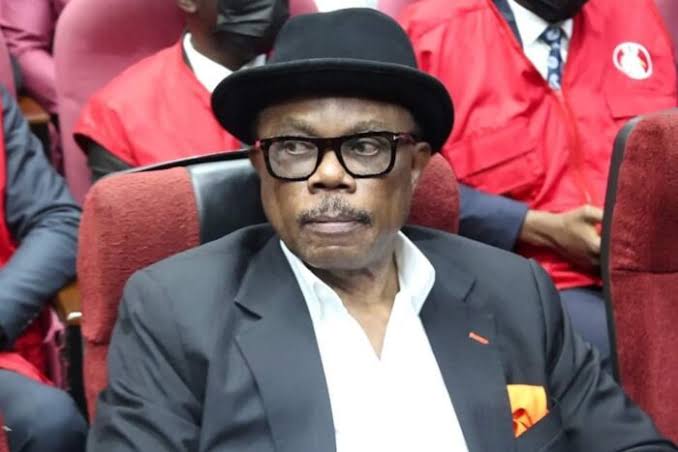
The Economic and Financial Crimes Commission (EFCC) has given details of how immediate past Anambra Governor Willie Obiano allegedly laundered about N4bn from the security votes account, using state officials.

The EFCC said it was about to conclude its full investigation of Obiano’s tenure from 2014 to 2022 outside his disbursement of the state’s security votes.

The anti-graft agency said these in its counter affidavit to a motion by Obiano, questioning the competence of a money laundering charge filed against him by the EFCC before the Federal High Court in Abuja.

Advertisement

Obiano is also challenging the jurisdiction of the court to try the charge on which he was arraigned on January 24.
In the charge marked: FHC/ABJ/CR/15/2024, the prosecution alleged that while in office between March 2014 and March 2022 Obiano indirectly transferred funds from Anambra State Government’s security vote account, which he deployed for purposes not related to security problems in the state.

In the counter affidavit, the EFCC said investigation relating to the utilization of the security votes account of the Government of Anambra State under Obiano revealed that he allegedly used some state government officials, including his Principal Private Secretary, Willie Nwokoye, one Otubetu Ugochukwu Chinedu and “one Uzuegbuna Okoagbue, whom he appointed as his Chief Protocol Officer/Deputy Chief of Staff upon becoming Governor and other individuals to launder funds for the defendant.
Read Also: Reps query NNPCL boss, Kyari over $278.185m unremitted revenue

“Instances abound, as borne by counts one to three of the charge where, at the instruction of the defendant, funds from the Anambra State Government security vote were transferred to non-financial institutions and even individual accounts, the monies converted into United State dollars and collected in cash and handed over to the defendant by the said Chief Protocol Officer/Deputy Chief of Staff, Uzuegbuna Okoagbue, which the defendant claimed was for his strategic security engagements, without evidence to that effect.

“Investigation revealed that though the Anambra State Government maintained dollar domiciliary account with Fidelity Bank, the defendant as Chief Accounting Officer/Chief Security Officer, preferred to use accounts of individuals, companies/enterprises with no business transactions with the state goverment for the sole purpose of laundering the funds.

Advertisement

“Instances abounds, as borne by counts four to nine of the charge where, at the instruction of the defendant, funds from the security vote account of Anambra State were transferred to accounts of some companies and enterprises, who had no business transactions with Anambra State Government, the funds converted to United State dollars in cash and handed over the defendant, who stated in his extra-judicial statement that the funds were for his strategic security engagement, which investigation proved otherwise.”

The EFCC also faulted Obiano’s contention that he could not be held accountable for the infractions of some Anambra officials.

The commission argued that such contention was strange and self-indicting because as Anambra Governor, he “ought to have taken action against the people who withdrew funds belonging to Anambra State and handed the funds to him, if their action was without his authority and illegal.”

At the mention of the case on Wednesday, Obiano’s lawyer, Onyechi Ikpeazu (SAN) prayed the court to grant the reliefs sought by his client.

Advertisement

Lawyer to the EFCC, Sylvanus Tahir (SAN) prayed the court to dismiss the motion, arguing that it is unmeritorious.

Tahir argued that, as against Obiano’s contention, security votes could be investigated when misappropriated.

He argued that the court has the jurisdiction to try the case, adding: “Security votes are like any other funds when misappropriated it can be accounted for.”

Justice Inyang Ekwo has however, adjourned till April 18 for ruling.
Advertisement
Continue Reading
Advertisement

News

Just in: Nigeria’s inflation rises in three consecutive months

Published

on

ADVERTISEMENT
Zoom Ad
ADVERTISEMENT
Zoom Ad

By Ojomah Austin.


Nigeria’s inflation rose for the third consecutive month to 15.93 percent in May 2026 from 15.69 percent recorded in April.

The National Bureau of Statistics disclosed this in its Consumer Price Index and inflation data released on Monday.

Advertisement

This means that in May, the country’s inflation rose on a month-on-month basis by 1.75 percent.

Also, the report showed that food inflation also skyrocketed to 16.96 percent in May, up from 16.06 percent recorded the previous month.

“In May 2026, the headline inflation rate on a month-on-month basis was 1.75 percent, which was 0.39 percent lower than the rate recorded in April 2026 (2.13 percent).

On a year-on-year basis, the headline inflation rate rose to 15.93 percent, up from 15.69 percent in April 2026 and down from 26.06 percent in the same month of the preceding year May 2025.

Advertisement

The Food inflation rate in May 2026 on a month-on-month basis was 2.98 percent, down by 0.65 percentage points from April 2026 (3.63 percent). On a year-on-year basis, it was 16.96 percent and stood at 24.55 percent in the same month of the preceding year, May 2025”.

Recall that the headline inflation rate dropped in March and April, respectively.

Recall the Central Bank of Nigeria retained the country’s interest rate 26.50 percent in its 305th Monetary Policy meeting.

Advertisement
Continue Reading

News

Finally, US-Iran deal announced with end to military warefare

Published

on

ADVERTISEMENT
Zoom Ad
ADVERTISEMENT
Zoom Ad


The United States and Iran agreed on a peace deal and an “immediate and permanent” end to military operations on all fronts, including Lebanon, mediator Pakistan said, in the strongest sign yet that more than three months of war in the Middle East is drawing to a close.

Pakistani Prime Minister Shehbaz Sharif posted on X that a peace deal “has been REACHED” and an official signing ceremony will be held on June 19 in Switzerland.

“The Deal with the Islamic Republic of Iran is now complete,” US President Donald Trump swiftly confirmed with his own statement on Sunday, as he marked his 80th birthday.

Advertisement

“I hereby fully authorise the toll-free opening of the Strait of Hormuz and, simultaneously herewith, authorise the immediate removal of the United States Naval blockade. Ships of the World, start your engines. Let the oil flow!”

There was no immediate confirmation from Iran, which just hours earlier had vowed to retaliate against a strike by Israel against Iranian ally Hezbollah in the suburbs of Beirut, which threatened to push back an agreement.

It had declined on Sunday to offer a clear timeline for reaching a peace deal.

But later in the day, Pakistan’s Sharif made the announcement that a deal had been struck, thanking the US and Iran “for finding a diplomatic solution to the conflict.”

Advertisement

Both sides have declared the immediate and permanent termination of military operations on all fronts, including in Lebanon,” Sharif wrote, adding thanks to leaders of Qatar, Saudi Arabia, and Turkey for their support in the mediation effort.

It was a rollercoaster Sunday, with Trump in the morning angrily blaming Israel for delaying its signing with the airstrike on Beirut, which he said had delayed the agreement.

The last time Israel hit the Beirut suburbs, it sparked one of the strongest jolts yet to a ceasefire that has largely held since April, with Iran firing off a retaliatory missile barrage and Israel responding with strikes.

Tehran has long demanded that any agreement to halt the war must include the parallel conflict in Lebanon, where Israel has been pursuing a campaign against Iran-backed Hezbollah.

Advertisement

The war began in late February, with US-Israeli strikes on Iran, which retaliated with attacks on Israel and US allies in the region, and by virtually blocking ship traffic in the Strait of Hormuz, a vital route for global oil and natural gas supplies. The US retaliated to that by blockading ship traffic to Iranian ports.

Continue Reading

News

Price of petrol expected to drop to N900 per litre as US-Iran opens way for Strait of Hormuz

Published

on

ADVERTISEMENT
Zoom Ad
ADVERTISEMENT
Zoom Ad


Prices of oil fell sharply in Asian trading on Monday after the United States and Iran announced an agreement that would allow the reopening of the Strait of Hormuz, ending more than 100 days of disruption to one of the world’s most important energy shipping routes.

At the time of reporting, Brent crude was down by nearly 4 percent at $83.67 per barrel, while U.S. benchmark West Texas Intermediate (WTI) declined to $80.76 per barrel.

The latest drop extends a downward trend that has emerged in recent weeks amid growing speculation that a diplomatic breakthrough was imminent despite continued military escalations.

Advertisement

As a result, the petrol price is seen falling below N1000 per litre after many weeks of inflated prices at filling stations across Nigeria.

Analysts say the price will likely settle between N850 and N915 when the Strait finally re-opens and ships begin ferrying fuel supplies, easing pressure on the domestic market while helping to stabilise costs.

The breakthrough was announced on Sunday night when President Trump stated on social media that negotiations with Iran had been concluded.

He said oil would once again move through the Strait of Hormuz once the agreement is formally signed on Friday.

Advertisement

Iran also signaled its approval of the arrangement.

Deputy Foreign Minister Kazem Gharibabadi confirmed that both sides had finalised the text of a memorandum of understanding, adding that a formal signing ceremony is scheduled to take place in Switzerland later this week.

The agreement was further validated by Pakistan and Qatar, which served as the principal mediators throughout the negotiations.

Although the full terms have not been officially released, Iran’s semi-official Mehr News Agency, citing a source close to the country’s negotiating team, reported that the deal includes an end to the conflict in Lebanon, the suspension of sanctions on Iranian oil exports, the release of $24 billion in frozen Iranian assets, and assurances that Iran will not pursue nuclear weapons.

Advertisement

According to the report, sanctions relief and the release of frozen funds will occur during a ceasefire period. Mehr also indicated that Iran could gain access to $12 billion before broader negotiations commence.

For energy markets, one of the most significant provisions is the resumption of Iranian crude exports during the proposed 60-day ceasefire while talks on nuclear issues continue.

The diplomatic progress nearly unravelled shortly before the announcement after Israel launched an air strike in southern Beirut. Trump criticised the operation, saying it “should not have happened,” and subsequently urged all parties to de-escalate.

He also called for an immediate halt to Israeli attacks across Lebanon.

Advertisement

Despite optimism surrounding the agreement, market participants remain cautious. Traders are expected to closely monitor the removal of mines from the Strait of Hormuz, the formal signing of the accord, and the restoration of normal shipping activity before fully embracing expectations of supply normalisation.

After more than three months of conflict, investors are increasingly pricing in the prospect of peace and a gradual return to stability in global oil markets. However, questions remain over the durability of the agreement and how quickly normal trade flows can be restored.

Continue Reading

Trending

Copyright © 2024 Naija Blitz News