
News
Send Your Kid To School or get jailed – Gombe govt cautions parents


- /home/naijuinz/public_html/wp-content/plugins/mvp-social-buttons/mvp-social-buttons.php on line 27
https://naijablitznews.com/wp-content/uploads/2025/09/Screenshot_20250922-184935.jpg&description=Send Your Kid To School or get jailed – Gombe govt cautions parents', 'pinterestShare', 'width=750,height=350'); return false;" title="Pin This Post">
- Share
- Tweet /home/naijuinz/public_html/wp-content/plugins/mvp-social-buttons/mvp-social-buttons.php on line 72
https://naijablitznews.com/wp-content/uploads/2025/09/Screenshot_20250922-184935.jpg&description=Send Your Kid To School or get jailed – Gombe govt cautions parents', 'pinterestShare', 'width=750,height=350'); return false;" title="Pin This Post">


By Kayode Sanni-Arewa
The Gombe State government says it would send parents and guardians to jail for not sending their children to schools.
Babaji Babadidi, Chairman, Gombe State Universal Basic Education Board, SUBEB, said this on Monday at the inauguration of the 2025/2026 School Enrolment Campaign at Amada in Akko Local Government Area of the state.
He said that defaulting parents could face a two-month jail term under Section 19(2) of the SUBEB Amendment Law 2021.
Babadidi said the measure was necessary to ensure that every child has access to quality basic education.
“Every parent should ensure that his child or ward attends and completes primary, junior and senior secondary education.
“Any parent, who contravene Section 19(2) of the law commits an offence and is liable, upon conviction, to pay a fine or serve a one-month prison sentence.
“Subsequent convictions also attract a substantial fine or imprisonment for a term of two months,” he said.
Babadidi said prior to this enrolment campaign, the state government adopted a carrot approach by providing free education.
“However, if we fail to meet our target of enrolling 400,000 students into primary schools this session, we will revert to the stick approach by enforcing the law.”
The Commissioner for Education, Prof. Aishatu Maigari, said the state has over 700,000 out-of-school children.
According to Maigari, the North-East region accounts for 15 per cent of Nigeria’s 18.2 million out-of-school children.
“We cannot sit and fold our arms while our children remain out-of-school. We will ensure every child is enrolled. Every child will receive quality education, and also learn a trade, which does not necessarily mean working for the government.
“An educated person can become an employer of labour through skills and entrepreneurship acquired in school,” she said.


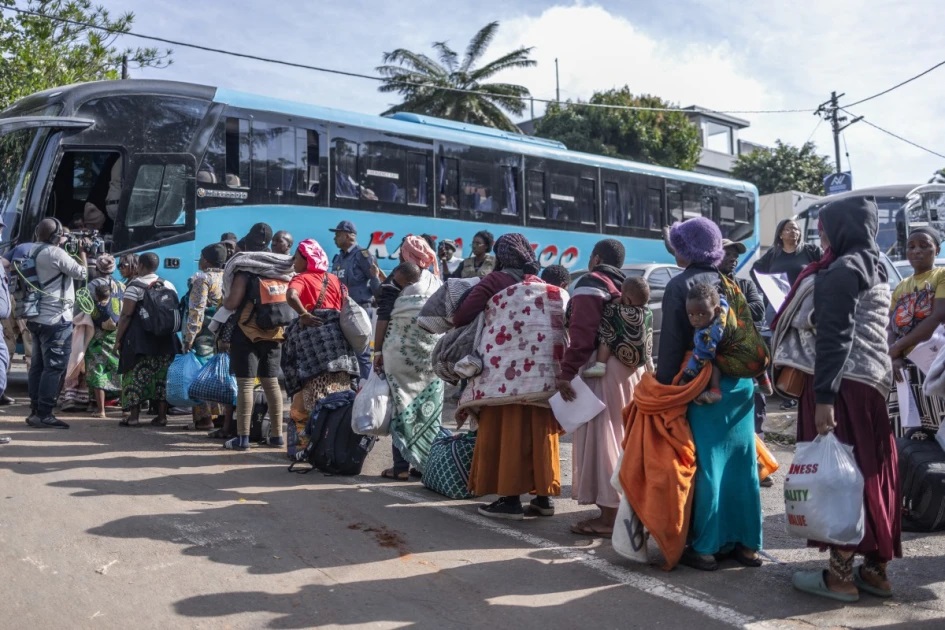
South Africa has repatriated 2,745 foreigners in the week after President Cyril Ramaphosa vowed tougher action against illegal immigration, the country’s home affairs minister said on Sunday.
One of Africa’s largest economies, South Africa has long attracted migrant workers from across the continent, both legally and illegally.
But saddled with an unemployment rate above 30 percent, it has experienced recurring spurts of anti-immigrant unrest, including fresh violence in recent weeks.
Mobs of South Africans carrying sticks, whips and shields have marched through parts of the country ordering foreigners with no residency papers to leave by June 30.
Growing security fears after businesses were looted and foreigners targeted have prompted citizens of Nigeria, Malawi, Ghana, Zimbabwe and Mozambique to accept voluntary repatriation organised by their governments.
“As of last night, the number we can report is 2,745 repatriations that have come in this period since the president spoke,” Home Affairs Minister Leon Schreiber told reporters.
“It is a moving target,” he said.
The government said most of those repatriated were in the country illegally.
They include Malawian nationals, about 7,000 of whom have been sheltering in an open field in the eastern port city of Durban, according to an inter-ministerial migration committee set up after the president’s address.
Eight buses commissioned by the Malawian government began moving its citizens on Sunday, with South Africa providing 10 additional buses to speed up deportations, the committee said.
Some 560 people, including about 200 children, took the journey on Sunday, Malawi Consul General Max Biwi said.
Among those boarding the first buses, some carried babies on their backs and small bags of belongings.
“I’m relieved we are finally leaving. It’s better than living in fear here,” said Fortunate Chilenje from Blantyre, Malawi’s commercial capital.
The 25-year-old had lived in South Africa for three years, she told AFP, adding that threats to leave had followed her even at the camp, one of the largest to emerge since the unrest began.
The government said on Sunday it did not operate refugee camps and had no intention of establishing them, even on a temporary basis.
Another passenger, Laina Nala from Mangochi in southern Malawi, said she simply wanted to be dropped as close to her home as possible, rather than continuing on to Blantyre.
“Blantyre is too far and expensive from there,” she said.
For Hassan Hasha, 27, a debt linked to his journey to South Africa still hung over his head.
He said he had barely stayed in South Africa for weeks before the anti-foreigner sentiment flared, but added: “I have resigned myself to going home”.
Last week, Ramaphosa acknowledged public concerns over illegal immigration but warned that the authorities would not tolerate anyone taking the law into their own hands.
Tensions escalated after two Mozambicans were killed following a May 29 march against illegal migrants in the Western Cape town of Mossel Bay. Mozambican authorities put the toll at five.
There are more than three million foreigners living in South Africa, or 5.1 percent of the population, according to the statistics agency.
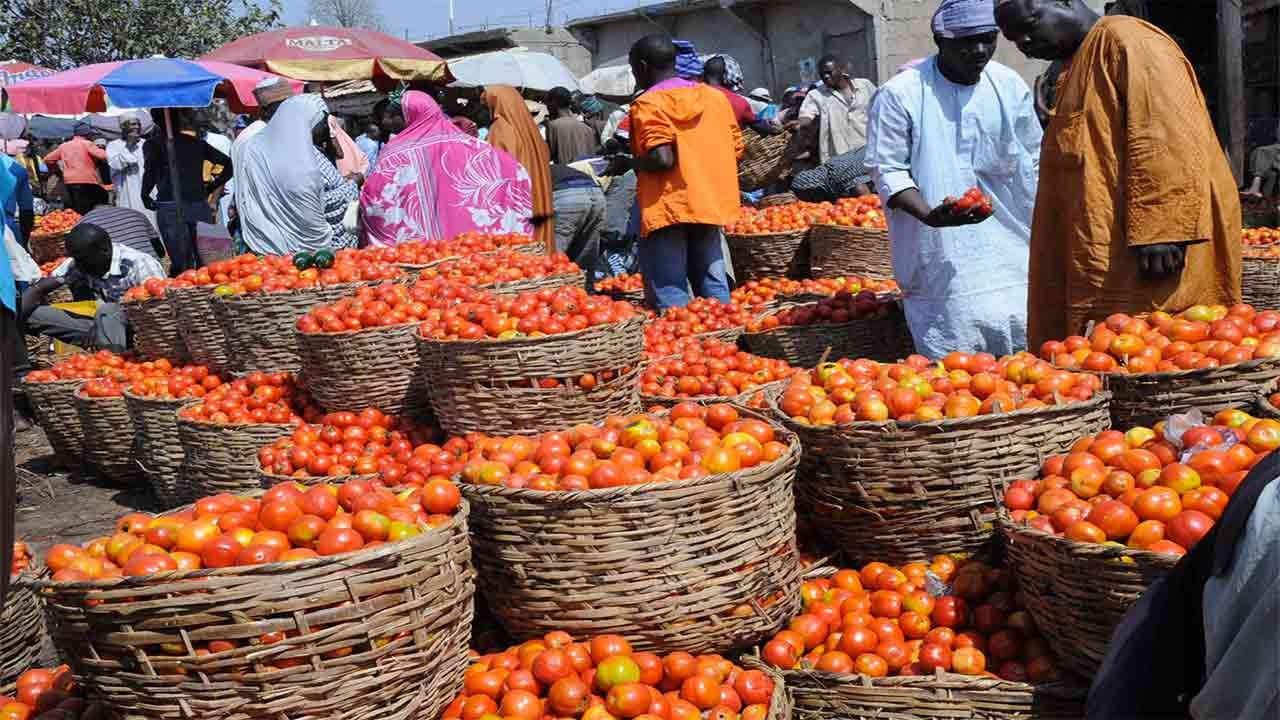
Many residents of the Federal Capital Territory (FCT) have expressed concern over the continued increase in the price of tomatoes.
The residents told the News Agency of Nigeria (NAN) on Sunday in Abuja that the situation was making things difficult for both traders and residents.
A market survey conducted by NAN in some markets in the FCT showed a sharp rise in tomato prices in recent weeks.
A vegetable seller at the Suleija market, Malam Isah Ado, said they were facing challenges in their business due to the surge in tomato prices.
Ado said a big basket of tomatoes, which sold for between N85,000 and N90,000 a few weeks ago, currently sells for between N150,000 and N170,000.
He attributed the rise in price to seasonal scarcity, post-harvest loses and high cost of transportation from farms to markets.
A tomato seller at Garki New Market, Ms Philomena Bassey, lamented that the cost of transporting produce from the producing states to the markets had continued to increase.
“Customers think we are ripping them off and making a lot of profit from our sales, but that is not the case.
” We buy these tomatoes sometimes cheaply from the farms where they are produced, but by the time they get to Abuja, the price will have gone up.
“So, we have to factor in all of these factors, which makes the cost of the product increase,” she said.
A small-scale trader popularly known as Mummy Juli, who resides in Kubwa village, said tomatoes were very scarce in the market these days.
” The scarcity has made tomatoes very expensive to buy, thus forcing us to also adjust our prices.
“I used to share a basket of tomatoes with three other traders, but now I have to share with five colleagues because of the increased price in the market,” she said.
She told NAN that a small bucket of tomatoes she usually sells for between N4,000 and N4,500 now sells for between N8,000 and N10,000.
“Due to the hike in price, I can no longer sell a portion of tomatoes for less than N1,000 as against N100.
” This has led to reduced sales in my business because the majority of my customers are very low-income earners who buy in small quantities.
“As the situation is right now, there is nothing I can do; I have to keep managing and hope for the best,” she said.
Mrs Angella Ikenna, a mother of two, shopping at the Dutse Market, said the rising cost of tomatoes was taking a toll on her family’s feeding expenses.
“I used to buy the tomatoes I need for a week, but due to their price, I now buy only what I need for a day or two,” she said.
Similarly, Mr Moses Sunday, a nurse, lamented that the rising cost of tomatoes was compounding the country’s economic situation.
Mrs Badia Muhammad, a resident of Dei-Dei, said the rise in tomato prices was affecting many households.
“We use tomatoes almost in every meal, but due to the sharp rise, we can no longer afford to buy them as we used to and have to opt for cheaper alternatives.
“We appeal to the government to address the issues affecting the supply of tomatoes and implement measures that will enhance production.

The family of late retired Major General Rabe Abubakar has disclosed that the former military officer died from a snakebite while being held captive by bandits, contradicting earlier reports that linked his death to complications arising from diabetes and hypertension.
Family members made the revelation during an interview with Deutsche Welle (DW), where they provided fresh details about the circumstances surrounding the retired general’s death and the continued captivity of his wife.
According to the family, the narrative that General Abubakar died as a result of pre-existing health conditions is inaccurate. They maintained that the retired army officer had no known history of diabetes or hypertension and insisted that a snakebite was responsible for his death while in the custody of his abductors.
The disclosure has raised new questions about the circumstances of the retired officer’s final days after he was kidnapped alongside his wife by armed bandits in Katsina State.
General Abubakar and his wife were abducted on May 30, 2026, along the Marabar Musawa–Kafinsoli Road in Matazu Local Government Area while travelling to their hometown.
Following news of his death, the Katsina State Government had announced that the retired military officer died from complications related to diabetes and high blood pressure while in captivity. However, his family has now publicly challenged that account, insisting that the cause of death was unrelated to any underlying medical condition.
The family further clarified that General Abubakar’s wife, who was kidnapped alongside him, has not regained her freedom and remains in the hands of the bandits.
They dismissed reports suggesting she had been released and expressed deep concern over her prolonged captivity.
Family members appealed to security agencies and relevant authorities to intensify efforts aimed at securing her rescue, stressing that the family continues to live in anxiety over her safety.
The death of the retired general has sparked widespread concern across the country, highlighting the persistent threat posed by banditry and kidnapping activities in several parts of northern Nigeria.
The tragic incident also reignited national conversations about insecurity and the safety of travellers on major roads across the region.
Reacting earlier to the retired officer’s death, President Bola Ahmed Tinubu expressed shock and sadness over the development, describing it as a painful loss to the nation.
In a statement issued through his Special Adviser on Information and Strategy, Bayo Onanuga, the President noted that General Abubakar had served the country with distinction during his military career before retiring from active service.
Tinubu also sympathised with the bereaved family, particularly the late general’s wife, who remains in captivity, and extended his condolences to the Katsina State Government and the Nigerian Armed Forces.
The President reaffirmed his administration’s commitment to combating terrorism, banditry, and kidnapping, while insisting that the government would not bow to pressure or demands from criminal groups operating across the country.
As security agencies continue efforts to rescue the general’s wife and other victims held by armed groups, the latest revelations from the family have added a new dimension to the circumstances surrounding the death of the retired military officer.

South Africa says 2,745 foreigners sent home in a week

FCT residents decry rising cost of tomatoes

Debutants Curaçao Score First-Ever World Cup Goal In 8-goal Thriller Against Germany




-

 News15 hours ago
31.5kg cocaine trafficking: 11 Indian sailors, ship convicted, fined $6m
-
 Crime14 hours ago
NDLEA nabs businessman with 6.10kg cocaine starched in shirts, towels from Brazil+Photos
-

 Sports15 hours ago
PSG’s Barcola hands over transfer request as Aresenal, Liverpool show interest
-

 Foreign15 hours ago
Hormuz to reopen on Sunday after US-Iran sign deal-Trump
-

 Sports9 hours ago
Real Madrid complete a Shocking Signing of Chelsea Superstar
-

 Politics14 hours ago
New Delta Vision not a political project, but generational movement, Delta State’s ADC candidate Unuafe clarifies
-
 News13 hours ago
ECOWAS Parliament Convenes High-Level Dakar Summit to Drive Renewable Energy Push in Rural West Africa
-

 News13 hours ago
Deputy Speaker Pushes for Home-Grown Defence Industry, Stronger Financial Crackdown on Insecurity