
News
Send Your Kid To School or get jailed – Gombe govt cautions parents


- /home/naijuinz/public_html/wp-content/plugins/mvp-social-buttons/mvp-social-buttons.php on line 27
https://naijablitznews.com/wp-content/uploads/2025/09/Screenshot_20250922-184935.jpg&description=Send Your Kid To School or get jailed – Gombe govt cautions parents', 'pinterestShare', 'width=750,height=350'); return false;" title="Pin This Post">
- Share
- Tweet /home/naijuinz/public_html/wp-content/plugins/mvp-social-buttons/mvp-social-buttons.php on line 72
https://naijablitznews.com/wp-content/uploads/2025/09/Screenshot_20250922-184935.jpg&description=Send Your Kid To School or get jailed – Gombe govt cautions parents', 'pinterestShare', 'width=750,height=350'); return false;" title="Pin This Post">


By Kayode Sanni-Arewa
The Gombe State government says it would send parents and guardians to jail for not sending their children to schools.
Babaji Babadidi, Chairman, Gombe State Universal Basic Education Board, SUBEB, said this on Monday at the inauguration of the 2025/2026 School Enrolment Campaign at Amada in Akko Local Government Area of the state.
He said that defaulting parents could face a two-month jail term under Section 19(2) of the SUBEB Amendment Law 2021.
Babadidi said the measure was necessary to ensure that every child has access to quality basic education.
“Every parent should ensure that his child or ward attends and completes primary, junior and senior secondary education.
“Any parent, who contravene Section 19(2) of the law commits an offence and is liable, upon conviction, to pay a fine or serve a one-month prison sentence.
“Subsequent convictions also attract a substantial fine or imprisonment for a term of two months,” he said.
Babadidi said prior to this enrolment campaign, the state government adopted a carrot approach by providing free education.
“However, if we fail to meet our target of enrolling 400,000 students into primary schools this session, we will revert to the stick approach by enforcing the law.”
The Commissioner for Education, Prof. Aishatu Maigari, said the state has over 700,000 out-of-school children.
According to Maigari, the North-East region accounts for 15 per cent of Nigeria’s 18.2 million out-of-school children.
“We cannot sit and fold our arms while our children remain out-of-school. We will ensure every child is enrolled. Every child will receive quality education, and also learn a trade, which does not necessarily mean working for the government.
“An educated person can become an employer of labour through skills and entrepreneurship acquired in school,” she said.


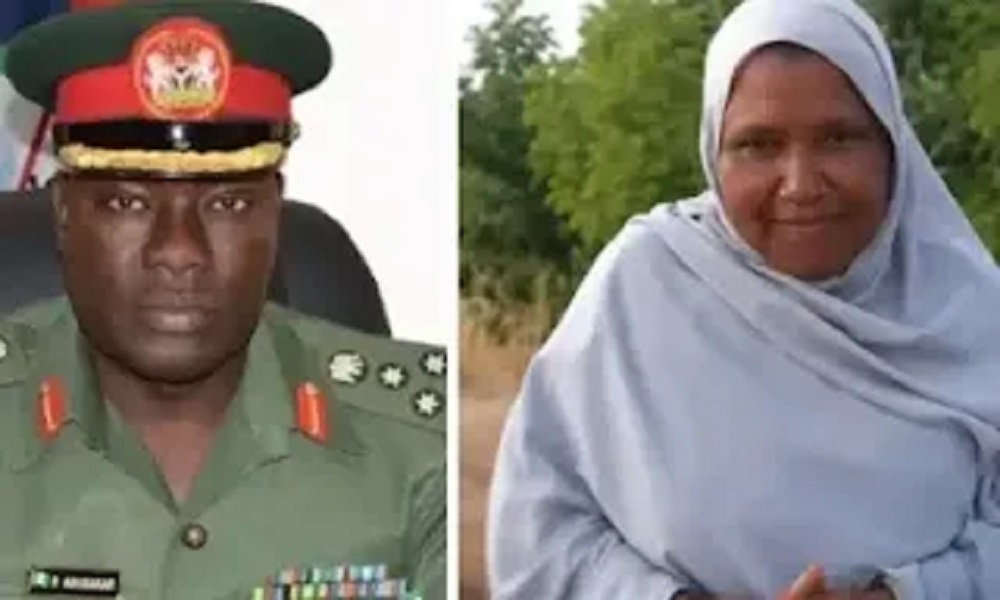
The family of late retired Major General Rabe Abubakar has disclosed that the former military officer died from a snakebite while being held captive by bandits, contradicting earlier reports that linked his death to complications arising from diabetes and hypertension.
Family members made the revelation during an interview with Deutsche Welle (DW), where they provided fresh details about the circumstances surrounding the retired general’s death and the continued captivity of his wife.
According to the family, the narrative that General Abubakar died as a result of pre-existing health conditions is inaccurate. They maintained that the retired army officer had no known history of diabetes or hypertension and insisted that a snakebite was responsible for his death while in the custody of his abductors.
The disclosure has raised new questions about the circumstances of the retired officer’s final days after he was kidnapped alongside his wife by armed bandits in Katsina State.
General Abubakar and his wife were abducted on May 30, 2026, along the Marabar Musawa–Kafinsoli Road in Matazu Local Government Area while travelling to their hometown.
Following news of his death, the Katsina State Government had announced that the retired military officer died from complications related to diabetes and high blood pressure while in captivity. However, his family has now publicly challenged that account, insisting that the cause of death was unrelated to any underlying medical condition.
The family further clarified that General Abubakar’s wife, who was kidnapped alongside him, has not regained her freedom and remains in the hands of the bandits.
They dismissed reports suggesting she had been released and expressed deep concern over her prolonged captivity.
Family members appealed to security agencies and relevant authorities to intensify efforts aimed at securing her rescue, stressing that the family continues to live in anxiety over her safety.
The death of the retired general has sparked widespread concern across the country, highlighting the persistent threat posed by banditry and kidnapping activities in several parts of northern Nigeria.
The tragic incident also reignited national conversations about insecurity and the safety of travellers on major roads across the region.
Reacting earlier to the retired officer’s death, President Bola Ahmed Tinubu expressed shock and sadness over the development, describing it as a painful loss to the nation.
In a statement issued through his Special Adviser on Information and Strategy, Bayo Onanuga, the President noted that General Abubakar had served the country with distinction during his military career before retiring from active service.
Tinubu also sympathised with the bereaved family, particularly the late general’s wife, who remains in captivity, and extended his condolences to the Katsina State Government and the Nigerian Armed Forces.
The President reaffirmed his administration’s commitment to combating terrorism, banditry, and kidnapping, while insisting that the government would not bow to pressure or demands from criminal groups operating across the country.
As security agencies continue efforts to rescue the general’s wife and other victims held by armed groups, the latest revelations from the family have added a new dimension to the circumstances surrounding the death of the retired military officer.
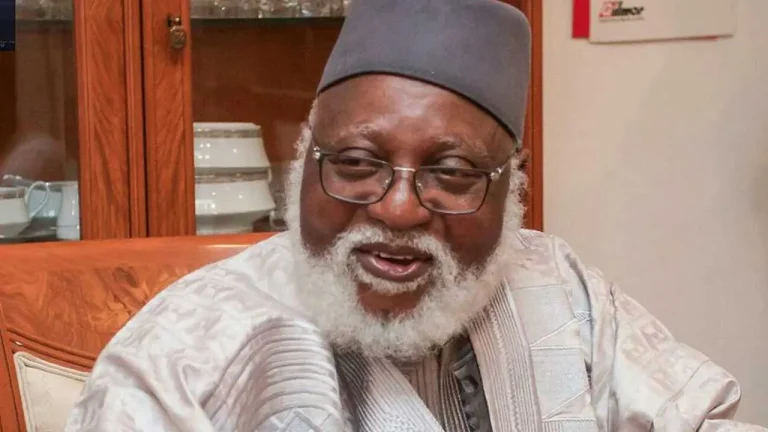
Former Head of State, General Abdulsalami Abubakar (retd.), has revealed that he made efforts to secure the release of Chief Moshood Kashimawo Olawale (MKO) Abiola long before he became Nigeria’s leader in 1998, despite the risk of being perceived as disloyal to the late General Sani Abacha.
Abdulsalami also disclosed that the whereabouts of the presumed winner of the June 12, 1993 presidential election were so closely guarded during the Abacha years that even senior officials of the regime, including then Chief of General Staff, Lt.-Gen. Oladipo Diya, did not know where he was being held.
The revelations are contained in Call of Duty: An Autobiography of Gen. Abdulsalami Alhaji Abubakar, one of the three books unveiled in Abuja on Saturday during celebrations marking the former Head of State’s 84th birthday.
In the book, Abdulsalami said he quietly engaged some leaders of the National Democratic Coalition (NADECO) after Abiola’s arrest in 1994 in an attempt to find a way out of the political crisis triggered by the annulment of the June 12 presidential election.
“At this point, I need to recount that after Abiola was arrested in 1994, I had, against the grain, made efforts to get him released at the risk of being deemed disloyal by Abacha,” he wrote.
The former military ruler said his efforts were largely unknown to the public because of the sensitive political environment at the time and the perception that any move in support of Abiola could be interpreted as opposition to the Abacha administration.
According to him, one of the most striking aspects of Abiola’s detention was the secrecy surrounding his location, a situation that underscored the tightly controlled nature of decision-making within the military government.
“Before I became Head of State, I didn’t know where Abiola was being detained. Even General Diya, who was second-in-command to Abacha, had no idea where Abiola was being held.
“They kept moving him from one detention centre to another”, Abubakar revealed.
The disclosure appears to reinforce long-held claims that despite his closeness to Abacha and his position within the military hierarchy, Abdulsalami remained outside the inner circle that controlled key political and security decisions during the period.
According to him, Abiola’s detention conditions were so restrictive that members of his family were denied access to him throughout the period, while only his personal physician, Dr. Ore Falomo, was allowed limited contact.
“His family never saw him. It was only his personal physician, Dr. Ore Falomo, that had access to him,” he wrote.
Abubakar said one of his earliest decisions after assuming office following Abacha’s death in June 1998 was to ensure that Abiola’s family was granted access to him.
The move, he revealed, was opposed by some members of his administration who remained uncomfortable with changing the policy surrounding Abiola’s detention.
“When I became Head of State, I insisted that his family must be granted access to him, despite strong opposition from some members of my government,” he wrote.
The former Head of State said many Nigerians failed to appreciate the extent of the internal power struggles he faced after assuming office, noting that becoming leader of the country did not automatically translate into total control of the military and government machinery.
“What many people outside government did not know was that even though I was now in power, there were still different interests in the military and in government.
“I was new in office and needed to consolidate my hold on the system. I needed to be careful and calculated with my actions”, he explained.
Abubakar further stated that despite his access to Abacha during his years in office, he was never part of the core power structure that controlled critical decisions.
“Despite my access to Abacha when he was in power, I was still effectively an outsider in his government.
“Becoming Head of State did not mean I could dissolve the power centres or displace entrenched interests overnight”, he wrote.
The former military ruler said arrangements were subsequently made for members of Abiola’s family to visit him in detention after he assumed office.
According to him, the family travelled to Abuja at his invitation, but internal disagreements prevented all members from seeing the detained politician together.
“One group saw him on the first day, July 6, 1998. The other group was to see him the next day, July 7,” he wrote.
However, that second meeting never took place.
“That was not to be,” Abubakar stated, in an apparent reference to Abiola’s death on July 7, 1998.
Abiola died in custody less than a month after Abacha’s death and shortly after Abdulsalami assumed office, bringing an abrupt end to hopes that the political crisis surrounding the annulled June 12 election could be resolved through his release.
The former Head of State’s account provides a rare insider perspective into the final weeks of Abiola’s detention and the complex web of interests, secrecy and power struggles that characterised one of the most contentious periods in Nigeria’s political history.
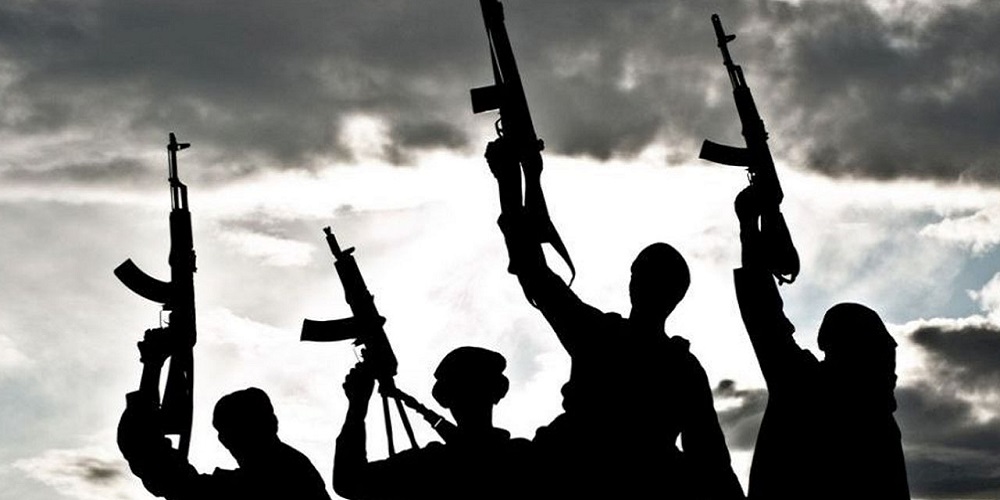
Following the abduction of another traditional ruler on Saturday, June 13, 2026, over 30 Yoruba monarchs have reportedly fled their palaces in fear for their lives. This latest incident brings the total number of Yoruba obas either abducted or killed by bandits to 11.
Oba Adeniyi Adelana – Baale of Ode Oriya Village, Owo Local Government Area, Ondo State.
Newsmen learnt he was abducted from his residence at about 8:30 pm on Saturday, June 13, 2026, by armed men. His wife was shot in the right hand during the attack .
The Full List of Abducted and Killed Yoruba Monarchs 👇
1. Oba Kehinde Jacob Falodun – Alagamo of Agamo, Akure North LGA, Ondo State
2. Oba Segun Aremu / Oba Olusegun Aremu-Cole – Olukoro of Koro, Ekiti LGA, Kwara State
3. Oba David Babatunde Ogunsakin – Elesun of Esun-Ekiti, Ekiti State
4. Oba Samuel Olatunji Olusola / Oba Olatunde Samuel Olusola – Onimojo of Imojo-Ekiti, Ekiti State
5. Oba Adegoke Adeusi – Olufon of Ifon, Ondo State
6. Baale of Ogbayo – Oke-Ode, Ifelodun LGA, Kwara State
7. Oba Salman Olátúnjí Aweda – Asamu of Olayinka, Ifelodun LGA, Kwara State
8. Oba J.D. Ogunyanda Ilufemiloye / Oba James Dada Ogunyanda – Obalohun of Okoloke, Yagba West LGA, Kogi State
9. Oba Kamilu Salami – Ojibara of Bayagan-Ile, Kwara State
10. Oba Simeon Olaonipekun – Oniwo of Afin, Ifelodun LGA, Kwara State
11. Oba Adeniyi Adelana – Baale of Ode Oriya Village, Owo LGA, Ondo State

Debutants Curaçao Score First-Ever World Cup Goal In 8-goal Thriller Against Germany

Family Reveals How General Abubakar Died, Says Wife Still In Bandits’ Custody

Iran Agrees US Peace Deal, To Reopen Strait Of Hormuz




-

 News15 hours ago
31.5kg cocaine trafficking: 11 Indian sailors, ship convicted, fined $6m
-
 Crime14 hours ago
NDLEA nabs businessman with 6.10kg cocaine starched in shirts, towels from Brazil+Photos
-

 Sports14 hours ago
PSG’s Barcola hands over transfer request as Aresenal, Liverpool show interest
-
 Foreign14 hours ago
Hormuz to reopen on Sunday after US-Iran sign deal-Trump
-
 Opinion12 hours ago
Chinese Miners Are Not the Architects of Nigeria’s Banditry A Response to Farooq A. Kperogi’s “How Chinese Miners Fuel Nigeria’s Terrorist Banditry”
-

 Sports9 hours ago
Real Madrid complete a Shocking Signing of Chelsea Superstar
-

 Politics14 hours ago
New Delta Vision not a political project, but generational movement, Delta State’s ADC candidate Unuafe clarifies
-
 News13 hours ago
ECOWAS Parliament Convenes High-Level Dakar Summit to Drive Renewable Energy Push in Rural West Africa