News
These Tax windfalls from global ICT platforms
- /home/naijuinz/public_html/wp-content/plugins/mvp-social-buttons/mvp-social-buttons.php on line 27
https://naijablitznews.com/wp-content/uploads/2024/02/Sonny-Aragba-Akpore.jpg&description=These Tax windfalls from global ICT platforms', 'pinterestShare', 'width=750,height=350'); return false;" title="Pin This Post">
- Share
- Tweet /home/naijuinz/public_html/wp-content/plugins/mvp-social-buttons/mvp-social-buttons.php on line 72
https://naijablitznews.com/wp-content/uploads/2024/02/Sonny-Aragba-Akpore.jpg&description=These Tax windfalls from global ICT platforms', 'pinterestShare', 'width=750,height=350'); return false;" title="Pin This Post">
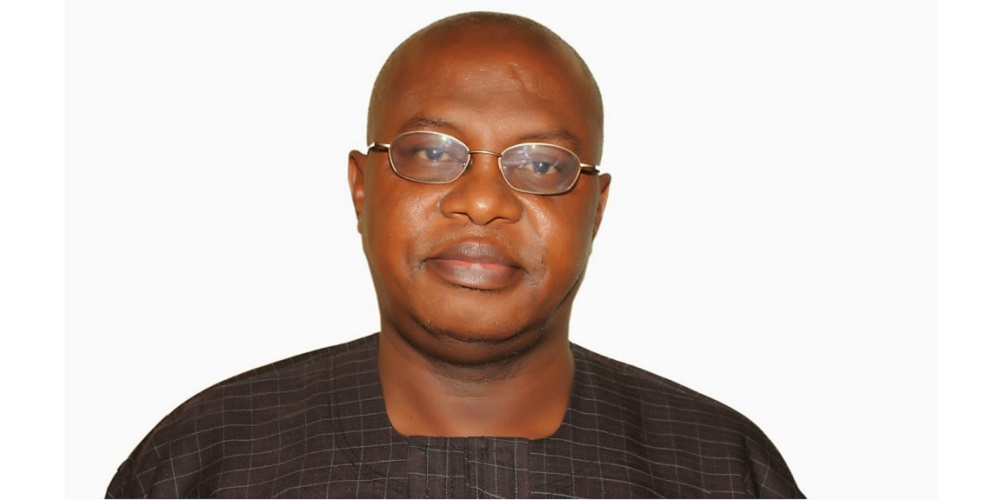
By Sonny Aragba-Akpore

In the midst of mounting agitations for and against, the proposed Tax Reform Bills, the Federal Government of Nigeria recently made a bounteous harvest in taxes of about N2.5 trillion when global Information and Communications Technology (ICT) firms operating in the country complied with the Code of Practice for Interactive Computer Services/ internet intermediaries.
Kashifu Inuwa Abdullahi, the Director General of the National Information Technology Development Agency (NITDA) must be basking in the euphoria of this breakthrough as the guidelines he introduced a little over two years ago in controversial circumstances yield results which are incontrovertible.

Google, Microsoft, Tik Tok and others obeyed the Code of Practice for Interactive Computer Service Platforms/Internet Intermediaries and Inuwa whose collaboration with other government agencies including the Nigerian Communications Commission (NCC) and others, savors the glory.
These figures cover the first half of 2024 according to a statement by Hadiza Umar ,NITDA,s Director, Corporate Affairs and External Relations.
“The code establishes a robust framework for collaborative efforts to protect Nigerians against online harms, such as hate speech, cyber-bullying, as well as disinformation and/or misinformation.
Similarly, to ensure compliance with the Code of Practice, NITDA also wishes to notify all Interactive Computer Service Platforms/Internet Intermediaries operating in Nigeria that the Federal Government of Nigeria has set out conditions for operating in the country.
These conditions address issues around legal registration of operations, taxation, and managing prohibited publication in line with Nigerian laws.
The conditions include the need to:
*Establish a legal entity i.e., register with Corporate Affairs Commission (CAC);
*Appoint a designated country representative to interface with Nigerian authorities;
*Abide by all regulatory demands after establishing a legal presence;
*Comply with all applicable tax obligations on its operations under Nigerian law;
*Provide a comprehensive compliance mechanism to avoid publication of prohibited contents and unethical behaviour on their platform; and
*Provide information to authorities on harmful accounts, suspected botnets, troll groups, and other coordinated disinformation networks and deleting any information that violates Nigerian law within an agreed time frame.”
In line with best practices and In accordance with its mandates, President Muhammadu Buhari, directed NITDA to develop a Code of Practice for Interactive Computer Service Platforms/Internet Intermediaries (Online Platforms), in collaboration with relevant Regulatory Agencies and Stakeholders.
Accordingly , NITDA presented to the Public a Code of Practice for Interactive Computer Service Platforms/Internet Intermediaries for further review and input.
This was on June 13,2022.
The Code of Practice is aimed at protecting fundamental human rights of Nigerians and non-Nigerians living in the country as well as define guidelines for interacting on the digital ecosystem.
“This is in line with international best practices as obtainable in democratic nations such as the United State of America, United Kingdom, European Union, and United Nations.”
The Code of Practice was developed in collaboration with the Nigerian Communications Commission (NCC) and National Broadcasting Commission (NBC), as well as input from Interactive Computer Service Platforms such as Twitter, Facebook, WhatsApp, Instagram, Google, and Tik Tok amongst others. O
ther relevant stakeholders with peculiar knowledge in this area were consulted such as Civil Society Organizations and expert groups. The results of this consultations were duly incorporated into the Draft Code of Practice now a code in line with “the new global reality stating that the activities conducted on these Online Platforms wield enormous influence over our society, social interaction, and economic choices.
Hence, the Code of Practice is an intervention to recalibrate the relationship of Online Platforms with Nigerians in order to maximise mutual benefits for our nation, while promoting a sustainable digital economy.”
Hadiza Umar, quoting data from the Federal Inland Revenue Service (FIRS) and the National Bureau of Statistics (NBS) explained that these figures were clearly a windfall for the government.
This Code was issued jointly by the Nigerian Communications Commission (NCC), National Broadcasting Commission (NBC), and NITDA and it outlines clear guidelines for promoting online safety and managing harmful content including but not limited to the protection of children from harmful online content.
“Data from the Federal Inland Revenue Service (FIRS) and the National Bureau of Statistics (NBS) reveal that foreign digital companies, including interactive computer service platforms and internet intermediaries (such as social media platforms) operating in Nigeria, contributed over N2.55 trillion (approximately $1.5 billion) in taxes in H1 2024.
“This significant increase in revenue underscores the role of robust regulatory frameworks in shaping compliance and driving revenue growth in the digital economy,” NITDA stated.
Updates on the level of compliance with the Code of Practice for Interactive Computer Service Platforms/Internet Intermediaries, show that all the digital platforms made conscious efforts to address user safety concerns in line with the Code and the platforms’ community guidelines.
Overall statistics across all the platforms show that:
“They received 4,125,283 (Four million, one hundred and twenty-five thousand, two hundred and eighty-three) registered complaints in 2023.
Content takedown: 65.8 million Content removed and re-uploaded after appeal by users: 379,433 Closed and deactivated accounts: 12.09 million” NITDA is excited and pleads “ for continued collaboration and innovation to address emerging challenges and ensure a safer and more responsible digital space.”
NITDA in June 2022 announced the Code, which seeks to moderate activities on social media blogs and online publications.
Specifically, the Code states that internet platforms including social media should as a rule
“act expeditiously upon receiving a notice from a user, or an authorised government agency of the presence of unlawful content on its Platform.”
“Act quickly to remove, disable, or block access to non-consensual content that exposes a person’s private areas, full or partial nudity, sexual act, deepfake, or revenge porn, where such content is targeted to harass, disrepute, or intimidate an individual.
Disclose the identity of the creator of information on its Platform when directed to do so by a Court order.”
“Provided that an order of this nature shall apply for the purpose of preventing, detecting, investigating, or prosecuting an offence concerning the sovereignty and integrity of Nigeria, public order, security, diplomatic relationships, felony, incitement of an offence relating to any of the above or in relation to rape, child abuse, or sexually explicit material.”
NITDA commends the efforts of the platforms, for the goal of creating a safer digital ecosystem which requires continuous collaboration and engagement with all stakeholders to strengthen and enhance user safety measures, digital literacy, trust and transparency.
Section 1 paragraphs b to e of the NITDA Act, 2007 are particularly instructive because they empower it to:
“(b) Provide guidelines to facilitate the establishment and maintenance of appropriate for information technology and systems application and development in Nigeria for public and private sectors, urban-rural development, the economy and the government;
(c) Develop guidelines for electronic governance and monitor the use of electronic data interchange and other forms of electronic communication transactions as an alternative to paper-based methods in government, commerce, education, the private and public sectors, labour, and other fields, where the use of electronic communication may improve the exchange of data and information;
(d) Develop guidelines for the networking of public and private sector establishment;
(e) Develop guidelines for the standardization and certification of Information Technology Escrow Source Code and Object Code Domiciliation, Application and Delivery Systems in Nigeria;”

News
BUA Cement distributes N108m farm inputs to 211 Sokoto farmers
BUA Cement Plc has distributed agricultural inputs valued at over N108 million to 211 farmers from its host and resettled communities in Sokoto State under its Resettlement and Sustainable Livelihood Restoration Programme.
The initiative is targeted at farmers affected by the company’s quarry operations and is aimed at restoring livelihoods, improving agricultural productivity and supporting food production.
Speaking at the distribution ceremony, the Managing Director of BUA Cement Plc, Engr. Yusuf Binji, said the programme reflects the company’s commitment to sustainable community development and economic empowerment.
Represented by the Assistant Director of Corporate Services, Alhaji Sada Suleiman, Binji said the intervention was designed to help resettled community members rebuild their livelihoods through agriculture.
“We believe that supporting agriculture is one of the most effective ways of empowering rural households and improving their economic well-being,” he said.
According to him, the company is focused on creating sustainable opportunities for affected communities beyond compensation and resettlement.
He added that the intervention would help improve beneficiaries’ incomes while contributing to increased food production in Sokoto State and across the country.
The company’s Director of Health, Community, Safety and Environment, Engr. Ali Gumel, urged beneficiaries to make effective use of the farm inputs, noting that they had received training on their proper application.
He said the company expects the inputs to translate into higher crop yields, improved household incomes and sustainable agricultural development.
Also speaking, the Programme Manager of the Sokoto State Agricultural Development Programme (SADP), Alhaji Abubakar Danmaliki, described the initiative as an example of effective collaboration between the private and public sectors in promoting rural development.
He said the programme would support farmers in recovering from the challenges associated with resettlement while boosting agricultural output.
Danmaliki added that beneficiaries would continue to receive extension services and technical support to encourage the adoption of improved farming practices.
The company’s Social Performance Specialist, Alhaji Rabiu Maska, said the package included NPK, urea and liquid fertilisers, improved maize, sorghum, cowpea and groundnut seeds, as well as pesticides, herbicides and other farm inputs.
According to him, the intervention was tailored to meet the farming needs of the beneficiaries and improve their harvests.
Some of the beneficiaries commended BUA Cement for the support, describing it as timely in view of rising production costs.
They pledged to utilise the inputs for the intended agricultural purposes to maximise the benefits of the programme.
News
Gombe LG Polls: APC Sweeps All Seats
The All Progressives Congress (APC) has emerged victorious in all the 24 chairmanship seats and 240 councillorship positions contested in Saturday’s local government elections in Gombe State.
Chairman of the Gombe State Independent Electoral Commission (GOSIEC), Abdullahi Garba Talasse, who announced the results on Saturday in Gombe, declared that the ruling party won in all the local government councils and Local Council Development Areas (LCDAs) where elections were conducted.
Talasse described the successful conduct of elections in the newly created LCDAs as a milestone in the state’s democratic development, noting that Gombe had expanded from 11 local government councils with 114 councillors to 24 councils and LCDAs with 240 councillors.
He said the commission worked closely with the State House of Assembly to secure the legal backing required for elections to be held in the LCDAs.
“We did not struggle for the enabling law in vain. Today, we have successfully conducted elections across the 24 councils and LCDAs, which is a significant achievement for the state,” he said.
The GOSIEC chairman attributed the poor showing of opposition parties to their limited participation in the polls.
According to him, the African Congress (AC) fielded candidates in only three chairmanship contests, while the Democratic Liberation Alliance (DLA) contested in six councils.
He added that the New Nigeria People’s Movement (NRM), Youth Party (YP) and Zenith Labour Party (ZLP) each sponsored candidates in three chairmanship elections.
For councillorship positions, Talasse said AC contested in eight wards, while DLA, NRM, YP and ZLP each fielded candidates in 11 wards.
“That explains why some parties recorded zero votes in several areas because they did not participate across all the councils and wards,” he said.
Talasse explained that although chairmanship results were declared at the various local government collation centres, the commission considered it necessary to present a statewide summary to journalists, observers and the public.
“From the results before the commission, APC has won all the 24 chairmanship seats and all the 240 councillorship positions,” he declared.
He commended political parties, election observers, civil society organisations, security agencies and other stakeholders for contributing to the peaceful conduct of the elections.
The GOSIEC chairman also appreciated party leaders, government officials, non-governmental organisations and other guests from across the country who monitored the exercise, describing their participation as crucial to the success of the electoral process.
News
Ex-President Obasanjo Blames Greed, Carelessness For Global Warming
Former President of Nigeria, Olusegun Obasanjo, has attributed global warming to human greed, selfishness, and reckless exploitation of the environment, warning that such actions continue to disrupt the natural balance of the ecosystem.
Obasanjo made the remarks in Kano during an event organised in honour of former President of the Nigerian Bar Association, Abubakar Mahmoud, and his Environment and Sustainability Initiative and Trust Fund.
Speaking at the event, Obasanjo acknowledged the reality and growing impact of climate change, stressing that human activities remain a major driver of global warming.
“God created our world in balance, but we, as human beings, out of selfishness and carelessness, have done more harm than good to our environment, and we need to do more in the safekeeping of our environment,” the former president said.
Obasanjo also revealed that he has personally planted more than 3.5 million trees as part of efforts to combat climate change, stressing that protecting the environment is a collective responsibility and a global public good.
The Kano State Government commended the initiative and pledged its support to ensure its sustainability.
The Commissioner for Environment and Water Resources, Dahiru Hashim, described the initiative as a significant step towards environmental protection and sustainable development.
“In recognition of this laudable initiative, the Kano State Government has approved the donation of 10,000 seedlings for the Mahmoud Environmental and Sustainable Trust,” Hashim said.
In his remarks, Abubakar Mahmoud said the initiative seeks to promote environmental sustainability and preserve the ecosystem for the benefit of both present and future generations.
“I started a small project that has grown into something quite formidable, providing protection to villages around and to preserving various species of plants,so what we are trying to do is to continue with this legacy,” he said.
The event attracted several dignitaries, including the vice presidential candidate of the Nigeria Democratic Congress (NDC), Rabiu Kwankwaso, former chairman of the Independent National Electoral Commission (INEC), Attahiru Jega, officials of the Kano State Government, and other stakeholders.
Participants at the event called for deliberate and collective action to address climate change and environmental degradation.
-
Foreign2 hours agoVenezuela’s earthquake death toll hits 1,430, ‘worst in 123 years’
-
News2 hours agoLagos Begins Unique ID Registration For Public, Private School Students
-
News2 hours agoNDC Vice Chairman, Assembly Candidate, Others Defect to APC After Court Nullifies Party Registration
-
Metro1 hour agoPolice Rescue 11 Abducted Farm Workers In Edo After ‘Gun Duel’ With Kidnappers
-
News2 hours agoOyo Gov Lifts Curfew in 10 LGAs, Reassures Residents on Security
-
News2 hours ago‘My Wife Sent Love Messages To Her Lover, Threatened Me With Knife For Dating Two Of My Church Members’
-
Entertainment2 hours agoFamily Announces Funeral Programme for Late Actor Kola Oyewo
-
News2 hours agoMy Husband Didn’t Tell Me He Had A Wife, Punches My Boss For Mediating In Our Affair

Warning: Undefined variable $user_ID in /home/naijuinz/public_html/wp-content/themes/zox-news/comments.php on line 49
You must be logged in to post a comment Login