News
Rivers State Crisis: Overview of Five Instances of State of Emergency Declared in Nigeria – List of Affected States, Reasons, Consequences
- /home/naijuinz/public_html/wp-content/plugins/mvp-social-buttons/mvp-social-buttons.php on line 27
https://naijablitznews.com/wp-content/uploads/2024/11/images-2024-11-01T163603.368.jpeg&description=Rivers State Crisis: Overview of Five Instances of State of Emergency Declared in Nigeria – List of Affected States, Reasons, Consequences', 'pinterestShare', 'width=750,height=350'); return false;" title="Pin This Post">
- Share
- Tweet /home/naijuinz/public_html/wp-content/plugins/mvp-social-buttons/mvp-social-buttons.php on line 72
https://naijablitznews.com/wp-content/uploads/2024/11/images-2024-11-01T163603.368.jpeg&description=Rivers State Crisis: Overview of Five Instances of State of Emergency Declared in Nigeria – List of Affected States, Reasons, Consequences', 'pinterestShare', 'width=750,height=350'); return false;" title="Pin This Post">
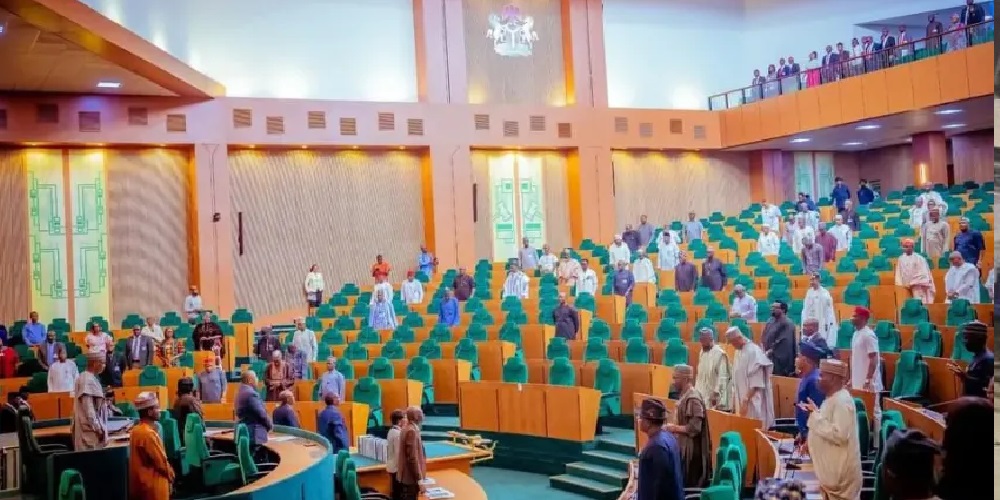
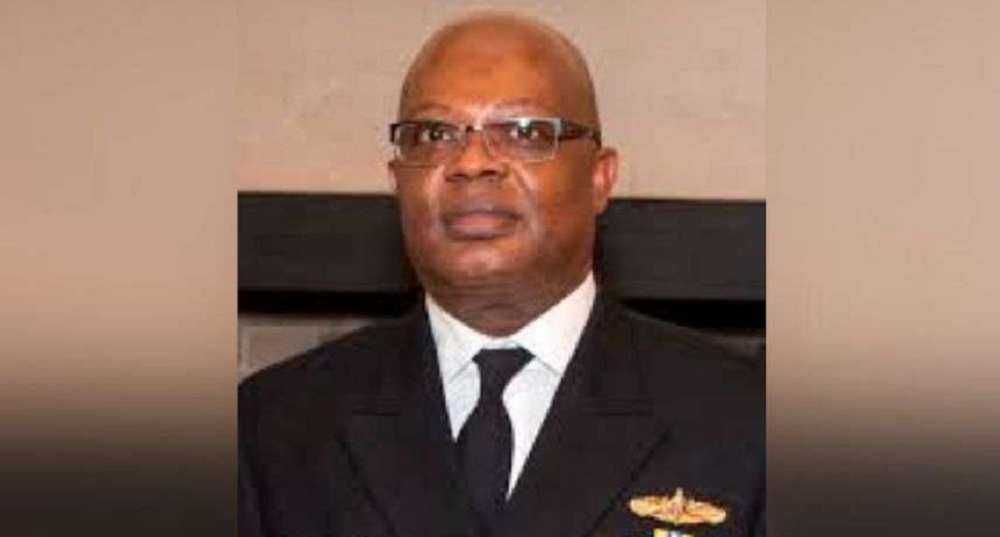
The declaration of a state of emergency in Rivers State on March 18, 2025, by President Bola Ahmed Tinubu marks a significant moment in Nigeria’s political history. This action, taken under Section 305 of the 1999 Constitution, involved the suspension of Governor Siminalayi Fubara, his deputy Ngozi Odu, and the state House of Assembly for an initial six-month period, with Vice Admiral Ibokette Ibas (retd.) appointed as administrator.

The stated reason was a prolonged political crisis that began in September 2023, which had paralyzed governance in the oil-rich state. To understand this event in context, let’s examine similar occurrences in Nigeria’s history since its return to democracy in 1999, as well as notable instances from earlier periods.
Post-1999 Instances of State of Emergency

Since Nigeria’s transition to democracy in 1999, states of emergency have been declared several times, typically in response to severe political instability, ethnic or religious violence, or insurgent activities. Below are key examples:
Plateau State (2004)
Context: In May 2004, President Olusegun Obasanjo declared a state of emergency in Plateau State due to escalating ethnic and religious violence between Christian and Muslim communities, particularly in the state capital, Jos. The conflict resulted in hundreds of deaths and widespread displacement.
Action: Governor Joshua Dariye was suspended, the state legislature was dissolved, and Major General Chris Alli (retd.) was appointed as administrator for six months.
Similarity: Like Rivers State in 2025, this involved the suspension of elected officials and the appointment of an administrator, though the trigger was violence rather than a purely political crisis. Both cases reflect the federal government’s intervention when local governance fails to maintain order or function effectively.
Ekiti State (2006)
Context: In October 2006, President Obasanjo declared a state of emergency in Ekiti State following a political crisis sparked by the impeachment of Governor Ayodele Fayose on charges of corruption and abuse of office. The impeachment process led to chaos, including the suspension of the state assembly speaker and violent clashes.
Action: Fayose and his deputy were removed, and Tunji Olurin, a retired general, was appointed as administrator for six months.
Similarity: This parallels the Rivers State case as it stemmed from a political crisis rather than widespread violence or insurgency. In both instances, the president acted to suspend elected officials and install an administrator to restore stability, highlighting the use of emergency powers to address governance breakdowns.
Borno, Yobe, and Adamawa States (2013)
Context: On May 14, 2013, President Goodluck Jonathan declared a state of emergency in these three northeastern states in response to the Boko Haram insurgency, which had overwhelmed local authorities with bombings, kidnappings, and territorial control.
Action: Unlike Plateau and Ekiti, the governors and state assemblies were not suspended. Instead, the federal government deployed additional troops, imposed curfews, and granted security forces expanded powers to combat the insurgents.
Difference: This differs from Rivers State in 2025, as it was a security-driven emergency rather than a political one, and elected officials retained their positions. However, it shares the commonality of federal intervention in a crisis deemed beyond state control.
Niger, Plateau, Yobe, and Borno States (2011)
Context: On December 31, 2011, President Jonathan declared a limited state of emergency in specific local government areas across these four states following Boko Haram attacks, including the Christmas Day bombings.
Action: The declaration included temporary border closures and enhanced security measures, but state governments remained intact.
Difference: This was narrower in scope compared to the full suspension of state leadership seen in Rivers State, focusing on targeted security measures rather than governance overhaul.
Pre-1999 Notable Instance
Before 1999, during Nigeria’s early post-independence years, a significant precedent occurred:
Western Region (1962)
Context: In May 1962, Prime Minister Sir Abubakar Tafawa Balewa declared a state of emergency in the Western Region amid a political crisis within the Action Group (AG), the ruling party. A factional dispute between Chief Obafemi Awolowo and Chief Samuel Ladoke Akintola, compounded by electoral irregularities and violence, led to a breakdown of order.
Action: The regional government was suspended, and Dr. Moses Majekodunmi was appointed as administrator for six months. The emergency was lifted in December 1962 after stabilizing the region.
Similarity: This is perhaps the closest historical parallel to Rivers State in 2025. Both involved political infighting that paralyzed governance, prompting the central government to suspend elected officials and appoint an administrator. The key difference is the democratic context—1962 occurred under a fragile parliamentary system, while 2025 is within a presidential democracy.
Analysis and Patterns
Triggers: Historically, states of emergency in Nigeria have been triggered by either security threats (e.g., Boko Haram) or political crises (e.g., Ekiti, Western Region). The Rivers State declaration aligns with the latter, a rarer occurrence since 1999, where the crisis is internal to the political class rather than involving widespread violence or external threats.
Federal Overreach Concerns: In cases like Plateau (2004) and Ekiti (2006), critics argued that the declarations undermined democracy by sidelining elected officials, a sentiment echoed in some reactions to the Rivers State action on X posts in 2025. The Western Region case similarly faced accusations of partisan misuse by the federal government.
Duration and Administration: The six-month initial period and appointment of a military or retired military figure as administrator (e.g., Ibas in Rivers, Alli in Plateau, Olurin in Ekiti) are consistent features, reflecting a preference for centralized control during emergencies.
Legal Basis: All post-1999 declarations, including Rivers State, adhere to Section 305 of the 1999 Constitution, requiring National Assembly approval within days, a safeguard not present in the 1962 parliamentary system.
Conclusion
The Rivers State emergency of March 18, 2025, mirrors earlier instances like the Western Region (1962) and Ekiti (2006) most closely, where political dysfunction—rather than insurgency or mass violence—prompted federal intervention.
While Plateau (2004) shares the feature of suspending elected officials, its violent context sets it apart. The 2013 northeastern emergency, though impactful, differs significantly due to its security focus and retention of state leadership. These historical parallels underscore Nigeria’s recurring challenge of balancing federal authority with state autonomy, a tension likely to shape debates around the Rivers State declaration.
News
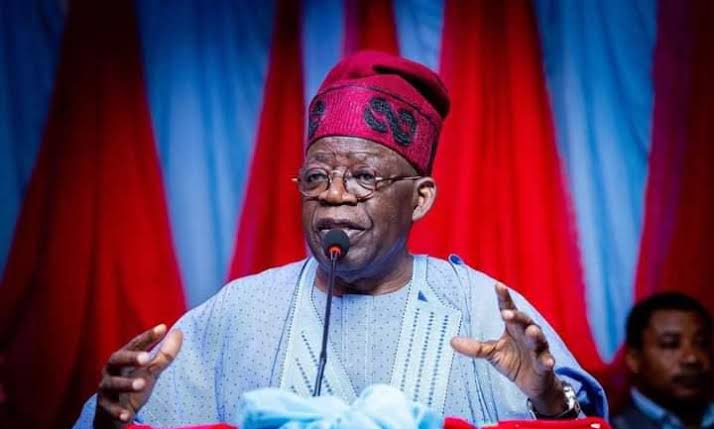
Deliver justice fast, ignore tribe, status – Tinubu to judges
President Bola Ahmed Tinubu has called on the Nigerian judiciary to ensure the delivery of fair and timely justice, warning that a compromised legal system poses a threat to democratic stability.
The president made the call on Monday during the commissioning of the Court of Appeal Abuja Division building complex in Dakibiyu, Abuja.
The development was disclosed in a statement posted on the official page of Vice President Kashim Shettima, who represented the President at the event.
According to the statement, Tinubu expressed concern over delays in the administration of justice and the growing frustration among citizens over prolonged court cases and case backlogs.
He said the justice system must remain accessible, fair and efficient to sustain public confidence in the judiciary.
“To my Lords Justices, as you move into this complex, Nigeria asks one thing of you: let justice be swift. Let it be fair. Let it be blind to status, tribe, or purse. Let the common man feel that this Court is truly his last hope,” Tinubu said.
The president stated that the newly commissioned Court of Appeal complex reflects his administration’s commitment to strengthening the justice sector under the Renewed Hope Agenda.
According to him, providing a befitting working environment for judicial officers remains part of efforts to improve the effectiveness of the nation’s justice system.
News
Court adjourns El-Rufai’s trial to June 24 over absence of two co-defendants
The Federal High Court sitting in Kaduna on Monday adjourned the trial of former Kaduna State Governor Nasir Ahmad El-Rufai to June 24, 2026, following the failure of two co-defendants to appear before the court.
El-Rufai, who is being prosecuted by the Independent Corrupt Practices and Other Related Offences Commission (ICPC) over allegations of abuse of office, financial impropriety, and fraud during his tenure as governor, was present in court when the matter was called.
The former governor arrived at the court premises at about 9:30 a.m., accompanied by officials of the ICPC, as well as operatives of the Department of State Services (DSS) and the Nigeria Police Force.
However, proceedings could not continue as scheduled after two other defendants named in the charge failed to appear before the court.
Following submissions by counsel, the presiding judge adjourned the matter to June 24, 2026, for the continuation of the hearing.
El-Rufai has consistently denied all allegations levelled against him, insisting that all actions taken during his administration were carried out in accordance with the law and established procedures.
The ICPC, on its part, alleges that public funds were released for projects that were either not executed or were improperly handled during the former governor’s administration.
The anti-corruption agency maintains that the charges against the defendants are supported by evidence gathered during its investigations and has expressed readiness to prosecute the case to its logical conclusion.
At previous sittings, the court had entertained arguments relating to bail conditions and preliminary applications filed by the defence team.
Monday’s proceedings were expected to feature further arguments on pending motions before the unexpected absence of the two co-defendants stalled the hearing.
The trial has continued to attract considerable public attention, given El-Rufai’s prominence in national politics and his eight-year tenure as governor of Kaduna State between 2015 and 2023.
With the matter now adjourned, both the prosecution and defence teams are expected to return to court on June 24 for the continuation of proceedings.
News
Obi condemns court-ordered deregistration of ADC, others
Presidential candidate of the Nigeria Democratic Congress, NDC, ahead of the 2027 polls, Peter Obi, has condemned in very strong terms the order given by the Federal High Court in Abuja that the African Democratic Congress, ADC, and four other parties should be deregistered for failing to meet constitutional requirements.
The former Anambra State governor, who took a swipe at the pronouncement, warned that the nation’s sacred institutions must not be sacrificed on the altar of politics.
Reacting to the Federal High Court ruling on Monday deregistering some political parties, including ADC, Obi remarked that the nation rises when institutions are stronger and not when they’re politicised.
Justice Peter Lifu ruled Monday that the Independent National Electoral Commission, INEC, must deregister ADC, Accord, Action Alliance, AA, Action Peoples Party, APP, and Zenith Labour Party, ZLP, after they failed to secure 25% of votes in the last general elections.
Writing on his X handle, the 2023 Labour Party Presidential Candidate said, “When the controversy surrounding the removal of the former Chief Justice of Nigeria, Walter Onnoghen, unfolded, I expressed a concern to a friend: that the greatest damage might not be immediate, but the message it sends about the sanctity and independence of our institutions to the world.”
“Strong economies are built on trust. Investors can manage security risks, policy risks, and even market risks. What they fear most is uncertainty in the rule of law and a judiciary that is perceived to be vulnerable to political pressure.
“Today, many Nigerians have lost confidence in systems that should protect them. Businesses increasingly request that their contracts be governed by foreign jurisdictions because they have greater confidence in those institutions than in our own. That should concern every patriot.
“We must never sacrifice our sacred institutions on the altar of politics. Nations rise when institutions are stronger than individuals. The Federal High Court judgment ordering the deregistration of the ADC and other political parties is just one of those activities that further reduces the common man’s trust in our legal systems; it should be reversed.
“I pledge that we will restore the dignity, independence, and integrity of the judiciary. The common man must have a voice. The business community must be protected from legal uncertainty and intimidation. Justice must be impartial, accessible, and respected by all.
“To our judges, legal luminaries, senior advocates, and lawyers: this is your moment. Rise, defend the rule of law, take back your country! A new Nigeria is possible.”
-
News24 hours agoNot Diabetes And hypertension, Son Reveals Shocking Details About General Rabe’s death
-
News23 hours agoI risked Abacha’s wrath to push for Abiola’s release, says Abubakar
-
News23 hours agoAt least 30 Yoruba Monarchs Flee Palaces After Bandits Abduct 11th Oba
-
Metro23 hours agoPolice Launch Massive Manhunt As Gunmen Abduct Ondo Community Leader
-
Sports23 hours agoDebutants Curaçao Score First-Ever World Cup Goal In 8-goal Thriller Against Germany
-
Foreign23 hours agoIran Agrees US Peace Deal, To Reopen Strait Of Hormuz
-
News23 hours agoFamily Reveals How General Abubakar Died, Says Wife Still In Bandits’ Custody
-
News17 hours ago2025 Capital Budget Gets New Lease of Life as Reps Push Deadline to September

Warning: Undefined variable $user_ID in /home/naijuinz/public_html/wp-content/themes/zox-news/comments.php on line 49
You must be logged in to post a comment Login