Metro
Plateau raises the alarm over imminent collapse of five bridges
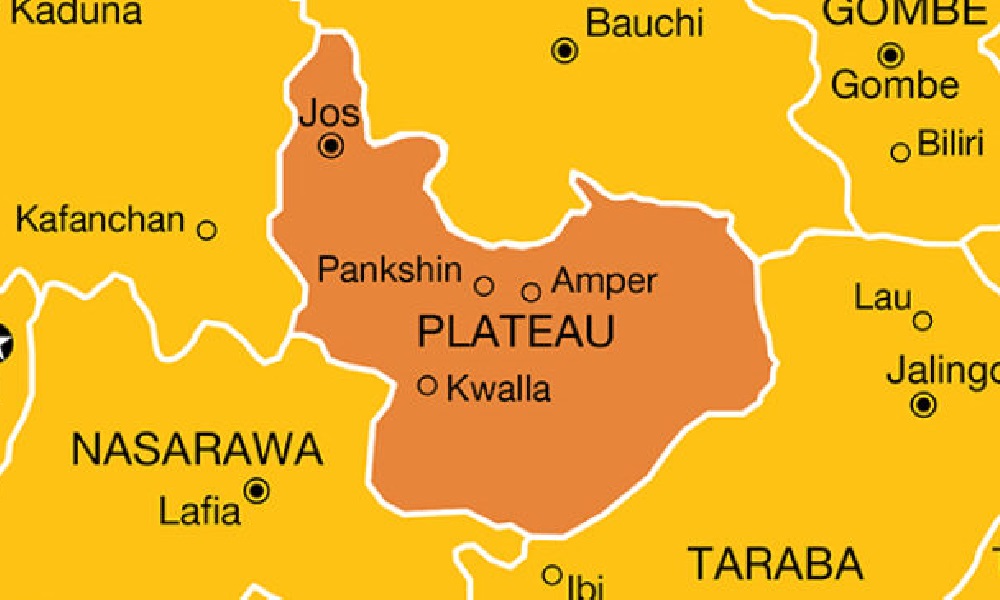
The Plateau State Government has raised serious concerns over the deteriorating condition of five major Federal Government bridges in the southern part of the state, warning that they are on the brink of collapse and require urgent emergency intervention.

The alarm was raised on Thursday during an inspection tour of the affected bridges led by the Commissioner for Works, Joshua Laven, alongside other top government officials.
Our correspondent reports that the bridges identified include the Longvel Bridge along the Shendam–Yelwa Ibi Road in Shendam Local Government Area; Kufai Yelwa Bridge on the Yelwa–Garkawa Road in Shendam LGA; Bakwai Bridge along the Langtang–Zamko–Garkawa Road in Langtang North LGA; the Bailey bridges along the Langtang–Wase Road in Langtang North LGA; the Jarmai Bridge along the Dengi–Bashar Road in Kanam LGA; and the Bauchi Road Bridge in Jos North LGA.

Speaking during the inspection, Laven explained that the Longvel Bridge, constructed several decades ago, has suffered extensive structural damage due to repeated flooding over the years.
He recalled that in 2012, severe flooding undermined the bridge’s foundation and approach, prompting the Federal Government to construct a relief culvert to address the damage.
However, subsequent floods between 2014 and 2018 further weakened the structure, leading to the failure of the retaining wall and approach embankment.
According to him, floodwaters also undermined the foundation of a second relief box culvert, causing it to sink and resulting in noticeable subsidence at the bridge approach.
He added that the bridge piles are now exposed, while sand excavation activities downstream have deepened the riverbed, worsening the structural instability.
“The bridge has outlived its serviceable age, and the best solution is complete demolition and reconstruction to guarantee safe connectivity,” he said.
Laven also said that the Longvel Bridge is a strategic route linking Plateau State with Nasarawa, Taraba, and other neighboring states, warning that its collapse would severely disrupt interstate movement and economic activities.
The Commissioner disclosed that the Kufai Yelwa Bridge and the Langtang–Wase Bailey bridges have already collapsed, while the others remain in critical condition.
He described the situation as an emergency, noting that all the affected bridges are Federal Government projects.
“As you can see, we are faced with an emergency situation in Plateau. About five bridges require urgent intervention. If any of these bridges collapse, commuters will be completely cut off, and several local government areas will lose access,” Laven said.
Laven further warned that with the rainy season approaching, the situation could worsen if immediate action is not taken.
He called on the Federal Government to deploy an emergency response team and provide funds for urgent rehabilitation before the rains intensify between March and April.
While noting that the state government has intervened in some federal infrastructure within Jos metropolis, including areas around Maraban Jama’a, UTC Junction, and Bauchi Road, he stressed that the current burden is overwhelming.
“This is beyond the capacity of the state government. We are appealing to the Federal Government to act swiftly to rescue the people of southern Plateau and other Nigerians who rely on these routes,” Laven added.
Also speaking during the inspection, the Commissioner for Information and Communication, Joyce Ramnap, underscored the economic importance of the affected bridges.
She described the Longvel Bridge as a critical link connecting the North Central region to the South-East and North-East zones of the country.
“Southern Plateau is the food-producing hub of the state. Large quantities of agricultural produce are transported from here to other parts of Nigeria.
“If this bridge fails, food supply chains will be disrupted, and the movement of goods will be jeopardized,” she said.
Ramnap warned that any further deterioration could isolate several communities and local government areas, with serious implications for commerce, food security, and regional connectivity.
She called for urgent federal attention, noting that early signs of rainfall have already begun, making swift intervention imperative.
It could be recalled that the Plateau State Government has embarked on the construction of roads in rural communities to boost economic activities and enhance security in recent days.
Metro
Gunmen Abduct, Kill Benue Monarch
The traditional ruler of Mbajiir in Tongov, Katsina-Ala Local Government Area of Benue State, has been abducted and murdered by armed men.
According to Vanguard, the deceased, Zaki Sughter Agamber, was abducted on March 6, 2026, by suspected gunmen at Kam Village in Tongov, an incident that left residents of the community in shock and fear.
Sources in the area said the traditional ruler was taken away from his home in the presence of his family by the armed men.
The monarch’s lifeless body was later discovered the following day in a nearby bush, sparking anger and grief among residents and traditional institutions in the area.
The source stated that “no group has so far claimed responsibility for the killing, while the motive behind the attack remains unclear.”
The development has drawn widespread condemnation, including the Benue State House of Assembly, which strongly condemned the abduction and subsequent killing of the Kindred Head, describing the incident as barbaric and unacceptable.
The House described the murder as a grave threat to traditional institutions and community leadership.
The Assembly reached the resolution during plenary presided over by the Speaker, Alfred Emberga.
The lawmakers called on security agencies, including the Nigeria Police, Department of State Services (DSS), and the Nigeria Security and Civil Defence Corps (NSCDC), to intensify efforts to track down those behind the crime.
Metro
Court Remands Four Police Officers in Kirikiri Over Alleged Killing of Traders in Lagos Market
An Ebute Metta Chief Magistrates’ Court on Tuesday ordered the remand of four officers of the Nigeria Police Force accused of shooting and killing traders at the Owode Onirin International Spare Parts Market in Lagos.
The defendants Manu Bala, Jibrin Samaila, Ibrahim Garuba, and Ibrahim Kashimu were ordered to be held at the Kirikiri Custodial Centre pending legal advice from the Director of Public Prosecutions (DPP).
The four officers are facing a seven-count charge that includes conspiracy and murder.
During the court proceedings, the police prosecutor, O. W. Ologun, told the court that the alleged offences occurred on August 27, 2025, at about 9 a.m. at the bustling spare parts market in Owode Onirin.
According to the prosecutor, the defendants allegedly conspired with other suspects who are still at large to carry out the attack on traders at the market.
Ologun further alleged that the suspects used AK-47 rifles to open fire on several traders at the market, resulting in multiple deaths.
“The defendants and others at large conspired and shot several traders to death with AK-47 rifles,” the prosecutor told the court.
The charge sheet filed by the Nigeria Police Force, through the Commissioner of Police, listed six victims who were allegedly killed during the incident. They were identified as Bamidele Dare Mufutau, Adebayo Adewale Mathew, Adeoye Taiye, Abraham Idowu Temilola, Akinboye Oluwaseyi Olamilekan, and Akeem Aderemi Adeoye.
The prosecutor informed the court that the alleged offences contravened Sections 223 and 233 of the Criminal Law of Lagos State, 2015.
He explained that the suspects were brought before the court primarily to obtain a remand order while awaiting legal advice from the Director of Public Prosecutions, which will determine whether sufficient evidence exists to establish a prima facie case against them.
“The advice will determine whether a prima facie case has been established against them,” Ologun added.
However, defence counsel Azuri Ejiofor urged the court to reject the prosecution’s request for remand. He argued that the accused officers had already spent more than five months in detention before their arraignment.
Despite the objection, the court ruled that the defendants should remain in custody at the Kirikiri Custodial Centre pending further legal advice from the DPP.
Metro
Soldiers Die In Combat As Boko Haram Intensifies Attacks On Military Bases In North-east
Jihadi extremist groups, including Boko Haram and one of its factions, have been blamed for intensified attacks on military bases in Nigeria’s north-east in the past week.
At least two officers and several soldiers have been killed in the attacks across parts of the region, as security analysts say the assaults demonstrate a remarkable level of coordination by the insurgents.
Over the weekend, Islamic extremists launched at least six attacks in Borno and Yobe states and across the wider Lake Chad region.
According to security reports, the attackers carted away trucks and military hardware from the targeted bases.
The Nigerian military said the attacks between Sunday and Monday were an attempt by terrorists to overwhelm troop positions.
Maj-Gen Sani Uba, military spokesperson, said the troops lost an unspecified number of soldiers and a military officer during the assaults.
Uba said the casualties add to the deaths of several soldiers and at least one officer recorded earlier in the week.
Security analysts estimate that at least four military officers have been killed in the attacks within the period.
The latest attacks have triggered public anger, with some Nigerians accusing the administration of President Bola Tinubu of focusing on political considerations ahead of the next presidential election.
Observers say although ISWAP has increased attacks on military positions in recent months, the recent wave marks one of the first times the group has carried out simultaneous assaults on such a scale in the region.
Videos released by ISWAP showed weapons, ammunition, motorcycles and vehicles which the group claimed were seized during the raids.
Taiwo Adebayo, analyst at the Institute for Security Studies, said insurgents often target military camps to replenish their weapons stock.
He said: “When they hit those camps, they strip the base of weapons, burn it down and retreat into the forests.”
Malik Samuel, Nigerian security researcher with Good Governance Africa, said the vulnerability of military bases has enabled insurgents to restock their weapons.
He said: “As long as military bases remain vulnerable to being overrun, ISWAP does not need to spend money buying arms.”
The attacks are occurring despite increased security cooperation between Nigeria and the United States.
At least 100 US troops have been deployed to assist the Nigerian military with training and logistics under a new security partnership.
Adebayo said the insurgents benefit from the limited presence of security forces and government institutions in many conflict-prone areas.
-
News18 hours agoFormer House Of Reps Speaker Dumps Party, Joins ADC
-
Economy20 hours agoDollar, Pound, Euro Rates in Nigeria Today – See Full Exchange for March 12, 2026
-
News18 hours agoWoman Writes Billionaire Femi Otedola, Wants Permission to Marry His Son Fewa
-
News16 hours agoCeding oil wells: FG losing 780 hectares of maritime water to corruption -CSOs(Video/Photos)
-
News16 hours agoJust in: Nine senators dump their parties for ADC
-
News18 hours agoPakistan Sends Naval warships to protect commercial ships in Strait of Hormuz
-
News17 hours agoGroup Defends Pipeline Surveillance Contracts
-
News14 hours agoJust in: ADC Wuse Ward suspends FCT Senator, Kingibe