News
Group Defends Pipeline Surveillance Contracts
- /home/naijuinz/public_html/wp-content/plugins/mvp-social-buttons/mvp-social-buttons.php on line 27
https://naijablitznews.com/wp-content/uploads/2026/03/IMG-20260312-WA0011-1000x600.jpg&description=Group Defends Pipeline Surveillance Contracts', 'pinterestShare', 'width=750,height=350'); return false;" title="Pin This Post">
- Share
- Tweet /home/naijuinz/public_html/wp-content/plugins/mvp-social-buttons/mvp-social-buttons.php on line 72
https://naijablitznews.com/wp-content/uploads/2026/03/IMG-20260312-WA0011-1000x600.jpg&description=Group Defends Pipeline Surveillance Contracts', 'pinterestShare', 'width=750,height=350'); return false;" title="Pin This Post">
…warn against campaign to undermine Stability of the Niger Delta

By Gloria Ikibah
The President of the South South Initiative, Emmanuel Iriogbe, has defended the current pipeline surveillance framework in the Niger Delta, warning that attempts to discredit the system could undermine the stability recently restored in the region.

Speaking at a press briefing in Abuja, Iriogbe said the group convened the meeting to address what it described as growing misinformation surrounding the protection of Nigeria’s oil pipelines, particularly in the wake of ongoing discussions and scrutiny by the National Assembly.
According to him, Nigeria’s oil infrastructure remains the backbone of the country’s economy and has for decades suffered from widespread vandalism, oil theft and organised criminal activity.
He said, “We have convened this press briefing today under the platform of the South South Initiative to address certain disturbing developments and deliberate misinformation currently circulating regarding the protection of Nigeria’s oil pipelines and the security architecture that has restored stability to the Niger Delta.
“Nigeria’s crude oil infrastructure is not just an industrial asset; it is the lifeline of our national economy. For decades, our nation suffered enormous losses as a result of pipeline vandalism, illegal bunkering, oil theft, and organised criminality across the Niger Delta,” he said.
He said the country had lost trillions of dollars that could have been used to fund development projects and critical public services.
The SSI President further explained that a major shift occurred when the Federal Government began adopting a community-based approach to pipeline protection during the administration of former President Goodluck Jonathan, a policy he said had been sustained by subsequent administrations.
“For many years, successive governments struggled to address this menace. Conventional approaches, including reliance solely on formal security agencies, unfortunately proved inadequate to stem the tide of theft and destruction.
“However, a turning point came when the Federal Government adopted a community-driven security approach, engaging indigenous pipeline surveillance companies with deep knowledge of the terrain and the communities,” Iriogbe stated.
Iriogbe identified companies such as Tantita Security Services and Maton Engineering Services among indigenous surveillance operators working across the region.
“One of the foremost among these companies is Tantita Security Services. There is also Maton Engineering Services, alongside other indigenous surveillance organisations operating across the Niger Delta. This strategy has produced measurable and undeniable results,” he said.
He maintained that before the introduction of the community-based surveillance structure, pipeline vandalism and illegal refineries were widespread across the Niger Delta.
According to him, the situation has significantly improved in recent years.
“Before the introduction of these indigenous surveillance structures, Nigeria’s pipelines were under relentless attack. Illegal refineries operated openly, crude was siphoned in massive quantities, and the nation could not even determine the exact volume of oil being produced or stolen.
“Today, the story is different. Pipeline vandalism has reduced drastically. Illegal bunkering activities have been significantly curtailed. The Federal Government can now make projections and budgetary plans based on more reliable production data,” he said.
He attributed the progress to the inclusion of host communities in the protection of oil infrastructure.
“These achievements did not happen by accident. They happened because local stakeholders were incorporated into the security architecture. Communities that host these pipelines now participate directly in protecting them,” he added.
Iriogbe explained that when the surveillance contract was awarded to Tantita Security Services, its leadership convened a major meeting in Oporoza, the traditional headquarters of the Gbaramatu Kingdom, where leaders from across the Niger Delta gathered to discuss an inclusive surveillance structure.
According to him, coordinators and subcontractors were appointed from areas where the pipelines pass, ensuring broad community participation.
“At that meeting, the leadership made it clear that pipeline protection would not be monopolised by one ethnic group or community. Instead, surveillance responsibilities were distributed across tribes and communities.
“This inclusive approach ensured that every community became a stakeholder in protecting national assets. These are verifiable facts,” he said.
The South South Initiative president also alleged that individuals who previously benefited from illegal bunkering were behind recent campaigns against the surveillance system.
“Corruption, especially in the oil bunkering sector, is fighting back. Those who profited from the chaos of pipeline vandalism and illegal refineries are naturally uncomfortable with the new order of accountability and surveillance,” he said.
He further warned against entrusting national resources to individuals whose presence in the region had been linked to corrupt practices.
“We cannot trust our resources to so-called forces whose only duty in the region is corruption and collaboration with illegal refineries,” he said.
Iriogbe urged Nigerians and the Federal Government to carefully scrutinise allegations being circulated against the current surveillance framework.
He noted that many oil-producing countries around the world invest heavily in protecting their energy infrastructure.
“The South South Initiative therefore urges the Nigerian public and the Federal Government to treat these allegations with extreme caution. We must not allow the enemies of Nigeria’s progress to dismantle what has taken years to build.
“No serious nation leaves the protection of its primary economic resource to chance. Nigeria should not be expected to do otherwise.
“Pipeline surveillance companies like Tantita are not merely security contractors. They have also demonstrated strong commitments to corporate social responsibility. Across the Niger Delta, numerous developmental initiatives have been undertaken,” he said.
He warned that dismantling the existing security arrangement without a clear alternative could push the Niger Delta back to the era of militancy and pipeline attacks.
“There was a time when the Niger Delta was engulfed in violence. Militancy disrupted production, pipelines were destroyed, and national revenues collapsed,” he said.
Iriogbe therefore called on the administration of Bola Ahmed Tinubu to sustain the current framework, to remain focused on protecting the gains made in the region.
“If necessary, the Federal Government may constitute a high-powered independent delegation to verify the claims we have presented today.
“In conclusion, we call on all well-meaning Nigerians to reject propaganda designed to resurrect the dark era of oil theft and pipeline vandalism. Let us protect the progress we have made and support systems that work,” he said.
News
Finally, US-Iran deal announced with end to military warefare
The United States and Iran agreed on a peace deal and an “immediate and permanent” end to military operations on all fronts, including Lebanon, mediator Pakistan said, in the strongest sign yet that more than three months of war in the Middle East is drawing to a close.
Pakistani Prime Minister Shehbaz Sharif posted on X that a peace deal “has been REACHED” and an official signing ceremony will be held on June 19 in Switzerland.
“The Deal with the Islamic Republic of Iran is now complete,” US President Donald Trump swiftly confirmed with his own statement on Sunday, as he marked his 80th birthday.
“I hereby fully authorise the toll-free opening of the Strait of Hormuz and, simultaneously herewith, authorise the immediate removal of the United States Naval blockade. Ships of the World, start your engines. Let the oil flow!”
There was no immediate confirmation from Iran, which just hours earlier had vowed to retaliate against a strike by Israel against Iranian ally Hezbollah in the suburbs of Beirut, which threatened to push back an agreement.
It had declined on Sunday to offer a clear timeline for reaching a peace deal.
But later in the day, Pakistan’s Sharif made the announcement that a deal had been struck, thanking the US and Iran “for finding a diplomatic solution to the conflict.”
Both sides have declared the immediate and permanent termination of military operations on all fronts, including in Lebanon,” Sharif wrote, adding thanks to leaders of Qatar, Saudi Arabia, and Turkey for their support in the mediation effort.
It was a rollercoaster Sunday, with Trump in the morning angrily blaming Israel for delaying its signing with the airstrike on Beirut, which he said had delayed the agreement.
The last time Israel hit the Beirut suburbs, it sparked one of the strongest jolts yet to a ceasefire that has largely held since April, with Iran firing off a retaliatory missile barrage and Israel responding with strikes.
Tehran has long demanded that any agreement to halt the war must include the parallel conflict in Lebanon, where Israel has been pursuing a campaign against Iran-backed Hezbollah.
The war began in late February, with US-Israeli strikes on Iran, which retaliated with attacks on Israel and US allies in the region, and by virtually blocking ship traffic in the Strait of Hormuz, a vital route for global oil and natural gas supplies. The US retaliated to that by blockading ship traffic to Iranian ports.
News
Price of petrol expected to drop to N900 per litre as US-Iran opens way for Strait of Hormuz
Prices of oil fell sharply in Asian trading on Monday after the United States and Iran announced an agreement that would allow the reopening of the Strait of Hormuz, ending more than 100 days of disruption to one of the world’s most important energy shipping routes.
At the time of reporting, Brent crude was down by nearly 4 percent at $83.67 per barrel, while U.S. benchmark West Texas Intermediate (WTI) declined to $80.76 per barrel.
The latest drop extends a downward trend that has emerged in recent weeks amid growing speculation that a diplomatic breakthrough was imminent despite continued military escalations.
As a result, the petrol price is seen falling below N1000 per litre after many weeks of inflated prices at filling stations across Nigeria.
Analysts say the price will likely settle between N850 and N915 when the Strait finally re-opens and ships begin ferrying fuel supplies, easing pressure on the domestic market while helping to stabilise costs.
The breakthrough was announced on Sunday night when President Trump stated on social media that negotiations with Iran had been concluded.
He said oil would once again move through the Strait of Hormuz once the agreement is formally signed on Friday.
Iran also signaled its approval of the arrangement.
Deputy Foreign Minister Kazem Gharibabadi confirmed that both sides had finalised the text of a memorandum of understanding, adding that a formal signing ceremony is scheduled to take place in Switzerland later this week.
The agreement was further validated by Pakistan and Qatar, which served as the principal mediators throughout the negotiations.
Although the full terms have not been officially released, Iran’s semi-official Mehr News Agency, citing a source close to the country’s negotiating team, reported that the deal includes an end to the conflict in Lebanon, the suspension of sanctions on Iranian oil exports, the release of $24 billion in frozen Iranian assets, and assurances that Iran will not pursue nuclear weapons.
According to the report, sanctions relief and the release of frozen funds will occur during a ceasefire period. Mehr also indicated that Iran could gain access to $12 billion before broader negotiations commence.
For energy markets, one of the most significant provisions is the resumption of Iranian crude exports during the proposed 60-day ceasefire while talks on nuclear issues continue.
The diplomatic progress nearly unravelled shortly before the announcement after Israel launched an air strike in southern Beirut. Trump criticised the operation, saying it “should not have happened,” and subsequently urged all parties to de-escalate.
He also called for an immediate halt to Israeli attacks across Lebanon.
Despite optimism surrounding the agreement, market participants remain cautious. Traders are expected to closely monitor the removal of mines from the Strait of Hormuz, the formal signing of the accord, and the restoration of normal shipping activity before fully embracing expectations of supply normalisation.
After more than three months of conflict, investors are increasingly pricing in the prospect of peace and a gradual return to stability in global oil markets. However, questions remain over the durability of the agreement and how quickly normal trade flows can be restored.
News
2025 Capital Budget Gets New Lease of Life as Reps Push Deadline to September
By Gloria Ikibah
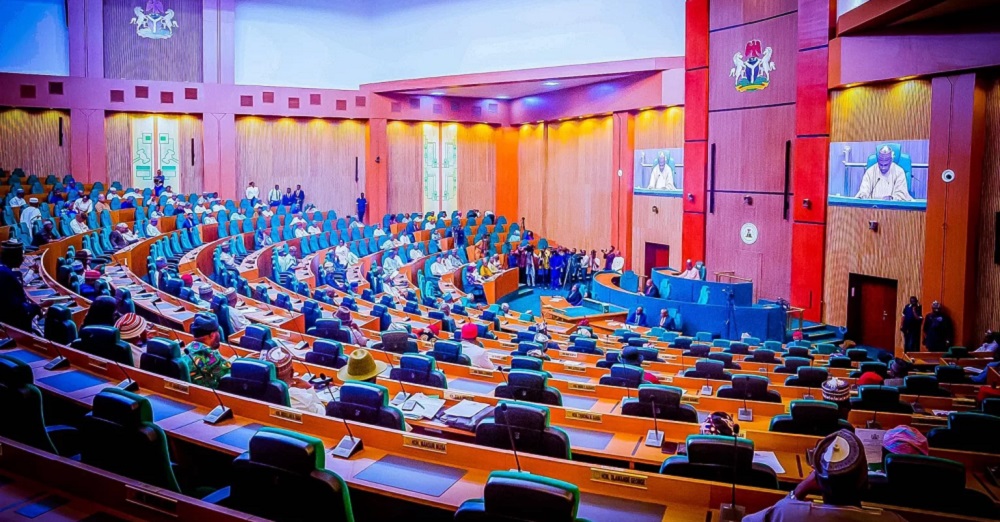
The House of Representatives has approved a three-month extension of the implementation period for the capital component of the 2025 Appropriation Act, shifting the deadline from June 30 to September 30, 2026.
The decision was taken during an emergency sitting held on Monday, as lawmakers moved swiftly to ensure the continued execution of capital projects captured in the national budget.
The legislation, which seeks to amend the Appropriation (Repeal and Enactment) Act, 2025, was designed to provide additional time for Ministries, Departments and Agencies to complete ongoing projects and fully utilise funds earmarked for capital expenditure.
In an unusually rapid legislative process, the bill passed through its first, second and third readings during the same plenary session after members suspended the relevant provisions of the House Standing Orders to facilitate its consideration.
Leading debate on the general principle of the bill, House Leader, Rep. Julius Ihonvbere, said the extension was necessary as several capital projects captured in the 2025 budget had not been fully implemented.
He emphasised that the amendment was not intended to alter any provision of the budget but merely to extend its lifespan by three months to allow ongoing projects to be completed.
He said: “It is very straightforward. Because some aspects of the capital appropriation will not be fully implemented, if we do not extend the life of this particular law, it will have a very grave impact on the growth and development of the national economy.
“The purpose essentially is to extend the lifespan. We are not touching any part of the law. It is simply extending the lifespan from June 30, 2026 to September 30, 2026. I urge my colleagues to approve this so that we can continue with the work of developing and growing our economy and country”.
Presiding over the session, Speaker of the House, Rep. Abbas Tajudeen, acknowledged that the records provided by the Chairman House Committee on Appropriations and other relevant agencies revealed that implementation of the capital budget was yet to be completed.
“As you are aware, the 2025 budget was extended to June 30. From the records we received from the Chairman, Appropriations, and other relevant quarters, it is yet to be fully implemented. It is therefore in the best interest of this country and the National Assembly for us to extend the budget to September 30 to enable the Federal Government fulfil its obligations under the 2025 budget,” the Speaker said.
Following the adoption of the bill at second reading, the House dissolved into the Committee of Supply where it had the clause by clause consideration of the bill, and approved the three clauses, explanatory memorandum and long title of the bill.
The committee subsequently reported back to plenary, where lawmakers adopted its recommendations and suspended House rules to allow the bill to be read a third time and passed the same day.
The accelerated passage reflects growing concern over the pace of implementation of key infrastructure and development projects, many of which require additional time to reach completion.
With the approval, government agencies now have until the end of September to execute projects funded under the capital component of the 2025 budget, a move expected to prevent disruptions to ongoing works and improve budget performance.
The extension is also aimed at ensuring that resources already allocated for development projects are effectively utilised before the capital budget expires.
With the passage of the amendment, federal ministries, departments and agencies now have an additional three months to implement capital projects and utilize funds appropriated under the 2025 budget.
Meanwhile, the House also announced changes in the leadership of some standing committees.
The appointments are as follows:
• Rep. Ali Madaki – Chairman House Committee on Special Duties
• Rep. Ali Isa J.C. – Chairman House Committee on Shipping Services,
• Rep. Pascal Agbodike – Chairman House Committee on Small and Medium Enterprises Development Agency of Nigeria (SMEDAN),
• Rep. Kelechi Nwogu – Chairman House Committee on Hydrological Services
The Speaker urged the newly appointed committee chairmen to assume their responsibilities immediately and bring their legislative experience to bear in advancing the work of the House.
-
Crime24 hours agoNDLEA nabs businessman with 6.10kg cocaine starched in shirts, towels from Brazil+Photos
-
Foreign24 hours agoHormuz to reopen on Sunday after US-Iran sign deal-Trump
-
Sports19 hours agoReal Madrid complete a Shocking Signing of Chelsea Superstar
-
Politics23 hours agoNew Delta Vision not a political project, but generational movement, Delta State’s ADC candidate Unuafe clarifies
-
News22 hours agoECOWAS Parliament Convenes High-Level Dakar Summit to Drive Renewable Energy Push in Rural West Africa
-
Opinion22 hours agoChinese Miners Are Not the Architects of Nigeria’s Banditry A Response to Farooq A. Kperogi’s “How Chinese Miners Fuel Nigeria’s Terrorist Banditry”
-
News22 hours agoDeputy Speaker Pushes for Home-Grown Defence Industry, Stronger Financial Crackdown on Insecurity
-
Sports18 hours agoEnzo Maresca wants Chelsea Defensive Superstar as Top Target at Man City