
News
Photos: FG ready to dismantle drug cartels, promoting Nigerians’ wellbeing – SGF Akume

- /home/naijuinz/public_html/wp-content/plugins/mvp-social-buttons/mvp-social-buttons.php on line 27
https://naijablitznews.com/wp-content/uploads/2026/07/5109d262-a0e2-4cd3-96c1-e72eda28ef2a-1000x600.jpeg&description=Photos: FG ready to dismantle drug cartels, promoting Nigerians’ wellbeing – SGF Akume', 'pinterestShare', 'width=750,height=350'); return false;" title="Pin This Post">
- Share
- Tweet /home/naijuinz/public_html/wp-content/plugins/mvp-social-buttons/mvp-social-buttons.php on line 72
https://naijablitznews.com/wp-content/uploads/2026/07/5109d262-a0e2-4cd3-96c1-e72eda28ef2a-1000x600.jpeg&description=Photos: FG ready to dismantle drug cartels, promoting Nigerians’ wellbeing – SGF Akume', 'pinterestShare', 'width=750,height=350'); return false;" title="Pin This Post">


. Substance use summit convened to mobilise National Action Plan against drug scourge, says Marwa
. UNODC, Health Ministry seek translation of commitment into practical, measurable action
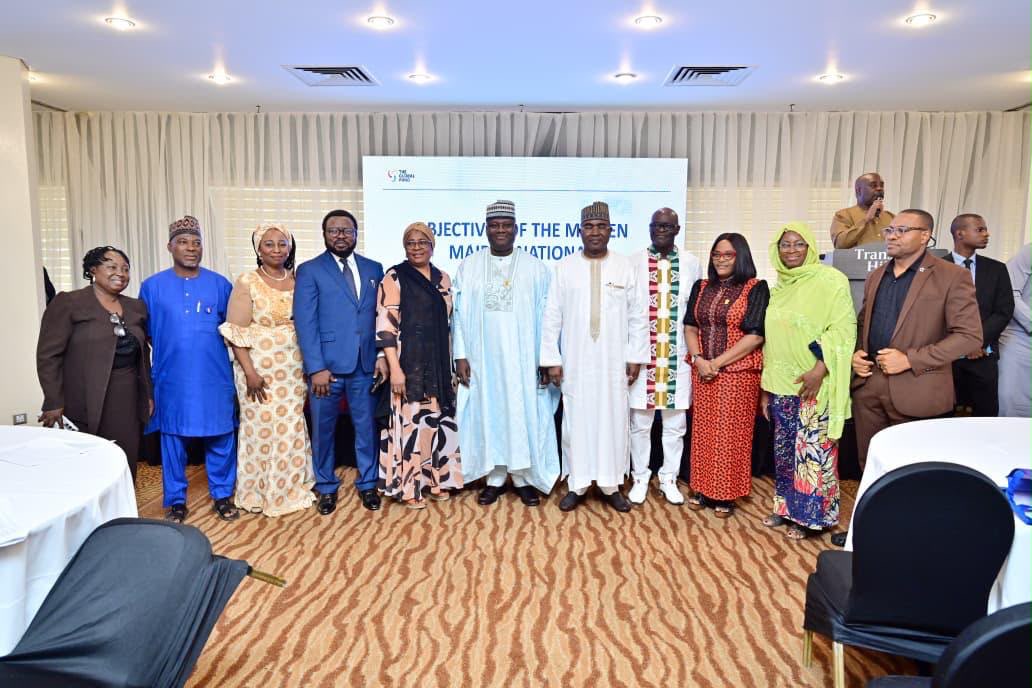
The Federal Government has reaffirmed its commitment to every initiative aimed at preventing illicit drug use, dismantling trafficking networks, expanding access to treatment and rehabilitation, and promoting the wellbeing of all Nigerians.
Justifying the government’s stance on the drug scourge, the SGF who was represented by the Permanent Secretary General Services (OSGF) Dr. Adamu Ibrahim Kana, stated that no nation will fold its hands while its youths are under the threat of substance abuse. According to him, “No nation can achieve sustainable development when its young population is threatened by drug abuse and addiction. No society can attain lasting peace and prosperity when criminal networks engaged in illicit trafficking continue to undermine its institutions and exploit its vulnerabilities. This much we know, and this much must guide our resolve. This summit, therefore, presents a timely opportunity for us to renew our collective commitment, deepen our partnerships and chart a clear, coordinated pathway towards a healthier, safer and more resilient Nigeria.
“Let me assure you that the administration of President Bola Ahmed Tinubu remains firmly committed to the health, safety and wellbeing of every Nigerian. Under the Renewed Hope Agenda, we are building resilient communities, promoting mental health, empowering our young people and strengthening the institutions that must confront these emerging social challenges.” He commended the initiative by the NDLEA, Ministry of Health and UNODC to convene the summit.
In his welcome address at the ceremony, Chairman/Chief Executive Officer of NDLEA, Brig Gen Mohamed Buba Marwa (rtd) stated that the summit was convened as a national platform for reflection, dialogue and collective action on the growing burden of drug use and substance use disorders, coming on the heels of a weeklong world drug day programme dedicated to raising awareness, deepening understanding and renewing stakeholders’ resolve, adding that such intensity “testifies to our shared commitment to confronting Nigeria’s evolving drug situation through coordinated, evidence-based and innovative action.”
He noted that despite the efforts and successes recorded in recent years by NDLEA in drug supply and drug demand reduction, it has become increasingly clear that no single institution can successfully confront the drug problem in isolation. “The scale of this challenge demands a whole-of-government and whole-of-society response, one that mobilises every stakeholder: government institutions, communities, families, development partners, the private sector, religious and traditional leaders, civil society and the media.
“This Summit is therefore both timely and necessary. It aligns with the global call to confront persisting drug challenges with innovative, collaborative responses, and it offers us a unique opportunity to build consensus around a coordinated National Action Plan, one that strengthens prevention, treatment, rehabilitation, data collection, policy implementation and community resilience”, he added.
“Over the years, the National Drug Law Enforcement Agency has remained steadfast in its mandate to combat this menace through a balanced and comprehensive approach. On the supply reduction front, the Agency has recorded significant successes in drug seizures, arrests, convictions and the dismantling of trafficking networks. Our operational feats in the last 18 months alone speak to this: a total of 29,262 arrests leading to the seizure of 5,305,484.88 kilograms of assorted illicit drugs valued at over N1.5 Trillion and the conviction of 5,225 offenders.
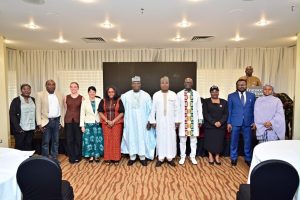
“Equally important have been our demand reduction efforts. Through the War Against Drug Abuse (WADA) campaign, we have sustained nationwide awareness initiatives across communities, schools and institutions. We have broadened access to counselling, treatment and rehabilitation services, while advancing preventive interventions such as our school-based Non-Punitive Drug Testing Policy. Within the same period of 18 months, we have conducted 6,645 drug use prevention focused sensitization and awareness creation programmes in schools, worship centres, work places, markets, motor parks and communities, and correctional facilities, among others, equipping nearly five million Nigerians with the life skills to resist drug abuse. Equally significant is the counselling, treatment and rehabilitation of 13,508 drug users across our 31 rehab centres spread all over the country.
“Worthy of particular note, too, is the launch of the Alternative Development Initiative for cannabis sativa growers, designed to support their transition from illicit cultivation to cash crop production and other sustainable livelihoods.” He expressed confidence that through partnership, shared responsibility and sustained commitment, Nigeria can significantly reduce the burden of drug use and build a healthier, safer and more prosperous nation.
In his remark, Minister of Health and Social Welfare, Prof. Ali Pate urged that the summit must not end as a talk shop. “The measure of this summit will not be the communique. It will be the number of young people who choose not to start drugs. It will be the number of patients who sleep without pain. It will be the number of families restored. The Federal Ministry of Health stands ready to lead, to coordinate, to collaborate and to deliver.”
Also speaking, the Country Representative, United Nations Office on Drugs and Crime (UNODC), Mr. Cheikh Toure represented by Dr. Akanidomo Ibanga commended the strong collaboration across ministries, agencies, civil society, the private sector, and development partners, adding that the gathering was a powerful demonstration of Nigeria’s commitment to addressing the drug challenge in a coordinated and forward-looking manner.
According to him, “As the United Nations, we stand here today not as individual agencies, but as one system—united in our support to Nigeria. The UN family is working collectively to support a comprehensive, balanced, and evidence-based response. We meet at a critical time. The scale and evolving nature of drug use in Nigeria—marked by emerging substances and shifting patterns—require us to act with urgency, but also with clarity and purpose. Beyond the numbers are lives, communities, and futures that depend on the strength of our response. This summit is therefore more than a convening. It is a moment of alignment. A moment to reaffirm our shared commitment to the National Drug Control Master Plan and to translate that commitment into practical, measurable action.”
The summit is being attended by relevant ministries, departments and agencies of government; development partners; the military and security agencies; NGOs, and civil society organisations, among others.
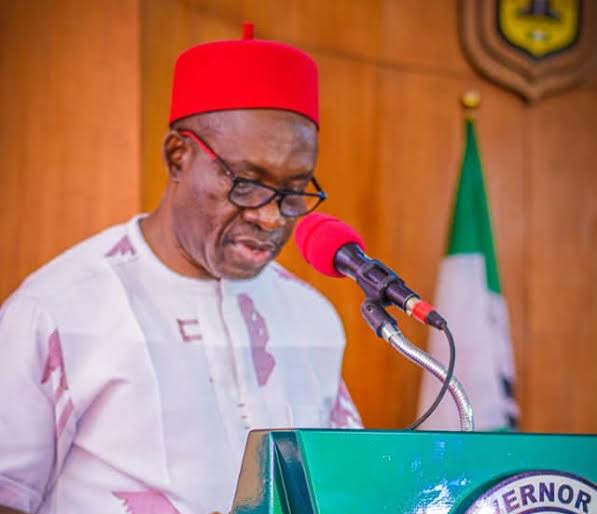
The Anambra State Government has said it is still servicing loans inherited from the administrations of former governors Peter Obi and Willie Obiano, even as it maintains that Governor Chukwuma Soludo has not borrowed from any commercial bank since assuming office.
The Commissioner for Finance, Izuchukwu Okafor, said the state’s debt burden had fallen by more than 83 per cent under Soludo, with the administration also clearing several inherited domestic obligations.
Okafor disclosed this during a Ndi Anambra podcast uploaded by Anambra State New Media on Monday while explaining the state’s finances and debt position.
He said repayments on loans secured by previous administrations continued to be deducted from Anambra’s allocation through the Federation Account Allocation Committee, including obligations dating back to the Obi and Obiano administrations.
“Yes, every month during our FAC meetings, and when you see the schedule of FAC, you will notice there were substantial, significant deductions from our own FAC because of loans previously borrowed by previous administrations,” Okafor said.
“These loans were borrowed, you know, during the time of, even, not the immediate predecessor, even during the time of Peter Obi and Willie Obiano, His Excellency, the past governors,” he said.
According to the commissioner, the Soludo administration had focused on managing the inherited obligations while avoiding new commercial borrowing.
“It’s on record, you know, that this administration has not borrowed a kobo from any commercial bank since the inception of this administration,” he said.
Okafor said the government had also settled a number of legacy liabilities, including unpaid contracts, gratuity and pension arrears, bringing the state’s domestic debt close to zero.
“But I will give you an example for our domestic debt, the control, the legacy, what we call legacy debts, you know, the contracts that were not paid, not owing, the gratuity arrears, pension arrears, we’ve been able to clear all that,” he said.
He added, “In terms of, so, our domestic debt as of today is near-zero balance.”
The commissioner attributed the reduction in the overall debt burden to repayments made by the administration, saying several inherited loans had already been settled.
“But I will also say that Mr Governor has not borrowed a penny. We have been able to manage the debt, the state debt, very well, that we have brought it down by more than 83 per cent as of today. I’ve been able to repay back most of these loans,” he said.
External obligations, however, remain part of the state’s financial commitments. Okafor explained that repayments on some foreign-denominated loans are deducted from the state’s federal allocation under the terms attached to the facilities.
“But following as well, external debts, which is foreign loan-denominated debts, when you look at it, because there are some covenants around the period it will take to pay off these loans, particularly deducted as such when we are doing FAC,” he said.
“Before they limit Anambra’s own allocation, they will deduct it as such, because most of them, World Bank loans and other loans, they committed.”
Okafor also disclosed that the state had recently fully repaid one of its debts.
“There is one debt that we recently paid off, CAGS,” he said.
He said the reduction in inherited liabilities had given the government more room to finance other priorities.
“So, in a nutshell, I’ve been able to, you know, create more fiscal space for Anambra State,” Okafor said.
He added, “This administration has been able to create more by paying off, you know, backlog of numerous debts inherited from previous governments, starting from the time of Peter Obi.”

No fewer than nine passengers were killed when gunmen opened fire on a commercial bus at Dungus Junction in Kuru community, Jos South Local Government Area of Plateau State.
Residents told journalists that the incident occurred when the bus driver parked to allow some passengers alight at the junction.
According to Daily Trust the bus which was heading to Jos was stained with blood and riddled with bullets.
Lawan Suleiman, a neighbor and teacher of one of the victims, confirmed the incident, adding that the attack occurred while the bus was stopped at the junction.
He said, “The driver is Ibrahim and he was my student. Three of them are from our community here in Bukuru. Their bodies have been deposited at the hospital. But relatives are preparing to collect them for burial.”
Spokesman of the Berom Youth Moulders, BYM, Rwang Tengwong, also confirmed the incident saying the victims were passengers travelling to Jos when the attackers opened fire on their vehicle.
“The incident happened around 9.40p.m. The victims were all passengers travelling to Jos when the terrorists opened fire on the vehicle. Among those killed was a member of Operation Rainbow. It is a very sad development and we lament the loss of lives.”
According to him, some of the passengers sustained gunshot wounds and were rushed to hospitals, where some later died.
Plateau state police command is yet to issue a statement regarding the incident as of press. (Daily Trust)
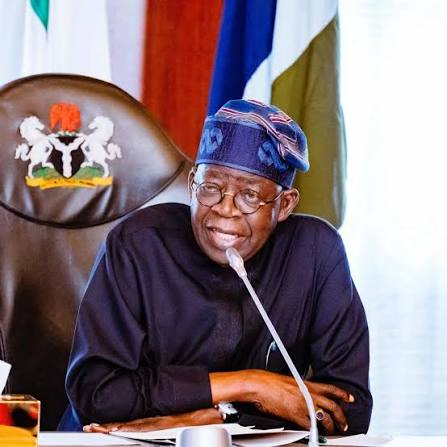
More than 600 senior lecturers from public universities across Northern Nigeria have declared their support for President Bola Tinubu’s bid to secure another term in the 2027 presidential election.
As reported by DAILY TRUST, the lecturers made their position known at a stakeholders’ meeting in Kaduna convened by the Special Adviser to the President on Political Matters, Ibrahim Masari, to discuss the administration’s performance and the country’s political direction ahead of the next general election.
The meeting, held at the Umaru Musa Yar’Adua Centre, attracted several northern political leaders, including Kaduna State Governor Uba Sani, Zamfara Governor Dauda Lawal, Yobe Governor Mai Mala Buni, Borno Governor Babagana Zulum and Gombe Governor Inuwa Yahaya.
The Minister of Defence, Bello Matawalle, Minister of Housing, Muttaqha Rabe Darma, and former Katsina State Governor, Aminu Bello Masari, were also among those who attended the engagement.
Presenting the communiqué, the Vice Chancellor of Kaduna State University, Prof Abdullahi Ibrahim Musa, said the academics assessed Tinubu’s administration since May 2023, including its handling of the economy, security, education, infrastructure and social development.
According to the lecturers, although some government reforms had increased the economic burden on Nigerians through higher living and transportation costs, the measures had also improved government revenue and public finances. They further cited developments in education funding, agriculture, infrastructure, business support and the digital economy.
The academics subsequently resolved to support Tinubu’s re-election but cautioned that their backing was not an unconditional endorsement.
They called on the Federal Government to urgently address food and transport costs, unemployment and insecurity, while strengthening investment in education, healthcare, agriculture, electricity, roads and other infrastructure in the North.
However, the Academic Staff Union of Universities distanced itself from the declaration, with its President, Prof Chris Piwuna, insisting that ASUU remains politically neutral.
Piwuna said individual lecturers were free to support any political party or candidate of their choice, but stressed that such decisions must not be attributed to the union.
“We have never, and we will never endorse any political party candidate. Nobody should drag us into such things,” the ASUU president said.
The endorsement came as political consultations intensify ahead of the 2027 presidential election, with the Tinubu camp seeking the backing of influential groups across Northern Nigeria.

Gov. Soludo reveals Obi, Obiano accumulated debts still hanging on Anambra

Sad: Nine passengers killed as gunmen open fire on bus in Plateau

Over 600 senior lecturers back Tinubu, ASUU disowns approval




-
 News11 hours ago
They Are Permanently Silent – Ortom Challenges Alia To Account For ₦1.2trn FAAC Revenue Since 2023
-

 News24 hours ago
Sad! One Casualty, Four Rescued as Four-Storey Building Collapses in Enugu
-
 News24 hours ago
Break-Up Fears Grip UK as Scotland, Wales, Northern Ireland Leaders Plot New Constitutional Front
-

 Entertainment11 hours ago
Celine Dion Weeps On Stage As She Returns To The Stage After Six Years
-

 News24 hours ago
‘I Don’t Want to Return to Nigeria’ — Chimamanda Adichie Speaks After Son’s Death
-
 News11 hours ago
2027: Why Igbos May Not Vote APC Despite Governors’ Defection — Party Chieftain
-
 News11 hours ago
Army Denies Reports Of Islamic Scholars Abduction In Senator Yariu’s House
-

 News11 hours ago
Sad! Cross River Commissioner dies in Abuja