
News
Price of 5kg cooking gas rise to N6,699.63 in September – NBS



By Francesca Hangeior
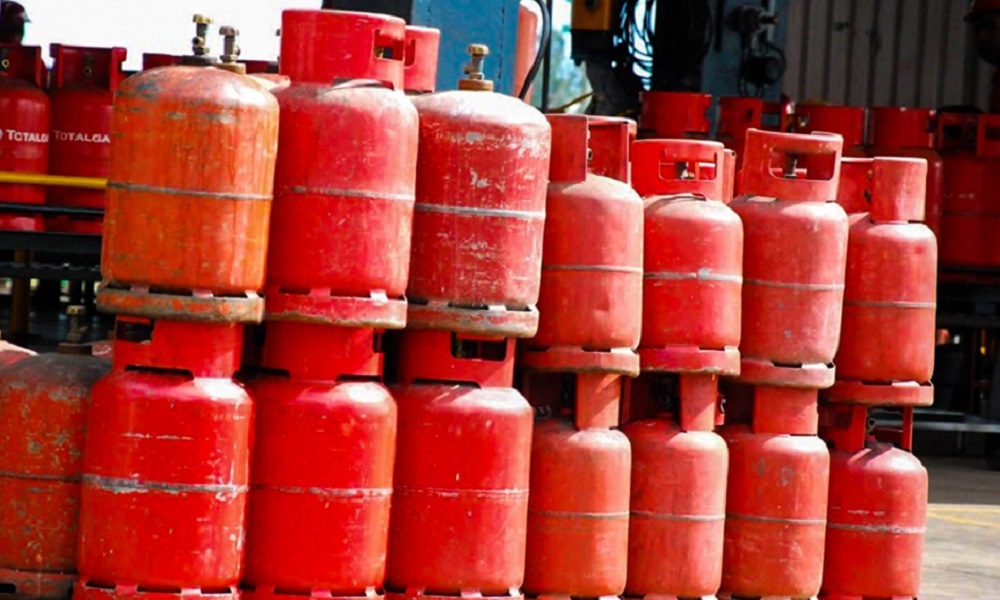
The National Bureau of Statistics (NBS) has said that the average price of 5kg of cooking gas increased from N6,430.02 recorded in August to N6,699.63 in September 2024.
This is contained in the Bureau’s “Cooking Gas Price Watch’’ for September 2024, released on Friday in Abuja.
The report said the September price represented a 4.19 per cent increase, compared to what was obtained in August.
The NBS said the average price of 5kg of cooking gas increased on a year-on-year basis by 59.90 per cent from N4,189.96 in September 2023 to N6,699.63 in September 2024.
On state profile analysis, the report showed that Rivers recorded the highest average price at N7,285.71, followed by Gombe at N7,271.88, and Borno at N7,089.72.
It said on the other hand, Kebbi recorded the lowest price at N5,950.00, followed by Kano and Benue at N6,133.33 and N6,143.52, respectively.
Analysis according to the six zones showed that the North-East recorded the highest average retail price at N6,929.02 for 5 kg of cooking gas, followed by the South-East at N6,893.47.
“The North-West recorded the lowest average retail price at NN6,382.30,” the NBS said.
Also, the NBS said the average retail price for refilling a 12.5kg cooking gas increased by 4.89 per cent on a month-on-month basis from N15,552.56 in August 2024 to N16,313.43 in September.
The report said the average retail price for 12.5kg cooking gas rose by 76.41 per cent on a year-on-year basis from N9,247.40 recorded in September 2023 to N16,313.43 in September 2024.
State profile analysis showed that Rivers recorded the highest average retail price of N17,992.86, followed by Gombe at N17,942.86 and Zamfara at N17,475.00.
On the other hand, the report showed that the lowest average price for 12.5kg of cooking gas was recorded in Adamawa at N13,983.33, followed by Nassarawa and Bauchi with N14,938.50 and N15,000.00, respectively.
Analysis by zone showed that the South-East recorded the highest average retail price of N16,957.29, followed by the South-West at N16,665.45.
The report said the North-East recorded the lowest price at N15,770.75.
Similarly, the NBS said the average retail price per litre of kerosene increased to N1,957.44 in September 2024 on a month-on-month basis, showing an increase of 5.97 per cent, compared to the N1,847.59 recorded in August 2024.
According to its National Kerosene Price Watch for September 2024 on a year-on-year basis, the average retail price per litre of kerosene rose by 50.68 per cent from N1,299.03 in September 2023.
On state profile analysis, the report showed that Abuja recorded the highest average price at N2,816.67 per litre of kerosene in August, followed by Kaduna at N2,437.50 and Akwa Ibom at N2,411.11.
“On the other hand, the lowest price was recorded in Bayelsa at N1,416.67, followed by Borno at N1,477.83 and Ekiti at N1,635.00.”
The NBS said the analysis further showed that the North Central recorded the highest average retail price per litre of kerosene at N2,194.05, followed by the North-West at N2,092.92.
It said the South-East recorded the lowest average retail price per litre of kerosene at N1,718.89.
The report said the average retail price per gallon of kerosene paid by consumers in September 2024 was N6,818.1, indicating an increase of 5.84 per cent increase from N6,441.94 recorded in August 2024.
“On a year-on-year basis, the average price per gallon of kerosene increased by 55.69 per cent from N4,379.31 in September 2023.
On state profile analysis, it showed that Katsina recorded the highest average retail price at N8,400 per gallon of kerosene, followed by Jigawa at N8,100.00 and Kebbi and Ogun at N8,000.00.
The report said Nasarawa recorded the lowest price at N5,250.00, followed by Adamawa and Niger at N5,281.25 and N5,291.67, respectively.
Analysis by zone showed that the North-West recorded the highest average price per gallon of kerosene at N7,809.52, followed by the South-East at N7,700.19.
“North-Central recorded the lowest average price per gallon of kerosene at N6,092.77,” the NBS said.
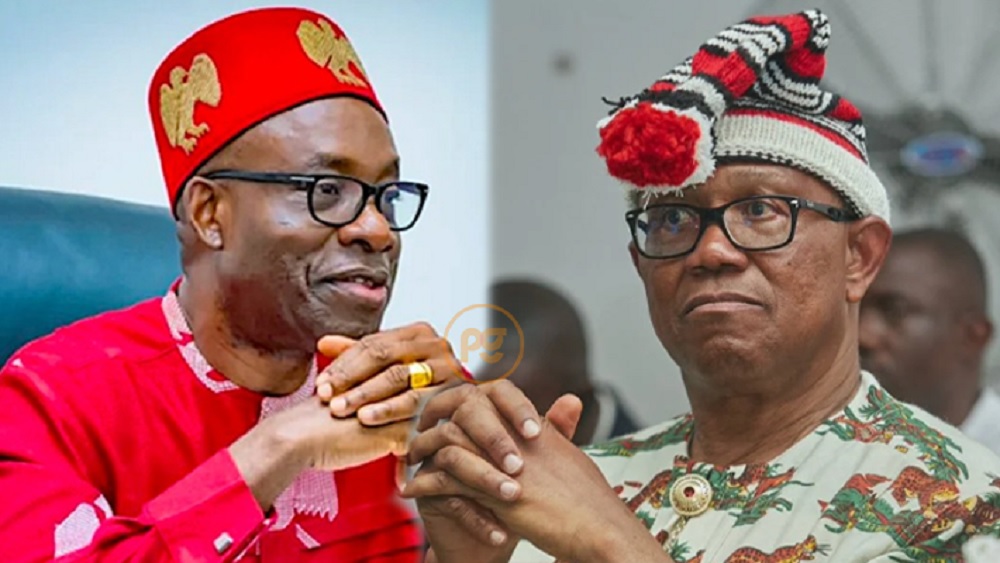
Anambra State Government has acknowledged that former Governor Peter Obi performed well during his tenure, while clarifying that its ongoing scrutiny of his administration’s financial records is not intended to discredit his achievements or political ambitions.
The state Commissioner for Information and Value Reorientation, Law Mefor, made the clarification while addressing the controversy surrounding Obi’s claim that he left no financial liabilities for subsequent administrations.
Mefor said the government’s position was focused on establishing the accuracy of the state’s financial records, particularly claims relating to funds allegedly left behind by the former governor.
He specifically questioned Obi’s assertion that his administration left N12.13 billion in an ecological fund account domiciled with First Bank at the Nnamdi Azikiwe University (UNIZIK), Awka branch.
According to the commissioner, the state government requested the relevant account statement from the bank but found no evidence supporting the claimed balance.
Mefor, however, stressed that the financial inquiry should not be interpreted as an attempt to diminish Obi’s record in office.
“The intention of the Anambra State government is not to indict Peter Obi. Peter Obi did well as governor.
“There is no rift between Governor Soludo and Peter Obi. They are both in politics, and they have their interests to defend,” he said.
The comments come amid renewed political exchanges between supporters of Obi, the former Anambra governor and Labour Party presidential candidate, and the administration of Governor Chukwuma Soludo.
While the two politicians have publicly differed over aspects of Anambra’s financial and developmental record, Mefor said the state government’s position was primarily aimed at clarifying the records rather than attacking Obi personally.
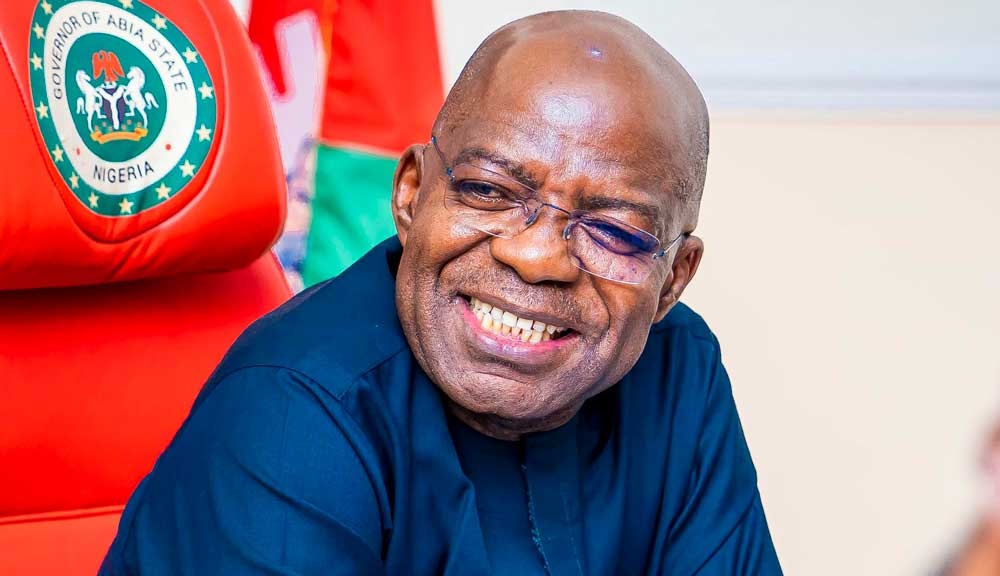
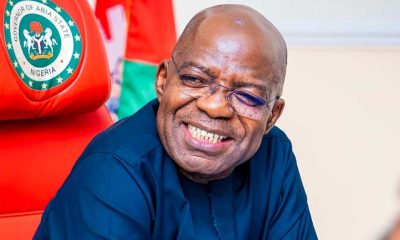
Abia State Governor Alex Otti has said he will support President Bola Ahmed Tinubu’s bid for re-election in 2027, despite remaining a member of the opposition Labour Party (LP).
Otti made the clarification during an interview with Arise Television on Friday, where he addressed questions about his relationship with the ruling All Progressives Congress (APC) and his position on Tinubu’s 2027 ambition.
The governor was asked whether his support for Tinubu amounted to a “comfortable arrangement” between him and the ruling party.
Otti agreed with the description, saying his position as a governor and member of the National Economic Council made it difficult for him to openly oppose the President’s re-election bid.
“It works the way you have said. It’s a statement of fact. I am not in a position to oppose his candidacy,” he said.
Otti explained that although he could disagree with some government policies, his membership of the National Economic Council meant he was also part of the broader governance structure through which federal policies and decisions were discussed.
He said openly opposing the President could create unnecessary tension within the system, adding that he preferred to raise disagreements during government meetings.
“And sometimes people don’t understand the opposition. When you say opposition, and you are part of a government, then what you are driving towards is implosion.
“So if I do have a problem with anything, I’ll sit down in one of our meetings and I’ll make my point. So I’m not going to oppose his candidacy,” Otti said.
The Abia governor further stressed that his role in the National Economic Council had placed him directly within the process of implementing and discussing policies of the Federal Government.
“I had also said that as a governor in this republic, that a lot of the things that are being, in fact, I’m part of all the things that have been done as a member of National Economic Council. So, we should distinguish that.
“When somebody now says, ‘Oh, you are supporting or you’re not,’ I have to support him,” he said.
However, Otti appeared to draw a distinction between supporting Tinubu’s re-election and abandoning the Labour Party.
When reminded of his earlier statement that he still had a presidential candidate in the Labour Party, the governor rejected the suggestion that he was referring to Tinubu.
“No, that’s not what I said,” he said.
Asked whether he was referring specifically to a Labour Party presidential candidate, Otti replied, “Yes.”
But when pressed again on whether he supported Tinubu’s 2027 bid, he responded: “What do you expect me to say? To say I’m not supporting him?”
Otti also said Tinubu had the constitutional right to seek another term in office, while noting that some of the President’s policies were consistent with positions he had previously held.
He specifically cited the removal of the petrol subsidy, which he described as unsustainable.
“Quite frankly, there are a lot of things that we have talked about now, that he has implemented, that resonate with me and my thinking.
“People don’t have to agree with me, but from where I sit, I know that for instance, the fuel subsidy was even unsustainable,” Otti said.
Former Osun governor’s absence raises questions as Atiku unveils campaign structure dominated by top political figures
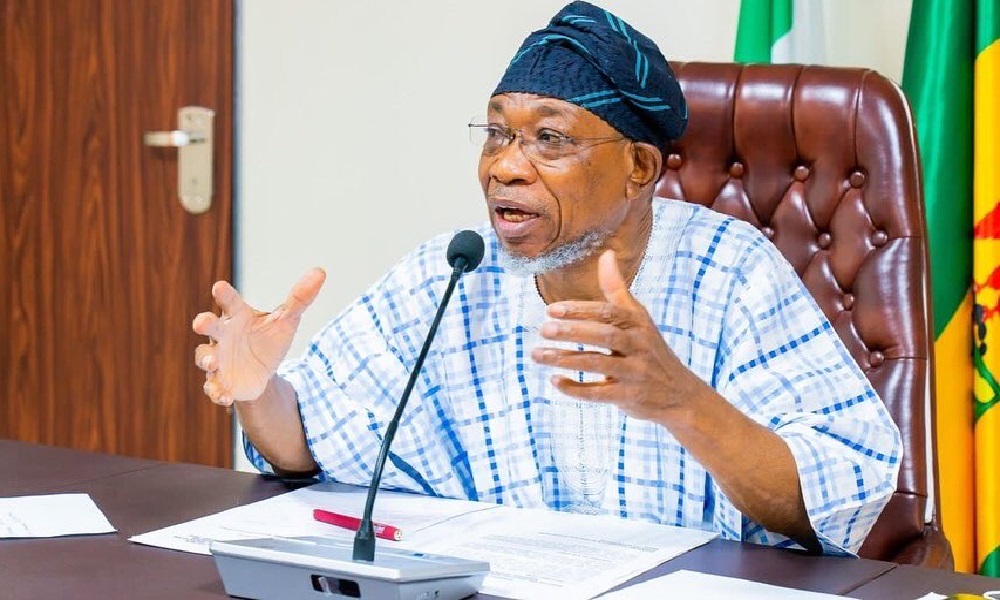
Former Osun State Governor and National Secretary of the African Democratic Congress (ADC), Rauf Aregbesola, has been left out of the presidential campaign council unveiled by the party’s candidate, Atiku Abubakar, ahead of the 2027 general elections.
Also absent from the campaign structure is the party’s National Publicity Secretary, Bolaji Abdullahi.
The omissions have attracted attention because both officials occupy key positions in the ADC’s national leadership. The party’s official website currently lists Aregbesola as National Secretary and Abdullahi as National Publicity Secretary.
Atiku approved the composition of the campaign council on Thursday, with Kashim Ibrahim-Imam appointed chairman and former Kaduna State Governor Nasir el-Rufai named deputy chairman.
Senator Austin Akobundu was appointed Director-General and Campaign Manager, while veteran journalist and publisher Dele Momodu will oversee the Media and Communications Directorate. Former Kogi West Senator Dino Melaye was named Deputy Director-General of the Contact and Mobilisation Directorate.
Former Edo State Governor and ex-national chairman of the All Progressives Congress (APC), John Oyegun, will chair the Campaign Advisory Board.
The policy team will be headed by Mohammed Hayatu-Deen, who contested the ADC presidential primary alongside Atiku, while former Deputy Governor of the Central Bank of Nigeria, Kingsley Moghalu, is also listed as a member.
According to Phrank Shaibu, Atiku’s Director of Strategic Communications, the campaign structure was designed around specific responsibilities, with six operational directorates and 30 directors assigned to defined roles.
“This is a structure built for work. Every directorate has a duty. Every director has an assignment. Every appointee must account for results,” Shaibu said.
Why Aregbesola’s absence is attracting attention
Aregbesola’s omission is particularly notable because of his position as one of the senior officers of the opposition party and his involvement in its political activities.
On the same day the campaign council was announced, Aregbesola appeared alongside Atiku and other ADC leaders in Akure, Ondo State, at the reception organised for Eyitayo Jegede, the former governorship candidate who joined the ADC.
However, Abdullahi has played down the significance of the omission.
Speaking to TheCable on Friday, he said the absence of some party leaders from the campaign structure should not be interpreted as evidence of disagreement within the party.
“There are so many party leaders whose names are not there. We play an important role in the party. So, it is not anything,” Abdullahi said.
He argued that the ADC’s national leadership still had to perform its statutory party functions and that removing key national officers from the party structure simply because of the campaign would be counterproductive.
Reported disagreement over campaign structure
Despite that explanation, reports indicate that the composition and structure of the campaign council had generated disagreement within the party.
According to reports, Kashim Ibrahim-Imam, who was appointed chairman of the campaign council, and Dino Melaye were involved in compiling the campaign structure before it was submitted to the ADC leadership for consideration.
Aregbesola was reportedly unhappy with aspects of the proposed organogram, particularly the arrangement under which some party executives would be required to report to individuals serving in the campaign structure who are not members of the party’s formal leadership.
He was also reportedly said to have questioned aspects of the composition of the council.

Soludo Govt Admits: ‘Peter Obi Did Well as Anambra Gov Amid Financial Records Dispute

US Sanctions Ground Iranian Airlines as Saudi Attacks Push Oil Above $106

2027: Otti Backs Tinubu, Says Role as Governor Makes Opposition Difficult


-

 News2 hours ago
Pope Leo XIV Warns Against AI Risks, Urges World to Protect Human Dignity
-
 News2 hours ago
Nigeria @66: Tinubu Urges Citizens to Keep Faith, Says ‘Light At End of Tunnel
-
 Politics4 hours ago
2027: Wike to lead campaign team for Tinubu’s re-election in FCT, Rivers
-
 News4 hours ago
184.5kg cocaine bust: NDLEA docks KC Luxury, 2 accomplices, remanded in custody ( Photos)
-
 News2 hours ago
Aregbesola Missing From Atiku’s 2027 Campaign Council Amid Reported ADC Rift
-
 News24 minutes ago
2027: Otti Backs Tinubu, Says Role as Governor Makes Opposition Difficult
You must be logged in to post a comment Login