
News
Kano, Katsina, Sokoto, 4 others spend N28.3bn on Ramadan feeding

- /home/naijuinz/public_html/wp-content/plugins/mvp-social-buttons/mvp-social-buttons.php on line 27
https://naijablitznews.com/wp-content/uploads/2024/03/Screenshot_20240320-160215.png&description=Kano, Katsina, Sokoto, 4 others spend N28.3bn on Ramadan feeding', 'pinterestShare', 'width=750,height=350'); return false;" title="Pin This Post">
- Share
- Tweet /home/naijuinz/public_html/wp-content/plugins/mvp-social-buttons/mvp-social-buttons.php on line 72
https://naijablitznews.com/wp-content/uploads/2024/03/Screenshot_20240320-160215.png&description=Kano, Katsina, Sokoto, 4 others spend N28.3bn on Ramadan feeding', 'pinterestShare', 'width=750,height=350'); return false;" title="Pin This Post">


By Kayode Sanni-Arewa
As Ramadan fast progresses, seven states of the federation have budgeted over N28. 3 billion to feed residents during the period, figures released by the states and put together by Daily Trust revealed.
The states include Katsina, Sokoto, Kano, Jigawa, Kebbi, Niger and Yobe.
It was gathered that many other states, especially in the North, have earmarked various sums for the project but have refused to make the actual amount public.
This has elicited anxiety in many quarters, with some clerics calling for accountability, considering the humongous amount set aside.
They said even though it was not entirely wrong to support the less privileged to feed during Ramadan because of the reward therein, they nonetheless called for caution concerning the possibility of abusing the process.
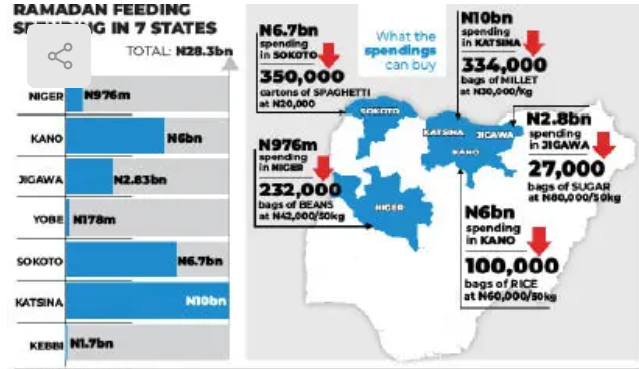
Katsina State topped the chart for the feeding programme by budgeting N10 billion.
Sokoto earmarked N6.7 billion, Kano set aside N6 billion, Jigawa N2.83 billion, Kebbi N1.5 billion, Niger N976 million, and Yobe N178 million respectively.
Governor Dikko Umar Radda, who disclosed the amount for the Ramadan feeding while inaugurating the committee that will oversee the distribution of the grains to the beneficiaries, said the gesture was to support citizens of the state.
In Sokoto, Governor Ahmed Aliyu said that the state expended N6.7 billion for the provision of Ramadan and other packages to the people of the state.
Also, the Kano State government said it is targeting four million people in the 2024 Ramadan feeding programme across the 44 local government areas of the state.
The Commissioner for Information and Home Affairs, Baba Dantiye, said the aim was to feed the less privileged.
Speaking to a national daily, Dantiye said the densely populated Kano metropolis, which is made up of eight LGAs has 90 special centres that include mosques, remand centres, almajiri schools, and hospitals.
He said: “In each centre, we have three women who cook and three men that provide security so that people don’t tamper with the food or cause stampedes.
“In each centre, there are two bags of rice to feed at least 200 people, that is 100 people per bag; there are also varieties such as beans cake and pap and other assorted food being cooked daily and is served between 6.30pm and 7.00p.m targeted at the most-needy.”
The Commissioner for Information in Jigawa, Sagir Musa, said in a statement that the Ramadan feeding programme will be implemented through 609 feeding centres, with a focus on providing three different food items to 182,700 poor and vulnerable people daily.
He said there will be dedicated feeding centres to be established at each of the state’s ten tertiary institutions.
He said that approximately 3.8 million vulnerable persons would benefit from the feeding programme throughout the Ramadan period.
Apart from approving a budget of N2.83 billion for the special feeding, the commissioner said the state executive council also allocated N1.125 billion for emergency procurement of additional rice and spaghetti to ensure adequate food supply across the state.
Kebbi’s N1. 5bn for the Ramadan feeding programme will be dispensed in 69 feeding centres, it was learnt.
The distribution will target three mosques in each of the 21 local government areas, according to the Special Adviser to the governor on Religious Affairs, Engr. Imran Usman-Abdulrahman.
In Niger State, the state Commissioner for Information, Binta Mamman, said that the N976 million for Ramadan feeding in the eight emirate councils of the state was timely.
She said assorted grains have been procured to be distributed to all the 25 local government areas, emirate councils, religious leaders, security agencies, and political parties in the state.
Yobe State governor, Mai Mala Buni, had also approved the sum of N187 million for the feeding of the less privileged and the vulnerable throughout this year’s Ramadan fast in the state.
Accountability key to success of the programme – Cleric
Malam Ahmad Abdullahi, a cleric in Bauchi, said while there is nothing wrong in catering for the people, the issue of accountability must be emphasised.
“Feeding the needy is an acceptable norm all over the world, especially during Ramadan.
“In fact, in some countries, including non -Muslim countries, they give meal tickets to unemployed persons as a temporary measure.
“But in Nigeria, we always have issues with these kinds of initiatives. Some people take advantage of it to steal; others produce poor quality meals.
“So, I want to advise that the governors should fear Allah. The contractors should also fear Allah,” he said.
Speaking to Daily Trust in Abuja, the Chief Imam of Nasirul-Lahi-Li-Fatih, Society of Nigeria (NASFAT) Mosque, Utako, Abuja and founder, Ashraaf Islamic Foundation, Sheik Sharafudeen Abdulsalam Aliagan, said the gesture is good and encouraging.
He said that somebody who wakes up in the morning and goes out to look for what to eat is different from someone observing fasting as a student or a vulnerable person.
“So, instead of these people to start going about begging or doing some very stressful work during the days of Ramadan, the well-to-do, those whom Allah has blessed, Islamic organisations, good individuals, philanthropists, according to the principle of Islam can assist those needy by giving them food, money and other lawful gifts to make the fasting easy for them,” Aliagan said.
He also said that thousands of people are being fed by NASFAT and other Muslim organisations across the country, especially students and other vulnerable persons that must be supported to enhance easier observance of Ramadan fasting.
When asked about the fears that the billions of naira earmarked for the exercise may be mismanaged due to corruption, the renowned cleric said this may not be possible due to the glory of the month of Ramadan.
He said that, while it is expected that those that may be asked to manage the resources would be competent and god-fearing people, it is also expected that those that the monies may be entrusted with would want to earn Allah’s reward and not be engaged in mismanagement of the Ramadan feeding programme monies or other resources.

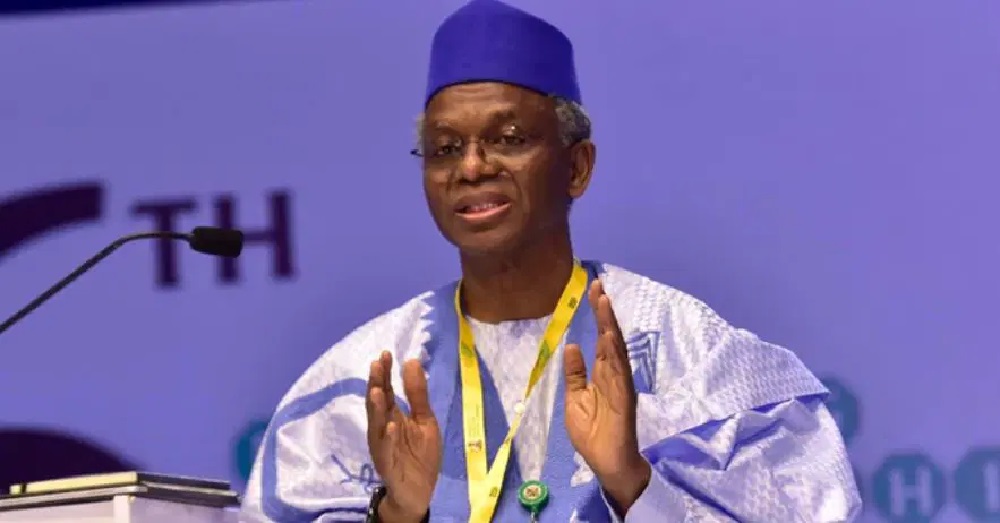
The camp of the African Democratic Congress, ADC, presidential candidate, Atiku Abubakar, has kicked against the continued detention of former Kaduna State Governor Nasir El-Rufai.
The former Kaduna governor has spent 200 days in detention since he was taken into the custody of the Independent Corrupt Practices and Other Related Offences Commission, ICPC.
A statement by Atiku’s media aide, Paul Ibe, said El-Rufai is entitled to justice, due process and equal treatment under the law.
He described the former governor as a political prisoner, alleging that he is being detained simply because he decided to chart a different political path, as provided for in Nigeria’s Constitution.
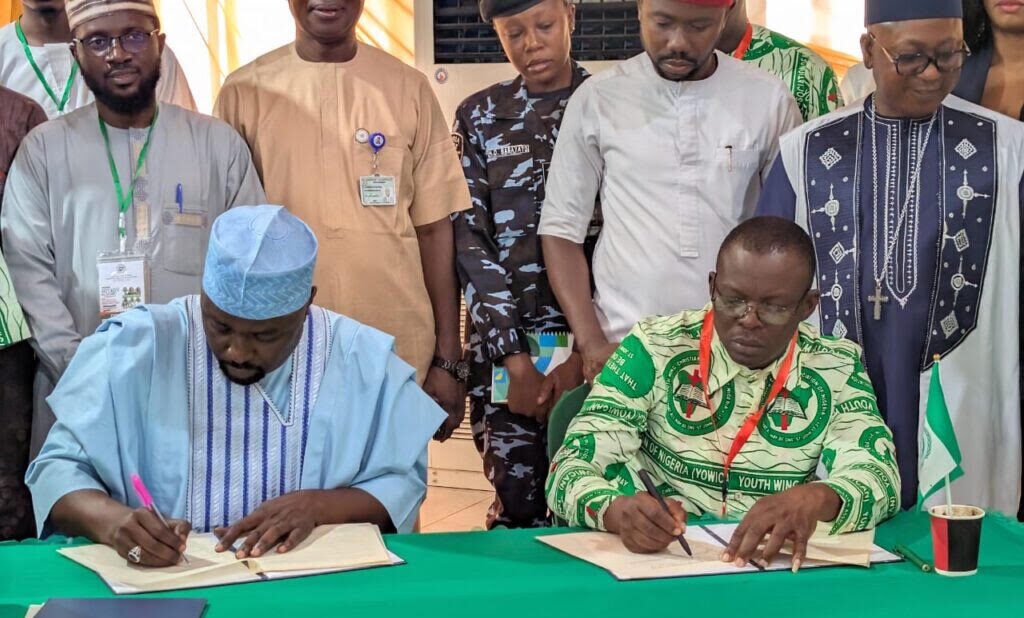
The Youth Wing of the Christian Association of Nigeria (YOWICAN) and the National Council of Muslim Youth Organisations (NACOMYO) have signed a peace accord ahead of the 2027 general elections.
The historic signing took place at the National Christian Centre on Friday in Abuja during the 2026 National Christian Youth Security Summit and Thanksgiving Service, held under the theme: “Empowered for Leadership, Service and Nation Building.”
The News Agency of Nigeria (NAN) reports that the peace accord aimed at fostering religious tolerance, rejecting political violence, and promoting peaceful coexistence ahead of the 2027 elections.
The three-day summit, brought together security officials, government representatives, Church leaders, and youth delegates from across the 36 states, the Federal Capital Territory (FCT), five CAN blocs, and six geopolitical zones.
Delivering his welcome address, the National Chairman of YOWICAN, Ven. Evang. Ademola Arowolo, described the peace accord as a “covenant of hope and a declaration of unity” designed to curb electoral violence and interfaith friction from the national level down to the grassroots.
”Today marks a defining moment in the history of youth engagement, faith-based leadership, national security advocacy, and interfaith collaboration in Nigeria.
“This Peace Accord represents more than a document. It is a covenant of hope, a declaration of unity, and a collective commitment by Christian and Muslim youths to work together in promoting peace, justice, dialogue, tolerance, and national development.”
Addressing newsmen during an interview, Arowolo emphasised the sanctity of human life and urged young people to resist political thuggery and vote-buying as the country prepares for the next electoral cycle.
”The key objective of today’s gathering is for the Christian youth of this country to sit down and see that security is very important, because every life whether of a Muslim, a Christian, or any other faith is sacred.
“God Himself does not divide us; it is human beings that divide us in their own mindsets.
“An idle man is the devil’s workshop, but as elections approach, if somebody meets you for any violence, tell them your children should not come. We cannot destroy our own land,” he said.
Corroborating the commitment, the National President of NACOMYO, Sani Sulaiman-Maigoro, stressed that interfaith solidarity remained the most viable tool to defeat security threats and political manipulation.
”First and foremost is for us to accept the reality that we are first Nigerians, and Nigeria is our country. Together we live and prosper, and when we are divided, we all suffer.
“When we work together, we are able to defeat the negative narrative and those few people who choose to be evil and divide us along religious, ethnic, or sectional lines.
“Nigerian Muslim youths are here in solidarity with Christian youths to say we are together towards securing and making Nigeria a better place for all,” he said.
Representing President Bola Tinubu, and First Lady, Sen. Oluremi Tinubu, the Executive Secretary, Nigerian Christian Pilgrim Commission (NCPC), Bishop Stephen Adegbite, cautioned young people against allowing politicians to use them as instruments of destruction.
”We are meeting at a very crucial time in the history of our great nation a period when we are moving towards another election
“It should be a period that none of you will be used as a sacrificial lamb. We don’t want any politician to use you and waste your life.
“The Muslim and the Christian in Nigeria must work together; we are brothers and sisters, and it is only when you have peace that you can talk of progress.”
The President of CAN, Most Rev. Daniel Okoh, urged Christian youths to rise as nation-builders and moral exemplars.
Okoh, represented by Rev. Simon Dolly-KIF, the Secretary-General of Northern Christian Religious Leaders Assembly (NOCRELA), urged youths to rise beyond the limitations of yesterday.
“The time has come for Nigerian Christian youths to rise beyond the limitations of yesterday and embrace the responsibility of building the Nigeria we desire to see tomorrow.
“Let no Christian youth become an instrument of violence, hatred, manipulation, or destruction.
“We must refuse to be recruited into anything that destroys the lives and future of our fellow Nigerians. Nigeria is bigger than our ethnicity, denomination, and political differences.”
Highlighting the security perspective, the Minister of Defence, Gen. Christopher Musa (rtd), noted that peace was essential for youth productivity.
Muse, represented by Mr Musa Likita, Special Adviser on Security and Intelligence to the Minister of Defence, recognised the important role of the youth in national development under a whole-of-society approach.
“The youth are full of energy, creativity, and innovation, so they will thrive better when the environment is peaceful.
“Youths are implored to hold values where they will not allow themselves to be exploited by extremist forces or criminal elements.”
(NAN)

By Gloria Ikibah
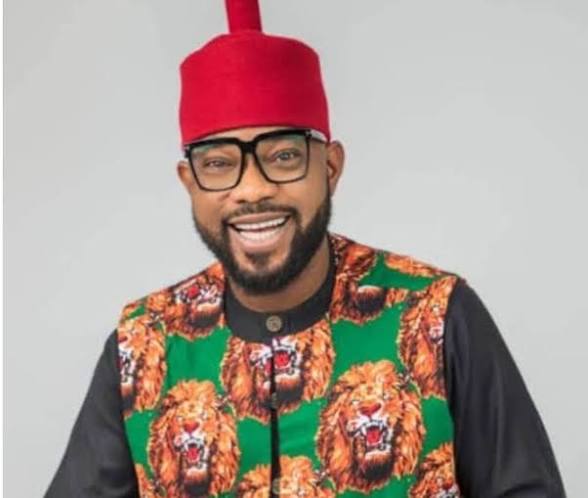
Member representing Ideato Federal Constituency of Imo State, in the House of Representatives, Rep. Ikenga Ugochinyere, has expanded his electricity intervention programme to seven communities with the installation of 500KVA transformers and other power infrastructure.
The latest phase of the Operation Light Up Ideato initiative covers Ogwume, Dikenafai and Akpulu, where transformers, electricity cables and other essential components are being installed to improve power supply.
The intervention cuts across Ideato North and Ideato South, with the latest installations building on earlier projects in Umuopia, Obodoukwu, Abukwa and Umukegwu.
The completion of the transformer installation in Akpulu, alongside ongoing work in Ogwume and Dikenafai, brings the number of communities reached by the initiative to seven.
According to the lawmaker, “the expansion underscored his “commitment to addressing critical infrastructure needs at the grassroots and ensuring that communities that have long experienced inadequate electricity infrastructure are not left behind.
“Unlike a one-off intervention, Operation Light Up Ideato is being implemented as a continuing community focused programme, with more transformers expected to be supplied and installed in additional communities identified as being in need.”
The programme is aimed at improving electricity infrastructure in communities that have faced inadequate power supply, while supporting economic and social activities at the grassroots.
Speaking on the continued expansion of the initiative, Ugochinyere, who is also Chairman, House Committee on Downstream Petroleum, reaffirmed his determination to ensure that every community in Ideato requiring electricity infrastructure is eventually covered.
He stressed that the objective was to progressively close the gap in power availability across the federal constituency.
The latest intervention adds to ongoing constituency projects by the lawmaker aimed at addressing basic infrastructure needs across Ideato North and South.

Nigeria’s External Reserves Hit $54bn, Highest Since 2008

Atiku’s camp angry as El-Rufai spends 200 days in prison

2Baba’s daughter laments separation of her parents




-
 News11 hours ago
Just in: Massive Explosion Rocks APC Governorship Candidate’s Convoy in Borno as Terrorists Attack
-

 News10 hours ago
Obi vows to protect 2027 election votes with his life
-
 Politics11 hours ago
Lere Olayinka: Some Presidential Candidates Are Not Contesting To Win 2027 Election But To Make An Impression
-

 News10 hours ago
See Dollar to Naira exchange rate today, September 4, 2026
-

 News10 hours ago
Bandits Kill Five, Abduct Several as Sokoto Community Comes Under Fresh Attack
-
 Metro35 minutes ago
Protesters storm Katsina streets over rising bandit attacks, urge govt to step up action
-
 News10 hours ago
NERD: UNIBEN, ABU, UNICAL, EKSU, Kwara State Poly Lead Nigeria’s Academic Digitisation Drive as Country crosses 400,000 academic submissions
-
 Politics36 minutes ago
FBI records: I’m ready for scrutiny, unlike you, Atiku tells Tinubu