Connect with us

News

Nigeria’s Security Architecture: Progress Amidst Complex Challenges, Not Incompetence

Published

on

ADVERTISEMENT
Zoom Ad
ADVERTISEMENT
Zoom Ad

The PUNCH editorial of April 27, 2025, titled “Insecurity and Incompetence of Security Chiefs”* , while understandably driven by patriotic fervour, falls into the classic pitfall of oversimplifying a profoundly complex national security crisis. *To characterise the Nigerian security chiefs as “clueless” or “grossly incompetent” is not only unfair, it dangerously underestimates the multidimensional challenges they confront daily, often at great personal risk and sacrifice.*


The editorial paints a grim, heartbreaking picture of Nigeria’s insecurity—and rightly so. *However, the portrayal of the Service Chiefs and heads of intelligence agencies as idle bureaucrats waiting for presidential instructions is misleading.* What it conveniently ignores is that Nigeria’s security challenges are neither isolated nor simplistic. *They are deeply rooted in decades-long socio-political fractures, economic dislocations, porous transnational borders, foreign insurgent influences, and a global terrorism matrix that continues to mutate beyond classical military doctrines.*

*The tragedy unfolding across Benue, Plateau, Kwara, and other states is not a sudden phenomenon.* It is the culmination of years of weak communal relations, the collapse of rural economies, foreign fighter infiltration, climate-driven migration pressures, and the trans-border proliferation of sophisticated arms from failed North African states. These are strategic and complex problems—far beyond the reach of simple military deployment or spontaneous reaction.

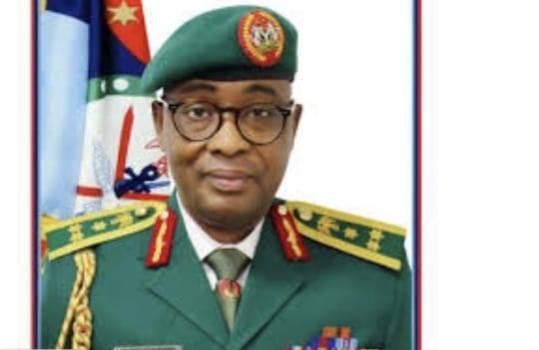
*Far from idling, Nigeria’s security chiefs—General Chris Musa (CDS), Lt. General Olufemi Oluyede (COAS), Air Marshal Hassan Abubakar (CAS), Vice Admiral Emmanuel Ogalla (CNS), IGP Kayode Egbetokun, DG DSS Adeola Ajayi, and DG NIA Ambassador Mohammed Mohammed—are engaged in continuous strategic, kinetic, and intelligence operations across the federation.*

Advertisement

*In fact, under their leadership, we have seen:*

Intensified aerial bombardments and decapitation strikes against insurgent camps.

Increased recovery of captured territories and ungoverned spaces.

Strategic alliances with regional forces under MNJTF to push back terrorist expansionism.

Advertisement

Deployment of joint task forces, mobile police squadrons, and proactive intelligence operations leading to the dismantling of several terrorist cells.

Enhanced collaboration with local security initiatives like Amotekun and Community Vigilantes to bolster internal security frameworks.

*Are these efforts flawless?* Absolutely not. But to dismiss them entirely is to be dangerously disconnected from the operational realities of national defence.

The editorial ridicules security chiefs for allegedly awaiting the President’s directive before acting. Such a portrayal reveals a fundamental misunderstanding of military command ethos. In every serious democracy, military and security operations must align with civilian authority. They do not—and should not—operate on whimsical impulses independent of constitutional control. President Tinubu’s firm directive, “Enough is enough,” signals reinforcement of political will—not an indictment of security operations.

Advertisement

It is true that Nigeria’s borders are porous. But has PUNCH forgotten that Nigeria shares over 4,477 kilometres of land borders with multiple states, many of which are politically unstable or in outright chaos? Even the wealthiest and most technologically advanced nations struggle with illegal immigration and infiltration. The inflow of armed elements from Mali, Burkina Faso, and Niger following the Sahelian upheavals exacerbates an already volatile security ecosystem. No security chief, no matter how competent, can seal such expansive borders overnight.

Expecting instant victories against insurgencies and banditry betrays ignorance of counter-insurgency realities. History shows that defeating asymmetric threats requires not just bullets and bombs, but winning hearts and minds, stabilising local economies, deradicalising ideologies, and rebuilding governance structures—none of which yield instant results.

Is the frustration of Nigerians justified? Without a doubt. But frustration must not be allowed to blind reason. Nigeria’s security chiefs are fighting an extraordinarily complex and long war—one complicated by decades of governmental neglect, international complicity in arms smuggling, and rapid socio-economic decline.

Instead of emotional denunciations, the media, civil society, and citizens should focus on:

Advertisement

*Institutional strengthening:* Advocating for police reforms, military modernisation, and enhanced intelligence architecture.

*Border security reinforcement:* Supporting diplomatic, military, and technological measures to better monitor Nigeria’s extensive frontiers.

*Community-based security initiatives:* Encouraging grassroots security partnerships between security agencies and communities.

*Balanced reportage:* Highlighting security successes alongside failures to boost morale among the troops risking their lives daily.

Advertisement

Rather than call for the resignation of the security chiefs who continue to bleed and toil for Nigeria’s stability, what the nation needs is a collective surge of constructive patriotism: citizen vigilance, local cooperation, responsible media advocacy, and political unity.

The path to securing Nigeria is not paved with simplistic outrage. It is carved painstakingly through cooperation, resilience, reform, and realism. Our security chiefs deserve fair critique—not sweeping condemnation.

As Nigeria navigates one of the most turbulent chapters of its history, let us choose the path of reasoned engagement over the temptation of emotionalism. Nigeria needs all hands on deck—not the cynical tearing down of those at the helm of a most difficult battle.

Signed:
TUKUR GUSAU
Brigadier General
Director Defence Information
28 April, 2025
Advertisement
Continue Reading
Advertisement
Click to comment

Warning: Undefined variable $user_ID in /home/naijuinz/public_html/wp-content/themes/zox-news/comments.php on line 49

You must be logged in to post a comment Login

Leave a Reply

News

NASENI Reiterates Commitment to Healthcare Innovation

Published

on

ADVERTISEMENT
Zoom Ad
ADVERTISEMENT
Zoom Ad

NaseniBy Gloria Ikibah

The National Agency for Science and Engineering Infrastructure (NASENI), has restated its commitment to strengthening Nigeria’s healthcare sovereignty through local manufacturing of medical diagnostic technologies.

The Executive Vice Chairman and Chief Executive Officer of NASENI, Khalil Suleiman Halilu, affirmed this while hosting participants of the Harvard University-led Science of Defeating Malaria programme at a closing dinner in Abuja, following their visit to the NASENI-TROMENT Biotechnologies Factory, where they commended the facility’s role in advancing disease control and healthcare innovation in Africa.

The delegation, led by Professor Dyann F. Wirth of Harvard University and comprising about 85 global health professionals, scientists and policymakers, toured the state-of-the-art facility and described it as a significant step towards combating malaria and other infectious diseases across the continent.

Advertisement

Speaking at the dinner, the NASENI boss noted that the commendation further validated the vision behind the NASENI-TROMENT Biotechnologies Factory, a strategic project initiated 18 months ago to reduce Nigeria’s dependence on imported diagnostic kits and strengthen local healthcare manufacturing capacity.

He explained that the facility is designed to produce up to 600 million diagnostic kits annually, enough to meet about 80 per cent of Nigeria’s diagnostic testing needs while creating opportunities for export to other African countries and global markets.

The factory manufactures rapid diagnostic tests (RDTs) and in-vitro diagnostic (IVD) products under the N-CheckUP brand for diseases and conditions including malaria, hepatitis B and C, HIV, typhoid, syphilis, COVID-19, pregnancy and blood glucose monitoring.

According to Halilu, the project aligns with NASENI’s broader mandate of deploying science, technology and innovation to address national challenges, create jobs and build industrial capacity.

Advertisement

He expressed appreciation to Professor Wirth and members of the Harvard delegation for their recognition of the progress made at the facility and reaffirmed NASENI’s commitment to developing innovative solutions that improve lives and position Nigeria as a leading healthcare manufacturing hub in Africa.

The Science of Defeating Malaria programme, which was held in Abuja from June 7 to 13, brought together global experts committed to advancing strategies for malaria elimination and strengthening public health systems worldwide.

Continue Reading

News

Obi Slams Court Ruling Deregistering ADC, Accord, Three Other Political Parties

Published

on

ADVERTISEMENT
Zoom Ad
ADVERTISEMENT
Zoom Ad

By Kayode Sanni-Arewa

Ex-Labour Party presidential candidate, Peter Obi, has condemned the recent judgment of the Federal High Court in Abuja ordering the deregistration of five political parties, including the African Democratic Congress (ADC) and the Accord Party.

Justice Peter Odo Lifu of the Federal High Court reportedly directed the Independent National Electoral Commission (INEC) to immediately deregister the affected parties over alleged constitutional breaches in a ruling delivered on Monday, June 15.

Reacting to the judgment, Obi described the decision as another troubling development that could further erode public confidence in Nigeria’s democratic institutions and the judiciary.

Advertisement

In a statement released on Monday, the former Anambra State governor argued that the court’s decision should be reversed, warning that weakening institutions for political purposes could have far-reaching consequences for the country.

According to Obi, the controversy surrounding the removal of former Chief Justice of Nigeria, Walter Onnoghen, had earlier raised concerns about the independence and sanctity of Nigeria’s institutions.

He noted that while investors can manage security and policy risks, uncertainty in the rule of law and perceptions of judicial vulnerability to political influence remain major deterrents to investment.

Strong economies are built on trust. Investors can manage security risks, policy risks, and even market risks. What they fear most is uncertainty in the rule of law and a judiciary that is perceived to be vulnerable to political pressure,” Obi stated.

Advertisement

The former presidential candidate lamented that many Nigerians have lost faith in institutions meant to protect them, adding that businesses increasingly prefer contracts governed by foreign jurisdictions due to greater confidence in their legal systems

Obi further argued that the judgment ordering the deregistration of the ADC and other political parties would further diminish public trust in the nation’s legal system.

“The Federal High Court judgment ordering the de-registration of the ADC and other political parties is just one of those activities that further reduces the common man’s trust in our legal systems. It should be reversed,” he said.

He pledged to work towards restoring the dignity, independence, and integrity of the judiciary, emphasizing the need for a justice system that is impartial, accessible, and respected by all.

Advertisement

“The common man must have a voice. The business community must be protected from legal uncertainty and intimidation. Justice must be impartial, accessible, and respected by all,” Obi added.

He also called on judges, senior advocates, legal luminaries, and lawyers across the country to defend the rule of law and safeguard Nigeria’s democratic institutions.

“To our judges, legal luminaries, senior advocates, and lawyers: this is your moment. Rise, defend the rule of law, take back your country,” he urged.

Obi concluded his statement with his popular refrain: “A New Nigeria is Possible.”

Advertisement

The ruling has continued to generate debate among legal and political stakeholders, with many awaiting further reactions from the affected parties and the electoral commission.

Continue Reading

News

BREAKING: Gunmen storm NIPSS Kuru, kill two soldiers Police Officer

Published

on

ADVERTISEMENT
Zoom Ad
ADVERTISEMENT
Zoom Ad

…as elite policy institute fends off night raid

By Kayode Sanni-Arewa

The National Institute for Policy and Strategic Studies, NIPSS, came under heavy attack on Monday night, June 15, 2026, as suspected attackers tried to breach Nigeria’s foremost policy school near Jos.

Two soldiers and one police officer were reportedly killed before security forces repelled the assault.

Advertisement

The attack began around 11:00 p.m.

Armed men attempted to force their way into the institute and reach the residential quarters where course participants were lodged, according to initial report by NewsmakersNG.

Sources said the slain police officer was the orderly attached to a retired Deputy Inspector-General of Police. The two soldiers died in the exchange of fire that followed.

But the attackers were stopped. Security operatives stationed at NIPSS mounted swift resistance and blocked access to the participants’ wing.

Advertisement

“No participant was abducted because the security forces successfully repelled the attackers before they could enter the residential area,” a source familiar with the incident was quoted to have said.

—NIPSS confirms incident, urges calm—

In a press release issued early Tuesday, June 16, the institute confirmed a “security incident occurred in the vicinity of the Institute in the early hours of today.”

Management said the situation was “promptly brought under control through the swift response of security personnel and relevant security agencies.”

Advertisement

“There is currently no threat to the safety of participants, staff, residents, or facilities of the Institute, and normal activities are continuing as scheduled,” said Dr. Osime Samuel, mni, Head of Public Affairs.

The institute stressed that investigations were ongoing and it would be “premature to speculate on the nature, scope, or outcome of the event.”

NIPSS said it could not confirm details circulating on social media.

“We urge members of the public and the media to rely on official communications from the Institute and relevant security agencies,” the statement added.

Advertisement

–Manhunt begins, motive unclear–

As of press time, authorities had not released an official statement on the motive behind the attack.

Security has reportedly been reinforced around the institute as investigations and manhunt operations commenced.

NIPSS Kuru trains Nigeria’s top bureaucrats, military officers, and policy strategists. An attack on the institute is an attack on the country’s policy brain trust. That it was targeted at night, with participants inside, has raised fresh fears about insecurity reaching Nigeria’s elite institutions.

Advertisement

For now, the guns are silent. The participants are safe. But three security men paid with their lives to keep it that way.

Continue Reading

Trending

Copyright © 2024 Naija Blitz News