
News
Reforms: How Nigeria and Kenya are rewriting Africa’s procurement “playbook”


- /home/naijuinz/public_html/wp-content/plugins/mvp-social-buttons/mvp-social-buttons.php on line 27
https://naijablitznews.com/wp-content/uploads/2025/07/IMG-20250710-WA0012-1000x600.jpg&description=Reforms: How Nigeria and Kenya are rewriting Africa’s procurement “playbook”', 'pinterestShare', 'width=750,height=350'); return false;" title="Pin This Post">
- Share
- Tweet /home/naijuinz/public_html/wp-content/plugins/mvp-social-buttons/mvp-social-buttons.php on line 72
https://naijablitznews.com/wp-content/uploads/2025/07/IMG-20250710-WA0012-1000x600.jpg&description=Reforms: How Nigeria and Kenya are rewriting Africa’s procurement “playbook”', 'pinterestShare', 'width=750,height=350'); return false;" title="Pin This Post">


By Sufuyan Ojeifo
An article in TheCable edition of July 4, 2025, entitled: “Lessons from Kenya’s e-procurement revolution,” examined the East African country’s e-procurement reforms and the rapid transformation in how it buys and spends.
It was a good read. And what it did, perhaps without meaning to, was remind us that Nigeria is also on a procurement reform journey of its own.
Quietly but steadily, the Bureau of Public Procurement (BPP), under the leadership of Dr Adebowale Adedokun, is turning procurement into a national development tool. Just like Kenya, Nigeria is rewriting the rules. And the progress deserves to be noted.
As the Director General of BPP, Dr. Adedokun likes to point out that public procurement is the engine of national development. And it so happens that simultaneously, Nigeria and Kenya are revving up in style.
In Nigeria, procurement accounts for roughly 30 per cent of government spending, delivering roads, hospitals, and schools. Kenya, according to recent figures, saves KES 85.9 billion annually (about 0.9 per cent of its GDP) through its e-procurement system.
To call a spade a spade, both countries have battled procurement fraud and inefficiency. Nigeria, for instance, lost ₦2.9 trillion to fraud between 2018 and 2020 alone, with ₦197 billion flagged in procurement-related irregularities in 2023. However, both countries are now fighting back with bold reforms.
Under President Bola Tinubu’s Renewed Hope Agenda, Nigeria’s procurement reforms are homegrown and purpose-built. They reflect Nigeria’s complexities, ambitions, and realities.
The BPP’s transformation is not only digital but also institutional and cultural. As Dr. Adedokun puts it, “For every inflated contract, a Nigerian suffers. That’s the pain we’re ending.”
● Digital transformation and smart systems
Kenya’s e-Government procurement system is already delivering results by integrating procurement with iTax and IFMIS platforms. Nigeria’s counterpart is the Nigeria Open Contracting Portal (NOCOPO), which aligns with the Open Contracting Data Standard. NOCOPO now allows real-time tracking of procurement activities, with monthly publication of contracts mandated for all MDAs.
To be clear, Nigeria’s systems go even further by leveraging artificial intelligence and blockchain technologies. These tools have been built for Nigeria’s mobile-first infrastructure, ensuring process integrity even in rural or low-connectivity areas. According to Dr. Adedokun, “Our systems are built for Nigeria’s realities, not imported solutions.”
● Efficiency gains
The referenced article in TheCable reported that Kenya had seen significant cost and time savings across counties. To be fair, Nigeria, through its decentralisation policy, has achieved similar results.
Only contracts above ₦5 billion for goods or consultancy and ₦10 billion for works now require Federal Executive Council (FEC) approval. This flexibility has reduced contract processing time by up to 300 per cent.
Additionally, the BPP now handles no-objection requests within 20 working days.
Moreover, from January to 17 June 2025 alone, the Bureau saved ₦173,762,059,693.19, $155,050,600.87, and €1,741,219.71 through price intelligence and cost benchmarking.
● Inclusion and local content
Kenya’s Access to Government Procurement Opportunities [AGPO] initiative reserves 30 per cent of contracts for youth, women, and persons with disabilities. Interestingly, Nigeria’s approach is similarly ambitious but tailored to its diverse procurement landscape.
Through the Affirmative Procurement Initiative and Community-Based Public Procurement, the BPP promotes participation by micro, small, and medium enterprises, women-owned firms, and persons with disabilities.
In tandem, the Nigeria First policy actively prioritises local manufacturing and services. This localisation drive is not merely patriotic; it is strategic. As Dr. Adedokun rightly says, “Every naira spent locally fuels Nigeria’s industrial revival.”
● Capacity building and professionalisation
While Kenya trains its officers through the Kenya School of Government, Nigeria’s strategy centres on the Nigeria Procurement Certification Programme (NPCP).
NPCP is delivered in partnership with six federal universities under the World Bank-supported Sustainable Procurement, Environmental and Social Standards Enhancement (SPESSE) programme. Over 7,000 procurement officers have been trained, and mandatory continuous certification is in place.
It is worth mentioning here that in Nigeria, a key innovation is the Procurement Officer Management System, which tracks performance and links officers to specific projects. Procurement is no longer a faceless function. Officers are held accountable.
In this regard, the BPP is also initiating collaboration with relevant institutions to regulate the practice of procurement training in the public sector. This is to ensure that only credible and certified providers offer training that aligns with the national procurement framework.
Furthermore, ethical standards are being reinforced. The BPP is issuing appropriate guidelines that all procurement professionals, whether individuals or corporate entities, must follow. These ethical codes are aimed at professionalising the space and closing the loopholes that previously enabled unethical behaviour.
This effort is complemented by the BPP’s ongoing partnership with relevant professional bodies to embed principles of good governance and integrity within the procurement profession.
● Anti-corruption and accountability
In terms of accountability, while Kenya relies on audit trails, Nigeria combines real-time scrutiny with digital oversight.
The BPP works closely with the EFCC and ICPC, flagging contracts for investigation, recovery, and prosecution where necessary.
Contractors who have inflated costs have been made to make refunds. In Dr Adedokun’s words, “We found fully paid contracts that were inflated. Contractors refunded. It’s no joke.”
Digital tools allow pre-bid reviews, unannounced audits, and strict monitoring. Non-performing contractors are placed on a debarment list. The recently updated Standard Bidding Documents guarantee transparency and ensure fairness in evaluations.
Meanwhile, the BPP now operates squarely as a regulator, not a participant in procurement. All stakeholders, ministries, departments, agencies, and suppliers are required to operate within the framework being established by the Bureau. This is a significant shift and underscores the Bureau’s mandate as both umpire and standard-setter.
As part of the ongoing reforms, the Bureau is also deepening engagement with Nigeria’s Parliament and Judiciary to ensure procurement delivers real value for money. Through procurement surveillance, ongoing audits, and evaluations, and in collaboration with statutory oversight bodies, the BPP is working to institutionalise transparency at all levels of government.
● Citizens as watchdogs
Kenya promotes transparency by making procurement data accessible. Nigeria is doing the same. NOCOPO is public; whistleblower hotlines are active, and civil society is involved. Citizens are encouraged to monitor implementation. Indeed, NGOs have audited major projects such as the Lagos-Calabar Highway.
It needs to be said that procurement is no longer the business of government alone. It is now a shared civic duty.
● Sovereign control and African context
Unlike off-the-shelf systems, Nigeria’s reforms are sovereign and context-specific. The BPP’s collaboration with sub-national governments ensures alignment. Political interference, long a problem in procurement, is tackled not after the fact but at the point of implementation.
The Bureau’s rebranding, which includes the motto “Driving National Development”, reflects a cultural shift. As Dr Adedokun says, “My dream is to make Nigeria the Dubai of Africa through our reformed procurement processes.”
At every step, the BPP is aligning Nigeria’s procurement regime with global best practices. From data standards and open contracting to ethical compliance and digital traceability, the goal is to bring Nigeria’s system in line with the world’s most effective and transparent frameworks.
The confidence in Nigeria’s reform process is also being validated externally. The recent additional funding support from the World Bank and other development partners is a testament to growing international trust in the direction of Nigeria’s procurement evolution.
As a follow-up to that, under the SPESSE programme, the Federal Government, through the BPP, is expected to share its experiences and success stories with other African countries. Nigeria’s reforms are not only for domestic benefit but could also help shape procurement best practices on the continent.
● A shared path forward
Nigeria and Kenya have a lot to learn from each other. Nigeria could scale up digital infrastructure at the sub-national level, like Kenya has done with county governments. Kenya, in turn, could adopt Nigeria’s use of blockchain and AI for process control. Both countries are well positioned to co-lead procurement reforms under the African Continental Free Trade Area.
By 2027, Nigeria plans to deploy sector-specific procurement portals in oil and gas, healthcare, and infrastructure. The journey is far from over, but the signs are promising.
In rounding off, Nigeria, like Kenya, is embracing procurement reforms. The measures being implemented by the BPP are homegrown, ambitious, and anchored in the Renewed Hope Agenda of President Bola Tinubu. With savings of ₦173 billion in the first half of 2025 alone, the results are measurable, and the commitment is visible.
Without equivocation, let it be clearly stated that this is not just about contracts in the abstract sense. It is about functional classrooms where students can actually learn; it is about roads that last beyond the next rainy season, and hospitals that heal those who go there when they are unwell.
As Dr. Adedokun reminds us, “For every inflated contract, a Nigerian suffers. That’s the pain we’re ending.”
It is important that Nigeria stays the course because reforms are never one-off events but continuous processes.
■ Sufuyan Ojeifo, MNGE, is a journalist, publisher, and media consultant based in Abuja.

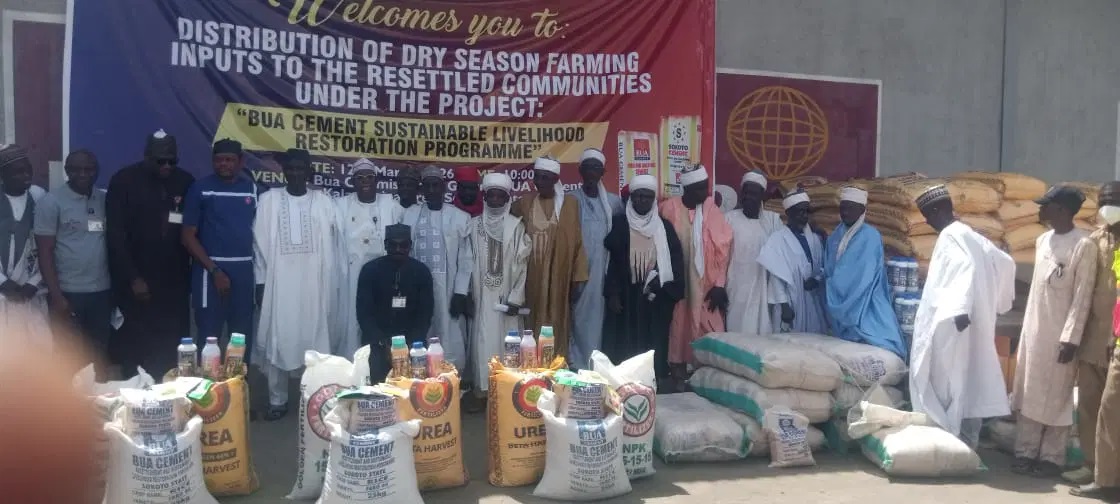
BUA Cement Plc has distributed agricultural inputs valued at over N108 million to 211 farmers from its host and resettled communities in Sokoto State under its Resettlement and Sustainable Livelihood Restoration Programme.
The initiative is targeted at farmers affected by the company’s quarry operations and is aimed at restoring livelihoods, improving agricultural productivity and supporting food production.
Speaking at the distribution ceremony, the Managing Director of BUA Cement Plc, Engr. Yusuf Binji, said the programme reflects the company’s commitment to sustainable community development and economic empowerment.
Represented by the Assistant Director of Corporate Services, Alhaji Sada Suleiman, Binji said the intervention was designed to help resettled community members rebuild their livelihoods through agriculture.
“We believe that supporting agriculture is one of the most effective ways of empowering rural households and improving their economic well-being,” he said.
According to him, the company is focused on creating sustainable opportunities for affected communities beyond compensation and resettlement.
He added that the intervention would help improve beneficiaries’ incomes while contributing to increased food production in Sokoto State and across the country.
The company’s Director of Health, Community, Safety and Environment, Engr. Ali Gumel, urged beneficiaries to make effective use of the farm inputs, noting that they had received training on their proper application.
He said the company expects the inputs to translate into higher crop yields, improved household incomes and sustainable agricultural development.
Also speaking, the Programme Manager of the Sokoto State Agricultural Development Programme (SADP), Alhaji Abubakar Danmaliki, described the initiative as an example of effective collaboration between the private and public sectors in promoting rural development.
He said the programme would support farmers in recovering from the challenges associated with resettlement while boosting agricultural output.
Danmaliki added that beneficiaries would continue to receive extension services and technical support to encourage the adoption of improved farming practices.
The company’s Social Performance Specialist, Alhaji Rabiu Maska, said the package included NPK, urea and liquid fertilisers, improved maize, sorghum, cowpea and groundnut seeds, as well as pesticides, herbicides and other farm inputs.
According to him, the intervention was tailored to meet the farming needs of the beneficiaries and improve their harvests.
Some of the beneficiaries commended BUA Cement for the support, describing it as timely in view of rising production costs.
They pledged to utilise the inputs for the intended agricultural purposes to maximise the benefits of the programme.
The All Progressives Congress (APC) has emerged victorious in all the 24 chairmanship seats and 240 councillorship positions contested in Saturday’s local government elections in Gombe State.
Chairman of the Gombe State Independent Electoral Commission (GOSIEC), Abdullahi Garba Talasse, who announced the results on Saturday in Gombe, declared that the ruling party won in all the local government councils and Local Council Development Areas (LCDAs) where elections were conducted.
Talasse described the successful conduct of elections in the newly created LCDAs as a milestone in the state’s democratic development, noting that Gombe had expanded from 11 local government councils with 114 councillors to 24 councils and LCDAs with 240 councillors.
He said the commission worked closely with the State House of Assembly to secure the legal backing required for elections to be held in the LCDAs.
“We did not struggle for the enabling law in vain. Today, we have successfully conducted elections across the 24 councils and LCDAs, which is a significant achievement for the state,” he said.
The GOSIEC chairman attributed the poor showing of opposition parties to their limited participation in the polls.
According to him, the African Congress (AC) fielded candidates in only three chairmanship contests, while the Democratic Liberation Alliance (DLA) contested in six councils.
He added that the New Nigeria People’s Movement (NRM), Youth Party (YP) and Zenith Labour Party (ZLP) each sponsored candidates in three chairmanship elections.
For councillorship positions, Talasse said AC contested in eight wards, while DLA, NRM, YP and ZLP each fielded candidates in 11 wards.
“That explains why some parties recorded zero votes in several areas because they did not participate across all the councils and wards,” he said.
Talasse explained that although chairmanship results were declared at the various local government collation centres, the commission considered it necessary to present a statewide summary to journalists, observers and the public.
“From the results before the commission, APC has won all the 24 chairmanship seats and all the 240 councillorship positions,” he declared.
He commended political parties, election observers, civil society organisations, security agencies and other stakeholders for contributing to the peaceful conduct of the elections.
The GOSIEC chairman also appreciated party leaders, government officials, non-governmental organisations and other guests from across the country who monitored the exercise, describing their participation as crucial to the success of the electoral process.
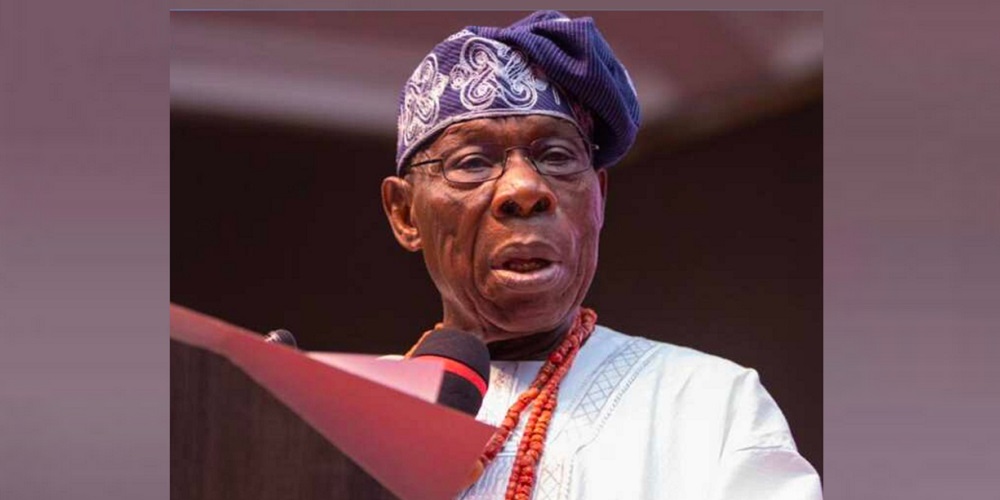
Former President of Nigeria, Olusegun Obasanjo, has attributed global warming to human greed, selfishness, and reckless exploitation of the environment, warning that such actions continue to disrupt the natural balance of the ecosystem.
Obasanjo made the remarks in Kano during an event organised in honour of former President of the Nigerian Bar Association, Abubakar Mahmoud, and his Environment and Sustainability Initiative and Trust Fund.
Speaking at the event, Obasanjo acknowledged the reality and growing impact of climate change, stressing that human activities remain a major driver of global warming.
“God created our world in balance, but we, as human beings, out of selfishness and carelessness, have done more harm than good to our environment, and we need to do more in the safekeeping of our environment,” the former president said.
Obasanjo also revealed that he has personally planted more than 3.5 million trees as part of efforts to combat climate change, stressing that protecting the environment is a collective responsibility and a global public good.
The Kano State Government commended the initiative and pledged its support to ensure its sustainability.
The Commissioner for Environment and Water Resources, Dahiru Hashim, described the initiative as a significant step towards environmental protection and sustainable development.
“In recognition of this laudable initiative, the Kano State Government has approved the donation of 10,000 seedlings for the Mahmoud Environmental and Sustainable Trust,” Hashim said.
In his remarks, Abubakar Mahmoud said the initiative seeks to promote environmental sustainability and preserve the ecosystem for the benefit of both present and future generations.
“I started a small project that has grown into something quite formidable, providing protection to villages around and to preserving various species of plants,so what we are trying to do is to continue with this legacy,” he said.
The event attracted several dignitaries, including the vice presidential candidate of the Nigeria Democratic Congress (NDC), Rabiu Kwankwaso, former chairman of the Independent National Electoral Commission (INEC), Attahiru Jega, officials of the Kano State Government, and other stakeholders.
Participants at the event called for deliberate and collective action to address climate change and environmental degradation.

Pastor flogs 13-yr-old girl to death over alleged N30, 000 theft

BUA Cement distributes N108m farm inputs to 211 Sokoto farmers

NCC unveils incentives for local smartphone production




-
 Foreign6 hours ago
Venezuela’s earthquake death toll hits 1,430, ‘worst in 123 years’
-
 News6 hours ago
Lagos Begins Unique ID Registration For Public, Private School Students
-

 News6 hours ago
NDC Vice Chairman, Assembly Candidate, Others Defect to APC After Court Nullifies Party Registration
-

 Metro5 hours ago
Police Rescue 11 Abducted Farm Workers In Edo After ‘Gun Duel’ With Kidnappers
-
 News6 hours ago
Oyo Gov Lifts Curfew in 10 LGAs, Reassures Residents on Security
-
 News6 hours ago
‘My Wife Sent Love Messages To Her Lover, Threatened Me With Knife For Dating Two Of My Church Members’
-
 News17 hours ago
Just in: Police rescue five abductees in Ogun
-
 Entertainment6 hours ago
Family Announces Funeral Programme for Late Actor Kola Oyewo
Warning: Undefined variable $user_ID in /home/naijuinz/public_html/wp-content/themes/zox-news/comments.php on line 49
You must be logged in to post a comment Login