Connect with us

News

Why Uzodimma May Handpick APC Candidates for LG Chairmanship, Councilorship positions

Published

on

ADVERTISEMENT
Zoom Ad
ADVERTISEMENT
Zoom Ad
 
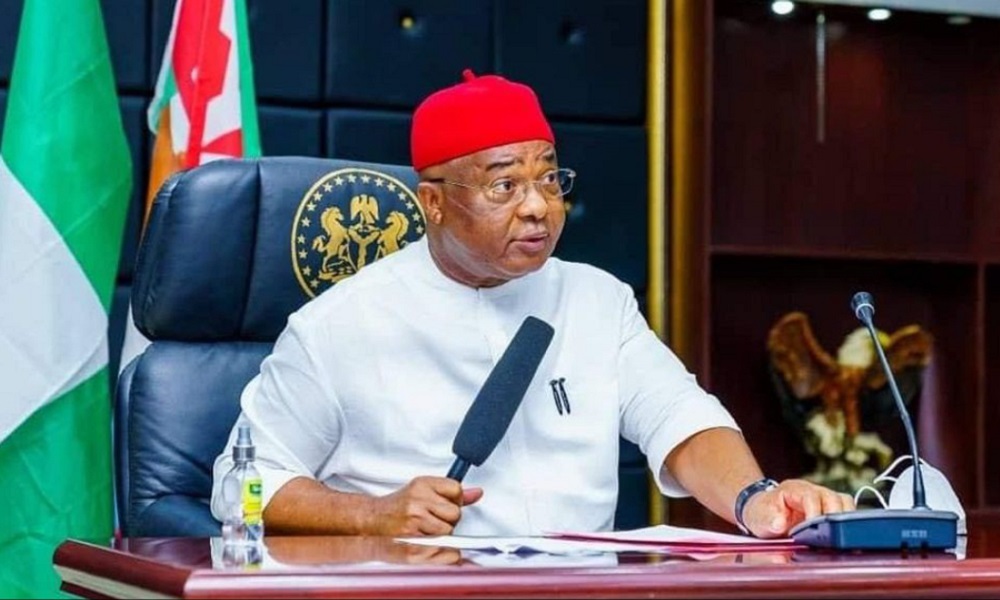
As the All Progressives Congress (APC) in Imo State prepares for the upcoming local government elections, Governor Hope Uzodimma faces a crucial decision: whether to allow party leaders to harmonize and select candidates or to personally handpick those who will represent the party in the chairmanship and councilorship races.
 
Several factors suggest that the governor may lean towards the latter, especially given the current political climate and the strategic considerations at play.
 
Governor Uzodimma has publicly warned APC aspirants against engaging in unethical practices, such as taking oaths or entering into allocation-sharing agreements with influential party leaders.
 
These practices, which have been rumored to be prevalent among some aspirants, pose a significant threat to the integrity of local governance.
 
By securing the support of powerful leaders through such means, these aspirants effectively become beholden to them, prioritizing the leaders’ interests over the needs of their constituencies.
 
The governor’s threat to disqualify any aspirant caught engaging in these practices is a strong stance, but it may not be enough if he allows the current leadership to produce candidates.
 
These leaders could easily program their chosen candidates to adhere to the allocation-sharing agreements or oath-bound loyalties, knowing that their positions are secure as long as Uzodimma’s influence pushes them to victory in the elections. In such a scenario, the governor’s warning becomes ineffective, and the true purpose of ensuring transparent and accountable governance is lost.
 
Maintaining Control Amidst Local Government Autonomy
 
The autonomy granted to local government chairmen across Nigeria has reshaped the power dynamics between state governors and local government officials.
 
With more control over their resources and administrative decisions, chairmen are less dependent on the state government, potentially limiting the governor’s influence at the grassroots level.
 
For Governor Uzodimma, allowing party leaders to select candidates for these powerful positions could result in a loss of control.
 
If leaders install their loyalists as chairmen and councillors, they could wield significant influence over local government affairs, potentially even outmaneuvering the governor himself.
 
These leaders could leverage their control to influence councillors to remove chairmen who do not toe their line, a feat the governor may find difficult to counter if he did not personally select the candidates.
 
By handpicking APC candidates, Governor Uzodimma can ensure that those elected are aligned with his administration’s goals and are not under the undue influence of party leaders with their own agendas.
 
This strategy would allow him to maintain a unified front within the party and ensure that local government officials remain accountable to the state government, thereby preserving his ability to govern effectively.
 
Balancing Power and Protecting Governance
 
Governor Uzodimma’s potential decision to handpick APC candidates is not just about maintaining control; it is also about balancing power within the party and the state.
 
The governor is keenly aware that the concentration of power in the hands of a few party leaders could destabilize the party and weaken the overall governance structure in Imo State.
 
By selecting candidates who are free from the influence of these leaders, the governor can prevent the rise of independent power centers that could challenge his authority and disrupt the administration’s efforts to deliver on its promises to the people.
 
Moreover, this approach would protect the integrity of local governance by ensuring that those elected are committed to serving their communities rather than advancing the interests of a select few.
 
However, allowing the aspirants to go to the field and conduct proper primaries might also ensure that the leaders do not manipulate the process and install their loyalists who might turn around tomorrow to work against Uzodimma.
 
It is worthy of note that once elected, Uzodimma would not have the power to unseat them and as they have their own allocation which comes directly to them, he would not be able to push them around.
 
 
Source: Issueshq.com

Continue Reading
Advertisement
Click to comment

Warning: Undefined variable $user_ID in /home/naijuinz/public_html/wp-content/themes/zox-news/comments.php on line 49

You must be logged in to post a comment Login

Leave a Reply

News

2025 Capital Budget Gets New Lease of Life as Reps Push Deadline to September

Published

on

ADVERTISEMENT
Zoom Ad
ADVERTISEMENT
Zoom Ad

By Gloria Ikibah

The House of Representatives has approved a three-month extension of the implementation period for the capital component of the 2025 Appropriation Act, shifting the deadline from June 30 to September 30, 2026.

The decision was taken during an emergency sitting held on Monday, as lawmakers moved swiftly to ensure the continued execution of capital projects captured in the national budget.

The legislation, which seeks to amend the Appropriation (Repeal and Enactment) Act, 2025, was designed to provide additional time for Ministries, Departments and Agencies to complete ongoing projects and fully utilise funds earmarked for capital expenditure.

Advertisement

In an unusually rapid legislative process, the bill passed through its first, second and third readings during the same plenary session after members suspended the relevant provisions of the House Standing Orders to facilitate its consideration.

Leading debate on the general principle of the bill, House Leader, Rep. Julius Ihonvbere, said the extension was necessary as several capital projects captured in the 2025 budget had not been fully implemented.

He emphasised that the amendment was not intended to alter any provision of the budget but merely to extend its lifespan by three months to allow ongoing projects to be completed.

He said: “It is very straightforward. Because some aspects of the capital appropriation will not be fully implemented, if we do not extend the life of this particular law, it will have a very grave impact on the growth and development of the national economy.

Advertisement

“The purpose essentially is to extend the lifespan. We are not touching any part of the law. It is simply extending the lifespan from June 30, 2026 to September 30, 2026. I urge my colleagues to approve this so that we can continue with the work of developing and growing our economy and country”.

Presiding over the session, Speaker of the House, Rep. Abbas Tajudeen, acknowledged that the records provided by the Chairman House Committee on Appropriations and other relevant agencies revealed that implementation of the capital budget was yet to be completed.

“As you are aware, the 2025 budget was extended to June 30. From the records we received from the Chairman, Appropriations, and other relevant quarters, it is yet to be fully implemented. It is therefore in the best interest of this country and the National Assembly for us to extend the budget to September 30 to enable the Federal Government fulfil its obligations under the 2025 budget,” the Speaker said.

Following the adoption of the bill at second reading, the House dissolved into the Committee of Supply where it had the clause by clause consideration of the bill, and approved the three clauses, explanatory memorandum and long title of the bill.

Advertisement

The committee subsequently reported back to plenary, where lawmakers adopted its recommendations and suspended House rules to allow the bill to be read a third time and passed the same day.

The accelerated passage reflects growing concern over the pace of implementation of key infrastructure and development projects, many of which require additional time to reach completion.

With the approval, government agencies now have until the end of September to execute projects funded under the capital component of the 2025 budget, a move expected to prevent disruptions to ongoing works and improve budget performance.

The extension is also aimed at ensuring that resources already allocated for development projects are effectively utilised before the capital budget expires.

Advertisement

With the passage of the amendment, federal ministries, departments and agencies now have an additional three months to implement capital projects and utilize funds appropriated under the 2025 budget.

Meanwhile, the House also announced changes in the leadership of some standing committees.

The appointments are as follows:
• Rep. Ali Madaki – Chairman House Committee on Special Duties
• Rep. Ali Isa J.C. –  Chairman House Committee on Shipping Services,
• Rep. Pascal Agbodike – Chairman House Committee on Small and Medium Enterprises Development Agency of Nigeria (SMEDAN),
• Rep. Kelechi Nwogu –  Chairman House Committee on Hydrological Services

The Speaker urged the newly appointed committee chairmen to assume their responsibilities immediately and bring their legislative experience to bear in advancing the work of the House.

Advertisement
Continue Reading

News

Day 4 of projects commissioning as President TInubu set to commission newly constructed Court of Appeal Building

Published

on

ADVERTISEMENT
Zoom Ad
ADVERTISEMENT
Zoom Ad


President Tinubu will commission the newly constructed Court of Appeal (Abuja Division) Building today, 15/6/26 as FCT projects commissioning enters Day 4.

#FCTProjects2026
#RenewedHopeFCT

Continue Reading

News

Cholera Outbreak: Plateau Records 5 Deaths, 11 Confirmed Cases

Published

on

By

ADVERTISEMENT
Zoom Ad
ADVERTISEMENT
Zoom Ad

Plateau State commissioner for Health, Dr Nicholas Baamlong, has revealed that the state recorded 11 confirmed cases of cholera, five deaths and 53 suspected cases.

Baamlong, who disclosed this to journalists yesterday in Jos, said the confirmed and suspected cases were reported in Pushit, Mangu 1 and Mangu 2 communities in Mangu local government area (LGA).

According to him, the state Ministry of Health is intensifying public health interventions to contain the outbreak, prevent further spread and reduce its impact on affected communities.

He explained that the state had taken decisive actions to control the outbreak and protect its citizens via the deployment of additional Response Teams (RRTs) to the affected wards, scaling up of treatment centres and isolation capacity and the emergency procurement of Rapid Diagnostic Tests Kits, intravenous fluids and essential drugs.

Advertisement

The Commissioner further said that the ministry had activated an Incident Management System (IMS), for a comprehensive and multi sectorial response to the outbreak.

“The activation of the IMS ensures a coordinated, efficient, and accountable response structure in line with national and international emergency response frameworks,” he said.

Baamlong explained that cholera was an acute diarrhoeal disease caused by consuming food or water contaminated with the bacterium Vibrio cholerae.

He urged residents of Mangu LGA and neighbouring communities to remain vigilant and take preventive measures, including drinking safe water, maintaining proper hand hygiene, avoiding open defecation, and ensuring proper waste disposal.

Advertisement

He also advised residents to promply report suspected cases of cholera to the nearest healthcare facility for immediate attention.

While reaffirming the state government’s commitment to safeguarding the health and well-being of residents, Baamlong called on development partners and other stakeholders to support ongoing response efforts.(NAN)

Continue Reading

Trending

Copyright © 2024 Naija Blitz News