

News
RIVERS, WIKE, FUBARA, AND THE WAY FORWARD
BY BOLAJI AFOLABI
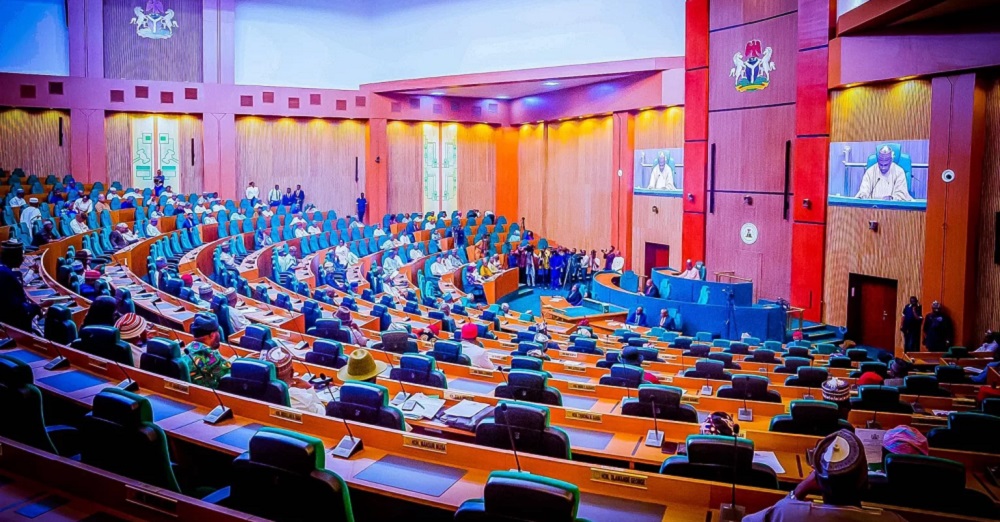
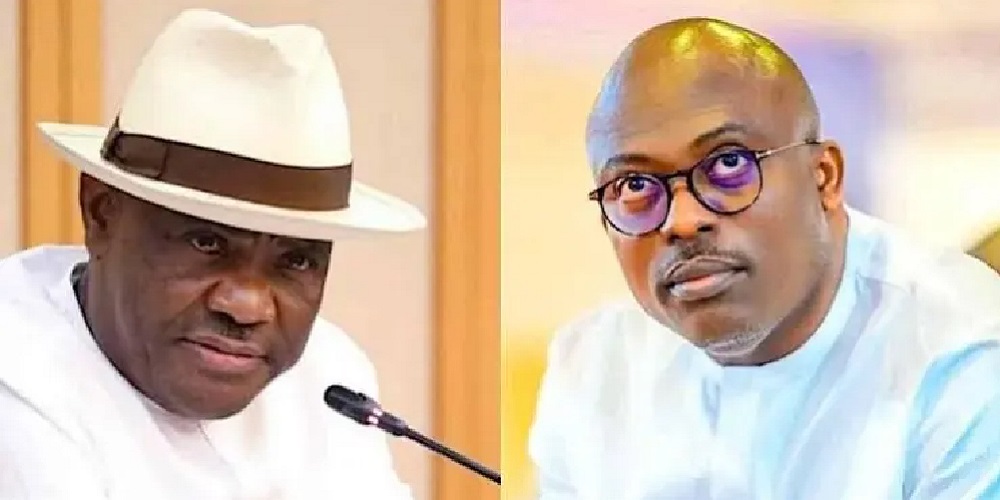
It is no longer news that the seemingly “minor” disagreement between Sir Siminilaye Fubara, and Barrister Nyesom Wike, and by extension the Rivers state House of Assembly; which snowball into protracted quagmire, and multi-faceted crisis led to the declaration of state of emergency by President Bola Tinubu on March 18, 2025. Somehow, the power-tussle, and relevance-battle which grew in leaps and bounds threw up different names, and groups. Sadly, while development issues in Rivers suffered unnecessary, and unreasonable hiatus, many individuals masquerading as “analysts, commentators, and activists,” literally swarmed radio, and television stations pushing forward, with ecclesiastical posturing the positions they believed to be “facts.”
Perhaps, the pursuit of pecuniary benefits may have informed these actions, and attitudes by those who reportedly embarked on regular visitations to media houses in Lagos, Abuja, Port Harcourt, and other major cities across the country. Some of these “experts” became “merchants of propaganda” and “purveyors of falsehoods” while the beef festered. Determined to justify their pay, they dug in; harder, deeper, and ferociously. It is argued that the fire of confusion in Rivers dragged on, and refused to be extinguished as a result of the continued unfriendly comments, and unpeaceful antics of some of these financially-induced commentators, groups, and associations.

Like most things in Nigeria, many people joined the bandwagon; pontificating on issues they didn’t have full, and proper grasp. Some of these interventions ranged from the ludicrous to tongue foolery. Not mindful of the harm the continued schisms were having on the general well-being of the ordinary people on the streets of Rivers, these puppeteers evolved selfish ways in compounding matters, thereby ensuring that their unconscionable activities received regular patronage. Many of those who purportedly enjoyed the largesse included lawyers, politicians, and academics. Activists, women groups, youth associations, and others allegedly leveraged on the crisis for financial favours. Indeed, professional bootlickers, crisis-manipulators, and mudslinging “careerists” coalesce to have their bites, and share of the enticing cake from the “treasure base” state.
Between the time the crisis became public in the last quarter of 2023, and when Tinubu declared a state of emergency, the writer refused to comment on the issue. Save for an opinion published December, 25, 2023, a siddon look approach was taken. Comments raised therein that have been justified will be looked at in the course of this treatise. Any critical follower of Nigeria’s political history who is imbued with discerning gifts will not be surprised about the turn of events in the state. The unfolding developments were easily predictable by any unattached, and unbiased mind. With all modesty, having had consistent official and personal interactions with the political class, the writer can be credited with some measure of exactness, and appropriateness on certain matters bothering on power struggle, influence-relevance, structures realignment, and political control.
In over two decades of closely monitoring Nigeria’s political development, and the political class, there are many lessons learnt which has enriched one’s knowledge, and broaden understanding. Yes, democracy is practiced in Nigeria. However, certain situations clearly suggests that our variant of democracy is unique, different in many ways. What may be practicable in some other countries can be an aberration in Nigeria. Issues like loyalty, group interest, party structures, positions and projects sharing, and similar others are not, never toyed with. In most cases, political office holders dissipate energies, time, and resources in maintaining the status quo towards being in the good book of those that matters. Everything is deployed in achieving this purpose. However, anybody that steps out of the line, particularly for perceived arrogance, and selfish agenda, the outcomes may not be palatable.
The Rivers crisis is a perfect example of these issues. As the dispute gained momentum, and became the major topic of discourse across the country for months, some dispassionate observers postulated that the final outcome may become tasteless in the mouths of certain people. The writer in an earlier commentary, “RESCUING FUBARA FROM IMMINENT POLITICAL DESCENT” published on 25th December, 2023 wrote that, “Governor Sim Fubara, being a political-starter may not be discerning enough to know that those encouraging him to take rigid positions and rudderless actions are only digging his “political grave.” How do one explain a Governor carrying out actions that are purely undemocratic? Closure of the Assembly Chambers; allegedly demolishing the Assembly Complex; presenting the state’s Budget to a “3-man Assembly” and some other constitutional infractions.”
Continuing, the writer declared that, “somebody must strongly advise Fubara that if actions that may throw the state into further tensions continue, it would not be out of place if the Federal Government declares “state of emergency” in Rivers. Recall that a similar thing happened in Oyo and Plateau states during Obasanjo’s administration. If protests and other activities persist, and the Wike group of “27 majority lawmakers” insists on doing the right thing, or the Federal Government takes necessary steps, Fubara will be the greatest loser. Either impeachment or a state of emergency, NONE will favour him. If this happens, Fubara may just discover that his group of friends, loyalists, and associates would abandon him. Typical of politicians, these “yes-men” will not only leave him to groan over his predicament but likely jump ship by shifting their “loyalty” to the other group. Fubara should meditate on this age-long aphorism that, the umbrella becomes a burden once the rain is over; that is how loyalty (the feigned and contrived one) functions when benefits stop.”
Back to now. Though there are on-going lawsuits, initiated by different blocs including the Peoples Democratic Party, (PDP) Governors Forum to reverse the presidential declaration but until the Supreme Court pronounces otherwise, the state of emergency subsists. Days into the “emergency state” certain comments credited to Fubara were encouraging. At various times, he alluded to the fact that no sacrifice is too big for the peace of Rivers. However, recent developments give concerns, and worries about the likelihood of ending or extending the “emergency state.” From reports, there seems to be an upsurge in rallies, walks, and demonstrations against Naval Vice Admiral Ibok-Ete Ekwe Ibas (Rtd), Rivers state Sole Administrator. At many of the protests, the call for the return of Fubara; to the office has been loud and clear. There are no pretences about the demand.
Yes, the supporters, loyalists, and associates of Fubara have the constitutional rights to legitimately press for his return to the classy, comforts of the “Brick House” moniker for the Government House. Some people who are non-aligned in the Rivers crisis are worried about the timing, messaging, and mission of these actions. Meanwhile, the rumour mill is agog about Fubara’s alleged endorsement of these protests. Many dispassionate observers concerned about this trend, are asking questions. Why has Fubara not called these groups to order? Why have his senior aides not issued statements to disassociate him from the allegations? Of what use are these activities amid certain reconciliatory talks?
Given the strategic position of Rivers to national development, most Nigerians are seriously concerned about the unpleasant news coming from the state. As the second largest revenue generating state, after Lagos there is an urgent need for permanent resolution of the crisis, towards engendering growth and development. If media reports about Fubara’s reconciliation drive are true, many people will be happy. However, as advised in the earlier article, “Fubara should realize that some Elders and Leaders who are now his “political advisers” have other reasons for supporting him. Their loyalty and support is not driven by love for him but some other extraneous reasons. Hence they keep exerting pressure on him to renege on the “Abuja Agreement.” One does not need to be Nostradamus to postulate that some of these people may have begun shadowy moves to truncate the reconciliatory moves. One hopes that Fubara will, this time; ‘borrow himself proper brain’ as they say on the streets. Perhaps, he should talk to himself; being Governor of the oil-rich state ‘is no beans, something he got on a platter of gold, amid many other aspirants with better political capacities and public service credentials.
Indeed, for the supporters of Fubara to eventually witness the return of their person to office, they must wholeheartedly urge him to “own” the process. Just as he is the greatest loser of the “emergency rule,’ he stands to be the major beneficiary when proper reconciliation is achieved. As stated in the earlier treatise, “for once, Fubara should put on his ‘thinking cap’ and be truthful to his conscience by ……………….. ensuring irrevocable reconciliation with Wike. Fact is, the Ikwerre-born political tactician whom Fubara fondly calls ‘my Oga’ is the only Leader that is fully committed to his success and political growth. Not the retinue of his vicious, selfish, and wicked new-lovers who will evaporate when the table turns. Fubara should be sober and sombre by going back to his political roots.” This position was canvassed about two years ago and stands valid. From observations and analysis of his personae, Wike looks more like someone that has meekness, fairness, and empathy. Though perceived as arrogant, and haughty by some people but beneath may be a soft, considerate, and accommodating mind. Fubara should imbibe the spirit and letters of the saying, “stoop to conquer,” and come down from his high horse, as well as stop dancing to the quarrelsome drums of his coterie of “deceivers.” On his part, Wike, who has shown, and further consolidated his coveted status as the “grandmaster” of Rivers politics, should embrace the teachings, and lessons of the Biblical “prodigal son” by not only forgiving but accepting Fubara back to the political family; where he truly belongs.
* BOLAJI AFOLABI, a Development Communications specialist, was with the Office of Public Affairs, The Presidency, Abuja.
News
Atiku And Other Northern Muslims Reject INEC 2027 Elections Dates
The announcement by the Independent National Electoral Commission (INEC) fixing dates for the 2027 general elections has sparked widespread criticism, particularly among northern Muslim leaders and political figures who argue that the schedule coincides with the Islamic holy month of Ramadan.
Former Vice President Atiku Abubakar has demanded an immediate change of the date released by the Independent National Electoral Commission for the 2027 general elections, stating it falls within the Ramadan period.
“The Independent National Electoral Commission (INEC) must urgently reconsider the February 20, 2027 date it has announced for the general elections,” Mr Abubakar said in a statement on Friday. “That date falls squarely within the Ramadan period (February 7 – March 8, 2027), a sacred season of fasting, reflection, and spiritual devotion for millions of Nigerian Muslims.”
INEC had earlier released the official elections timetable, outlining dates for campaigns, voters’ registration, political parties’ primary elections and general elections.
However, Mr Abubakar blasted INEC for fixing the elections within the holy month of Ramadan, accusing the electoral umpire of poor judgement and insensitivity to the country’s socio-religious realities.
“Elections are not mere administrative rituals; they are national exercises that demand maximum participation, physical endurance, and collective focus. Fixing such a critical civic exercise in the middle of a major religious observance reflects poor judgment and a troubling lack of sensitivity to the nation’s socio-religious realities,” the ADC chieftain said.
While noting that inclusive planning was fundamental, the former vice president said INEC’s poor handling of election timing casts doubt on the capacity of the body to deliver free and fair elections to Nigerians.
“In a diverse country like Nigeria, inclusive planning is not optional, it is fundamental. Something as basic as choosing a broadly acceptable date should not be mishandled. It speaks to competence, foresight, and respect for citizens.
“If INEC struggles with getting a simple matter of timing right, Nigerians are justified in asking: what assurance do we have that it will competently deliver free, fair, and credible elections in 2027?” Mr Abubakar stated.
We have recently deactivated our website’s comment provider in favour of other channels of distribution and commentary. We encourage you to join the conversation on our stories via our Facebook, Twitter and other social media pages.
Ramadan is a sacred period in Islam marked by fasting from dawn to sunset, increased prayers, and spiritual reflection. For many Muslims, the month involves physical restraint, heightened devotion, and communal religious activities that can be physically demanding.
Critics argue that conducting national elections during this period could suppress voter turnout, especially in predominantly Muslim regions of northern Nigeria. They maintain that elections require physical endurance, long hours at polling units, and active participation in vote protection and monitoring — activities that may prove challenging while fasting.
A statement circulating online described the move as “a troubling lack of sensitivity to Nigeria’s socio-religious realities,” emphasizing that election planning in a diverse country must take religious observances into account.
In Nigeria, where religion plays a significant role in public life, stakeholders insist that inclusive planning is not optional but fundamental to democratic credibility.
Atiku and Other Northern Voices React
Another northern commentator, Hamma Hayatu, declared confidently on social media that “the date for elections 2027 just released shall be changed,” reflecting a growing sentiment among critics that public pressure may force a review.
Several social media users echoed similar concerns, with one post reading: “There’s no way the Muslim majority will participate in the casting and protection of votes during Ramadan.”
Questions About Consultation and Planning
Observers say the controversy raises broader questions about the consultative process that preceded the announcement.
In past election cycles, INEC has often engaged political parties, civil society organizations, and security agencies in discussions around logistics and scheduling. However, critics argue that the Ramadan overlap suggests either insufficient consultation with religious and community leaders or an oversight in evaluating the socio-cultural implications of the dates.
Some commentators have framed the issue as a test of INEC’s foresight and administrative competence.
“If INEC struggles with getting a simple matter of timing right, Nigerians are justified in asking what assurance we have that it will competently deliver free, fair, and credible elections in 2027,” one political analyst wrote.
The concern is not merely symbolic. Analysts warn that even a marginal decline in voter turnout in key regions could influence electoral outcomes and fuel post-election disputes.
Risks to Voter Participation and Credibility
The primary fear expressed by critics is the potential suppression of voter turnout among Muslims observing the fast. During Ramadan, many adherents limit strenuous activities, especially under the hot sun, which characterizes much of Nigeria’s dry season in February and March.
Long queues at polling units, delays in accreditation, and potential security challenges could further discourage participation.
Election observers also note that reduced turnout in certain demographics may affect perceptions of legitimacy. In a country already grappling with concerns about voter apathy and trust in electoral institutions, any factor that appears to limit participation could undermine public confidence.
Moreover, Ramadan evenings are often dedicated to special prayers known as Taraweeh, meaning extended polling delays could clash with religious commitments.
Broader Political Implications
Beyond religious considerations, the controversy comes at a politically sensitive time as parties begin early maneuvering ahead of the 2027 race.
The northern region remains a crucial voting bloc in presidential elections. Any perception that its predominantly Muslim population is disadvantaged could become a major campaign issue.
Political strategists suggest that opposition parties may seize on the controversy to question INEC’s neutrality or competence, potentially escalating tensions.
At the same time, some voices have urged calm, noting that Ramadan does not automatically preclude civic participation and that Muslims in other countries have voted during the holy month. However, they acknowledge that Nigeria’s logistical and climatic realities differ significantly.
Pressure Mounts on INEC
As criticism intensifies, pressure is mounting on INEC to review the announced dates. Civil society groups and commentators argue that adjusting the calendar now would demonstrate responsiveness and strengthen public trust.
So far, INEC has not issued a formal statement addressing the Ramadan concerns. The Commission’s leadership may face increasing calls to clarify whether alternative dates were considered and what consultations informed the decision.
Election experts emphasize that revising the schedule at this early stage would not pose significant logistical challenges, given that 2027 is still over a year away.
A Test of Inclusivity
Ultimately, the debate over the 2027 election dates underscores Nigeria’s delicate balance of religion, politics, and democracy.
In a multi-ethnic, multi-religious society, national institutions are expected to demonstrate sensitivity to diverse realities. Critics insist that something as fundamental as election timing should reflect inclusive planning.
Whether INEC will reconsider its decision remains to be seen. However, the immediate public outcry signals that the issue resonates deeply, particularly among northern Muslim communities.
As the 2027 elections approach, the controversy serves as an early reminder that beyond logistics and ballots, the credibility of Nigeria’s democracy rests heavily on public trust — and that trust often begins with decisions that show respect for the nation’s diversity.
News
Bashir Ahmad urges INEC to review 2027 election timetable, cites Ramadan
Former presidential aide Bashir Ahmad has urged the Independent National Electoral Commission (INEC) to reconsider the dates announced for the 2027 general elections, saying the proposed timetable falls within the Muslim holy month of Ramadan and could affect participation.
INEC, in a notice issued on Friday, fixed February 20, 2027, for the presidential and National Assembly elections, while governorship and state assembly elections are scheduled for March 6, 2027.
The dates were announced at a news conference in Abuja by the commission’s chairman, Joash Amupitan.
Reacting in a post on X, Ahmad addressed Independent National Electoral Commission, expressing concern that both election days fall within Ramadan.
“Dear INEC Nigeria, this is a respectful observation following the announcement of February 20th and March 6th, 2027, as the date for the next presidential and National Assembly and governorship and state assembly elections respectively,” he wrote.
“The proposed dates fall within the holy month of Ramadan, a period during which many Muslims devote significant time to fasting, prayer, and spiritual reflection,” Ahmad added.
He warned that holding the elections during the period could pose challenges for many voters.
“If the intention is to encourage full and inclusive participation in the electoral process, scheduling such a critical national exercise during Ramadan may present challenges for a large segment of the population,” he said.
According to him, many Muslims reduce engagement in demanding activities during the fasting period in order to focus on religious obligations.
“Given the significant Muslim population in this country, it may be worthwhile to reconsider the timing to ensure broader participation and convenience for all citizens,” Ahmad stated.
He added that his observation was made “in the spirit of inclusiveness and national cohesion.”
News
‘I’ll Never Let My Child Go There’: Niger State Parents Reject School Reopening Over Insecurity Fears
Parents and community leaders in Niger State have expressed concern over the reopening of schools, citing the continued risks to children and education workers in areas affected by insecurity.
Several schools in Shiroro, Agwara, Rafi, and Mariga local government areas are located in communities that have experienced repeated attacks, kidnappings, and threats.
The November 2025 attack on St. Mary’s Catholic School in Papiri, Agwara, which prompted a state-wide closure, remains a reference point for assessing safety in schools across the state. Residents have said reopening without adequate security could expose students to similar risks.
Mohammed Musa Alawa, Deputy Imam of Allawa Central Mosque in Shiroro LGA questioned the government’s handling of school closures and reopening, saying the situation remains unsafe, Saharareporters can report.
“Firstly, I need to question the government’s act on school closure; is school closure actually meant to combat insecurity? If it’s a yes, then I guess reopening schools at this moment is not safe,” Alawa said.
He also highlighted specific schools in insecure areas as unsafe for children to attend.
“For instance, Model Primary School, Allawa, as listed among the schools reopened, I will never let my child go there as there has been no one in Allawa since April 25, 2024 when the government withdrew the military stationed there,” he said.
“Actually, the only modalities I would like the government to put in place is none other than to take necessary measures on combating these cruel beings. Wiping them or driving them out of the state is the only solution that will guarantee the safety of our children,” Alawa added.
Alawa raised concerns about the effect of armed presence near schools.
He said, “While I understand that in some areas vigilantes are guarding schools, the presence of armed men on school premises can instill fear in students and hinder their ability to focus on their studies.”
The Lapkama Freedom Fighters (LFF) said schools could only be reopened where there is “visible, sustained and credible security presence alongside clear emergency response mechanisms.”
They warned that reopening schools in areas with ongoing threats “exposes innocent children and education workers to grave dangers.”
LFF said they had engaged security agencies, conducted public awareness campaigns, and advocated for a coordinated school safety framework involving government, communities, and security forces.
They said they were “willing and ready to collaborate with government and security agencies on school safety assessment, support community-based early warning and protection initiatives around schools.”
Recent incidents have underscored ongoing risks.
An IED explosion between Kududu and Chukuba in Shiroro, along with repeated attacks in Papiri, indicates that some schools officially cleared for reopening remain in areas of concern. Parents said children should only return “where there is safety, protection and a chance for our children to learn in peace.”
Schools approved for reopening in Agwara, Rafi, and Mariga LGAs include Alhaji Zakari Mohammed Sani Nursery and Primary School; Army Children School, Wawa; Federal Government Girls College Staff Nursery and Primary School; and Waziri Primary School.
Some residents said insecurity in these areas has raised doubts about whether reopening is feasible without additional safety measures.
The Niger State Government has emphasised that schools in unsafe areas remain closed until credible security is restored.
Authorities have urged stakeholders to comply with reopening directives while prioritising the safety and educational development of students.
As of the time of filing this report, Niger State Police Public Relations Officer, Wasiu Abiodun, had not responded to SaharaReporters’ requests for comment on the safety of schools in the affected areas.
-
News22 hours agoReps Move to Bar NiMet, FHA, SON, Others from 2026 Budget Over Audit Failures
-
News23 hours agoJust in: Fear Engulfs Three Kwara Communities After Suspected Terror Group Sends Threat Letter, Vows To Strike ‘Anytime Soon’
-
News22 hours agoReps Pledge Full Delivery of 2026 Budget
-
News21 hours agoJust in INEC Finally Fixes February 20 For 2027 Presidential Election, March 6 For Guber
-
News21 hours agoNigerian Man Cries Out Alleges Forced Recruitment Into Russian Army, Begs FG For Help
-
News20 hours agoCourt grants demand to probe academic qualifications of Interior Minister, Tunji-Ojo
-
News6 hours agoUK To Replace Paper Visas With e-Visas
-
News22 hours agoBudget Snub Sparks Showdown: Reps Move to Axe NACETEM Funding, Query Food Council’s Finances

You must be logged in to post a comment Login