


Connect with us

News

Reps Raise Alarm Over Sugar Import Figures, Revenue Flow to NSDC

Published

on

ADVERTISEMENT
Zoom Ad
ADVERTISEMENT
Zoom Ad

By Gloria Ikibah

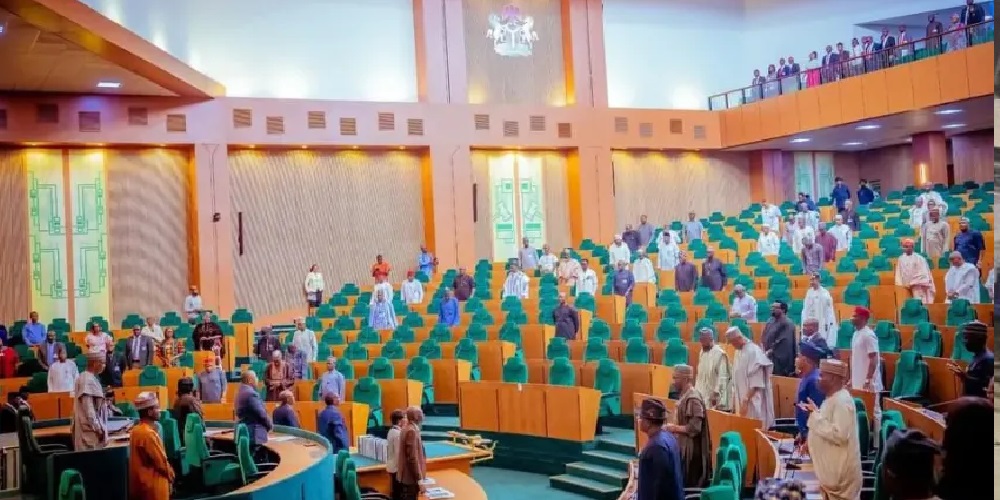
The House of Representatives has flagged inconsistencies in the reported volume of sugar imported into Nigeria and the revenue linked to the National Sugar Development Council during an ongoing review of government earnings.

The concern emerged during the House Committee on Finance revenue monitoring exercise covering the 2023–2025 fiscal years.

The session brought the Executive Secretary of the National Sugar Development Council, Kamar Bakrin, before lawmakers to clarify issues surrounding sugar importation and the sector’s financial contributions to government coffers.

Leading the inquiry, the Chairman House Committee on Finance, Rep. James Faleke, questioned the reliability of the import figures presented by the council. Lawmakers indicated that the data submitted might not accurately reflect the real quantity of sugar entering the country.

Advertisement

In response, the Executive Secretary of the council, Bakrin explained that it does not directly collect revenue from sugar imports. Instead, the responsibility for collecting the statutory sugar levy rests with the Nigeria Customs Service at the nation’s ports, after which the funds are transferred into designated government accounts.

He also clarified that the council’s involvement in the importation process is largely regulatory. Companies seeking to bring raw sugar into the country are required to obtain import licences, which are issued based on recommendations from the council after evaluating the compliance and performance of operators and processors within the industry.

“These recommendations are subsequently forwarded through the supervising ministry for final approval by the President.

“Within the review period, approvals were granted for the importation of about two million metric tonnes of raw sugar”, he said.

Advertisement

The ES further explained that its activities are funded mainly through a portion of the sugar levy collected by the Nigeria Customs Service. Releases for its operations are made periodically by the Office of the Accountant General of the Federation in line with appropriations approved by the National Assembly.

“To finance its programmes and sector development initiatives, the council typically submits quarterly requests to the Accountant General’s office for the release of funds allocated to it”, he added..

However, the committee chairman maintained that the council must establish a more reliable mechanism for verifying the actual volume of sugar imported into the country.

According to him, “relying solely on figures supplied by the Nigeria Customs Service may lead to discrepancies and could ultimately affect the accuracy of government revenue records”.

Advertisement

Faleke cautioned that the data currently available to the council appears to underestimate the true quantity of sugar entering the Nigerian market, raising concerns about potential revenue leakages.

He therefore urged the NSDC to strengthen its monitoring and reconciliation framework with relevant agencies, particularly the Nigeria Customs Service, to ensure accurate data management and greater transparency within the sector.

The chairman stressed that proper tracking of imports is critical for effective revenue generation and accountability.

Meanwhile, the committee also directed the Nigerian National Petroleum Company Limited (NNPCL) to provide detailed information on Nigeria’s oil assets and equity participation in oil wells across the country.

Advertisement

Faleke specifically instructed the organisation’s Financial Controller, Tajudeen Karim, to submit a comprehensive breakdown of all oil wells in which Nigeria has equity participation.

The committee requested a detailed list indicating the ownership structure of the wells, including those operating under Joint Venture (JV) arrangements, Production Sharing Agreements (PSAs), and wholly owned assets.

According to Faleke, the information should also include production volumes from each well and the corresponding share accruing to Nigeria under the applicable agreements.

“They do that under certain laws or agreements which they sign with you. In some cases we have percentage shareholding 60/40, 50/50 and there are wells that are 100 per cent owned. You have to identify them separately,” Faleke said.

Advertisement

He added that once the committee receives the full list of oil wells and their shareholding structures, the NNPCL would be required to present production data alongside Nigeria’s equity share in line with the contractual agreements governing each asset.

Faleke further directed that all the requested information must be properly reflected in supporting documents submitted to the committee to enable effective verification.

The committee stated that the ongoing exercise forms part of the National Assembly’s oversight responsibility to ensure transparency, accountability, and proper remittance of revenues by government agencies into the Federation Account.

Advertisement
Continue Reading
Advertisement

News

Finally, US-Iran deal announced with end to military warefare

Published

on

ADVERTISEMENT
Zoom Ad
ADVERTISEMENT
Zoom Ad


The United States and Iran agreed on a peace deal and an “immediate and permanent” end to military operations on all fronts, including Lebanon, mediator Pakistan said, in the strongest sign yet that more than three months of war in the Middle East is drawing to a close.

Pakistani Prime Minister Shehbaz Sharif posted on X that a peace deal “has been REACHED” and an official signing ceremony will be held on June 19 in Switzerland.

“The Deal with the Islamic Republic of Iran is now complete,” US President Donald Trump swiftly confirmed with his own statement on Sunday, as he marked his 80th birthday.

Advertisement

“I hereby fully authorise the toll-free opening of the Strait of Hormuz and, simultaneously herewith, authorise the immediate removal of the United States Naval blockade. Ships of the World, start your engines. Let the oil flow!”

There was no immediate confirmation from Iran, which just hours earlier had vowed to retaliate against a strike by Israel against Iranian ally Hezbollah in the suburbs of Beirut, which threatened to push back an agreement.

It had declined on Sunday to offer a clear timeline for reaching a peace deal.

But later in the day, Pakistan’s Sharif made the announcement that a deal had been struck, thanking the US and Iran “for finding a diplomatic solution to the conflict.”

Advertisement

Both sides have declared the immediate and permanent termination of military operations on all fronts, including in Lebanon,” Sharif wrote, adding thanks to leaders of Qatar, Saudi Arabia, and Turkey for their support in the mediation effort.

It was a rollercoaster Sunday, with Trump in the morning angrily blaming Israel for delaying its signing with the airstrike on Beirut, which he said had delayed the agreement.

The last time Israel hit the Beirut suburbs, it sparked one of the strongest jolts yet to a ceasefire that has largely held since April, with Iran firing off a retaliatory missile barrage and Israel responding with strikes.

Tehran has long demanded that any agreement to halt the war must include the parallel conflict in Lebanon, where Israel has been pursuing a campaign against Iran-backed Hezbollah.

Advertisement

The war began in late February, with US-Israeli strikes on Iran, which retaliated with attacks on Israel and US allies in the region, and by virtually blocking ship traffic in the Strait of Hormuz, a vital route for global oil and natural gas supplies. The US retaliated to that by blockading ship traffic to Iranian ports.

Continue Reading

News

Price of petrol expected to drop to N900 per litre as US-Iran opens way for Strait of Hormuz

Published

on

ADVERTISEMENT
Zoom Ad
ADVERTISEMENT
Zoom Ad


Prices of oil fell sharply in Asian trading on Monday after the United States and Iran announced an agreement that would allow the reopening of the Strait of Hormuz, ending more than 100 days of disruption to one of the world’s most important energy shipping routes.

At the time of reporting, Brent crude was down by nearly 4 percent at $83.67 per barrel, while U.S. benchmark West Texas Intermediate (WTI) declined to $80.76 per barrel.

The latest drop extends a downward trend that has emerged in recent weeks amid growing speculation that a diplomatic breakthrough was imminent despite continued military escalations.

Advertisement

As a result, the petrol price is seen falling below N1000 per litre after many weeks of inflated prices at filling stations across Nigeria.

Analysts say the price will likely settle between N850 and N915 when the Strait finally re-opens and ships begin ferrying fuel supplies, easing pressure on the domestic market while helping to stabilise costs.

The breakthrough was announced on Sunday night when President Trump stated on social media that negotiations with Iran had been concluded.

He said oil would once again move through the Strait of Hormuz once the agreement is formally signed on Friday.

Advertisement

Iran also signaled its approval of the arrangement.

Deputy Foreign Minister Kazem Gharibabadi confirmed that both sides had finalised the text of a memorandum of understanding, adding that a formal signing ceremony is scheduled to take place in Switzerland later this week.

The agreement was further validated by Pakistan and Qatar, which served as the principal mediators throughout the negotiations.

Although the full terms have not been officially released, Iran’s semi-official Mehr News Agency, citing a source close to the country’s negotiating team, reported that the deal includes an end to the conflict in Lebanon, the suspension of sanctions on Iranian oil exports, the release of $24 billion in frozen Iranian assets, and assurances that Iran will not pursue nuclear weapons.

Advertisement

According to the report, sanctions relief and the release of frozen funds will occur during a ceasefire period. Mehr also indicated that Iran could gain access to $12 billion before broader negotiations commence.

For energy markets, one of the most significant provisions is the resumption of Iranian crude exports during the proposed 60-day ceasefire while talks on nuclear issues continue.

The diplomatic progress nearly unravelled shortly before the announcement after Israel launched an air strike in southern Beirut. Trump criticised the operation, saying it “should not have happened,” and subsequently urged all parties to de-escalate.

He also called for an immediate halt to Israeli attacks across Lebanon.

Advertisement

Despite optimism surrounding the agreement, market participants remain cautious. Traders are expected to closely monitor the removal of mines from the Strait of Hormuz, the formal signing of the accord, and the restoration of normal shipping activity before fully embracing expectations of supply normalisation.

After more than three months of conflict, investors are increasingly pricing in the prospect of peace and a gradual return to stability in global oil markets. However, questions remain over the durability of the agreement and how quickly normal trade flows can be restored.

Continue Reading

News

2025 Capital Budget Gets New Lease of Life as Reps Push Deadline to September

Published

on

ADVERTISEMENT
Zoom Ad
ADVERTISEMENT
Zoom Ad

By Gloria Ikibah

The House of Representatives has approved a three-month extension of the implementation period for the capital component of the 2025 Appropriation Act, shifting the deadline from June 30 to September 30, 2026.

The decision was taken during an emergency sitting held on Monday, as lawmakers moved swiftly to ensure the continued execution of capital projects captured in the national budget.

The legislation, which seeks to amend the Appropriation (Repeal and Enactment) Act, 2025, was designed to provide additional time for Ministries, Departments and Agencies to complete ongoing projects and fully utilise funds earmarked for capital expenditure.

Advertisement

In an unusually rapid legislative process, the bill passed through its first, second and third readings during the same plenary session after members suspended the relevant provisions of the House Standing Orders to facilitate its consideration.

Leading debate on the general principle of the bill, House Leader, Rep. Julius Ihonvbere, said the extension was necessary as several capital projects captured in the 2025 budget had not been fully implemented.

He emphasised that the amendment was not intended to alter any provision of the budget but merely to extend its lifespan by three months to allow ongoing projects to be completed.

He said: “It is very straightforward. Because some aspects of the capital appropriation will not be fully implemented, if we do not extend the life of this particular law, it will have a very grave impact on the growth and development of the national economy.

Advertisement

“The purpose essentially is to extend the lifespan. We are not touching any part of the law. It is simply extending the lifespan from June 30, 2026 to September 30, 2026. I urge my colleagues to approve this so that we can continue with the work of developing and growing our economy and country”.

Presiding over the session, Speaker of the House, Rep. Abbas Tajudeen, acknowledged that the records provided by the Chairman House Committee on Appropriations and other relevant agencies revealed that implementation of the capital budget was yet to be completed.

“As you are aware, the 2025 budget was extended to June 30. From the records we received from the Chairman, Appropriations, and other relevant quarters, it is yet to be fully implemented. It is therefore in the best interest of this country and the National Assembly for us to extend the budget to September 30 to enable the Federal Government fulfil its obligations under the 2025 budget,” the Speaker said.

Following the adoption of the bill at second reading, the House dissolved into the Committee of Supply where it had the clause by clause consideration of the bill, and approved the three clauses, explanatory memorandum and long title of the bill.

Advertisement

The committee subsequently reported back to plenary, where lawmakers adopted its recommendations and suspended House rules to allow the bill to be read a third time and passed the same day.

The accelerated passage reflects growing concern over the pace of implementation of key infrastructure and development projects, many of which require additional time to reach completion.

With the approval, government agencies now have until the end of September to execute projects funded under the capital component of the 2025 budget, a move expected to prevent disruptions to ongoing works and improve budget performance.

The extension is also aimed at ensuring that resources already allocated for development projects are effectively utilised before the capital budget expires.

Advertisement

With the passage of the amendment, federal ministries, departments and agencies now have an additional three months to implement capital projects and utilize funds appropriated under the 2025 budget.

Meanwhile, the House also announced changes in the leadership of some standing committees.

The appointments are as follows:
• Rep. Ali Madaki – Chairman House Committee on Special Duties
• Rep. Ali Isa J.C. –  Chairman House Committee on Shipping Services,
• Rep. Pascal Agbodike – Chairman House Committee on Small and Medium Enterprises Development Agency of Nigeria (SMEDAN),
• Rep. Kelechi Nwogu –  Chairman House Committee on Hydrological Services

The Speaker urged the newly appointed committee chairmen to assume their responsibilities immediately and bring their legislative experience to bear in advancing the work of the House.

Advertisement
Continue Reading

Trending

Copyright © 2024 Naija Blitz News