

News
School Resumption & The Dilemma Of Many Parents
- /home/naijuinz/public_html/wp-content/plugins/mvp-social-buttons/mvp-social-buttons.php on line 27
https://naijablitznews.com/wp-content/uploads/2024/09/IMG-20240922-WA0039-1000x600.jpg&description=School Resumption & The Dilemma Of Many Parents', 'pinterestShare', 'width=750,height=350'); return false;" title="Pin This Post">
- Share
- Tweet /home/naijuinz/public_html/wp-content/plugins/mvp-social-buttons/mvp-social-buttons.php on line 72
https://naijablitznews.com/wp-content/uploads/2024/09/IMG-20240922-WA0039-1000x600.jpg&description=School Resumption & The Dilemma Of Many Parents', 'pinterestShare', 'width=750,height=350'); return false;" title="Pin This Post">
By Emmanuel Ajibulu
Many concerned Nigerians have taken to the streets and various social media platforms lamenting how difficult it has been for them in feeding their children, let alone sending them back to school to kick start their fresh academic session.
In Lagos State for example, students had gone on a long vacation after the 2023/2024 session ended on July 19, 2024.

Accordingly, Primary and Secondary schools in many parts of Nigeria resumed for the 2024/2025 academic session Monday, September 19, 2024; especially in Lagos and Delta States. No doubt,the resumption literally sparked debate on the growing challenges faced by parents and guardians as well as the country’s education sector. Schools are also not spared from the shocking consequences of the trending scourge as patronage significantly dropped in many private schools.
In the face of high living costs, families are struggling to provide basic educational needs such as school fees, transportation, and materials whilst the minimum wage is just N70,000 amidst rising inflation which is currently at double digits.
It is recalled that UNICEF, the UN agency for children, reported in June 2024 that around 11 million Nigerian children were experiencing severe child food poverty. The report says this translates to one in every three Nigerian children under five years old.
UNICEF defines severe child food poverty as consuming no more than two out of eight food groups.
Globally, 181 million children under the age of five are considered to be facing severe child food poverty. Nigeria ranks among the 20 countries that account for 65% – almost two-thirds – of these children.
The UNICEF report further indicated that four out of five children experiencing child food poverty globally are fed only milk or a starchy staple, such as rice, maize or wheat. Less than 10% of these children are fed fruits and vegetables. And even fewer, less than 5%, are fed nutrient-dense foods such as eggs, fish, poultry or meat.
This is utterly worrisome, heart-rending and preposterous.
However, to function well in this dire strait, the Nigerian government needs to take proactive, responsible, responsive and well-informed decisions in tackling the many socio-economic conditions that are disrupting education across the country, bearing in mind the potential long-term and short-term negative impacts it could have on children’s education and the future of the country if not quickly nipped in the bud.
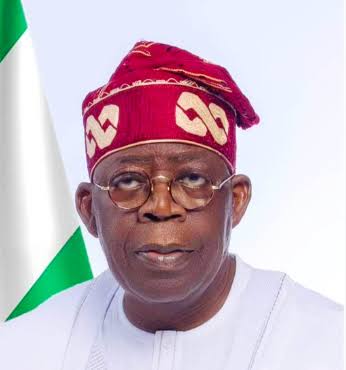
While it is important to applaud the long-term benefits of President Bola Ahmed Tinubu’s economic reforms across many sectors of Nigeria’s economy, his team also needs to look inwards and give priority to short-term benefits as well, so that the citizenry can have a breather. Understandably, Mr. President is barely sixteen months (16) in office, he can still make a difference in the shortest possible time for the greater good of the downtrodden and other vulnerable segments of the society.
It is a well-known fact that the youth of any country is a great asset. They are indeed the future of the country and represent it at every level. The role of youths in nation-building is more important than one might possibly think. In other words, the intelligence and work of the youth will take the country on the pathway of success. As every citizen is equally responsible, the youth is too. They are the building blocks of a country.
It therefore becomes imperative for governments across the board (Local, State and Federal), corporate organizations, religious bodies and other critical stakeholders in the society to embrace a purposely paradigm shift by investing heavily in the education of Nigerian children, so that the future of Nigeria would be remarkably great and desirable. May God bless and prosper Nigeria.
●Ajibulu wrote from Abuja, he is an infopreneur, social media influencer, writer, communication consultant and publisher of veracitydesk.com, emmanuelajibulu@gmail.com
News
Just in: Nigeria’s inflation rises in three consecutive months
By Ojomah Austin.
Nigeria’s inflation rose for the third consecutive month to 15.93 percent in May 2026 from 15.69 percent recorded in April.
The National Bureau of Statistics disclosed this in its Consumer Price Index and inflation data released on Monday.
This means that in May, the country’s inflation rose on a month-on-month basis by 1.75 percent.
Also, the report showed that food inflation also skyrocketed to 16.96 percent in May, up from 16.06 percent recorded the previous month.
“In May 2026, the headline inflation rate on a month-on-month basis was 1.75 percent, which was 0.39 percent lower than the rate recorded in April 2026 (2.13 percent).
On a year-on-year basis, the headline inflation rate rose to 15.93 percent, up from 15.69 percent in April 2026 and down from 26.06 percent in the same month of the preceding year May 2025.
The Food inflation rate in May 2026 on a month-on-month basis was 2.98 percent, down by 0.65 percentage points from April 2026 (3.63 percent). On a year-on-year basis, it was 16.96 percent and stood at 24.55 percent in the same month of the preceding year, May 2025”.
Recall that the headline inflation rate dropped in March and April, respectively.
Recall the Central Bank of Nigeria retained the country’s interest rate 26.50 percent in its 305th Monetary Policy meeting.
News
Finally, US-Iran deal announced with end to military warefare
The United States and Iran agreed on a peace deal and an “immediate and permanent” end to military operations on all fronts, including Lebanon, mediator Pakistan said, in the strongest sign yet that more than three months of war in the Middle East is drawing to a close.
Pakistani Prime Minister Shehbaz Sharif posted on X that a peace deal “has been REACHED” and an official signing ceremony will be held on June 19 in Switzerland.
“The Deal with the Islamic Republic of Iran is now complete,” US President Donald Trump swiftly confirmed with his own statement on Sunday, as he marked his 80th birthday.
“I hereby fully authorise the toll-free opening of the Strait of Hormuz and, simultaneously herewith, authorise the immediate removal of the United States Naval blockade. Ships of the World, start your engines. Let the oil flow!”
There was no immediate confirmation from Iran, which just hours earlier had vowed to retaliate against a strike by Israel against Iranian ally Hezbollah in the suburbs of Beirut, which threatened to push back an agreement.
It had declined on Sunday to offer a clear timeline for reaching a peace deal.
But later in the day, Pakistan’s Sharif made the announcement that a deal had been struck, thanking the US and Iran “for finding a diplomatic solution to the conflict.”
Both sides have declared the immediate and permanent termination of military operations on all fronts, including in Lebanon,” Sharif wrote, adding thanks to leaders of Qatar, Saudi Arabia, and Turkey for their support in the mediation effort.
It was a rollercoaster Sunday, with Trump in the morning angrily blaming Israel for delaying its signing with the airstrike on Beirut, which he said had delayed the agreement.
The last time Israel hit the Beirut suburbs, it sparked one of the strongest jolts yet to a ceasefire that has largely held since April, with Iran firing off a retaliatory missile barrage and Israel responding with strikes.
Tehran has long demanded that any agreement to halt the war must include the parallel conflict in Lebanon, where Israel has been pursuing a campaign against Iran-backed Hezbollah.
The war began in late February, with US-Israeli strikes on Iran, which retaliated with attacks on Israel and US allies in the region, and by virtually blocking ship traffic in the Strait of Hormuz, a vital route for global oil and natural gas supplies. The US retaliated to that by blockading ship traffic to Iranian ports.
News
Price of petrol expected to drop to N900 per litre as US-Iran opens way for Strait of Hormuz
Prices of oil fell sharply in Asian trading on Monday after the United States and Iran announced an agreement that would allow the reopening of the Strait of Hormuz, ending more than 100 days of disruption to one of the world’s most important energy shipping routes.
At the time of reporting, Brent crude was down by nearly 4 percent at $83.67 per barrel, while U.S. benchmark West Texas Intermediate (WTI) declined to $80.76 per barrel.
The latest drop extends a downward trend that has emerged in recent weeks amid growing speculation that a diplomatic breakthrough was imminent despite continued military escalations.
As a result, the petrol price is seen falling below N1000 per litre after many weeks of inflated prices at filling stations across Nigeria.
Analysts say the price will likely settle between N850 and N915 when the Strait finally re-opens and ships begin ferrying fuel supplies, easing pressure on the domestic market while helping to stabilise costs.
The breakthrough was announced on Sunday night when President Trump stated on social media that negotiations with Iran had been concluded.
He said oil would once again move through the Strait of Hormuz once the agreement is formally signed on Friday.
Iran also signaled its approval of the arrangement.
Deputy Foreign Minister Kazem Gharibabadi confirmed that both sides had finalised the text of a memorandum of understanding, adding that a formal signing ceremony is scheduled to take place in Switzerland later this week.
The agreement was further validated by Pakistan and Qatar, which served as the principal mediators throughout the negotiations.
Although the full terms have not been officially released, Iran’s semi-official Mehr News Agency, citing a source close to the country’s negotiating team, reported that the deal includes an end to the conflict in Lebanon, the suspension of sanctions on Iranian oil exports, the release of $24 billion in frozen Iranian assets, and assurances that Iran will not pursue nuclear weapons.
According to the report, sanctions relief and the release of frozen funds will occur during a ceasefire period. Mehr also indicated that Iran could gain access to $12 billion before broader negotiations commence.
For energy markets, one of the most significant provisions is the resumption of Iranian crude exports during the proposed 60-day ceasefire while talks on nuclear issues continue.
The diplomatic progress nearly unravelled shortly before the announcement after Israel launched an air strike in southern Beirut. Trump criticised the operation, saying it “should not have happened,” and subsequently urged all parties to de-escalate.
He also called for an immediate halt to Israeli attacks across Lebanon.
Despite optimism surrounding the agreement, market participants remain cautious. Traders are expected to closely monitor the removal of mines from the Strait of Hormuz, the formal signing of the accord, and the restoration of normal shipping activity before fully embracing expectations of supply normalisation.
After more than three months of conflict, investors are increasingly pricing in the prospect of peace and a gradual return to stability in global oil markets. However, questions remain over the durability of the agreement and how quickly normal trade flows can be restored.
-
Sports19 hours agoReal Madrid complete a Shocking Signing of Chelsea Superstar
-
Opinion22 hours agoChinese Miners Are Not the Architects of Nigeria’s Banditry A Response to Farooq A. Kperogi’s “How Chinese Miners Fuel Nigeria’s Terrorist Banditry”
-
News23 hours agoECOWAS Parliament Convenes High-Level Dakar Summit to Drive Renewable Energy Push in Rural West Africa
-
News23 hours agoDeputy Speaker Pushes for Home-Grown Defence Industry, Stronger Financial Crackdown on Insecurity
-
Sports19 hours agoEnzo Maresca wants Chelsea Defensive Superstar as Top Target at Man City
-
News11 hours agoNot Diabetes And hypertension, Son Reveals Shocking Details About General Rabe’s death
-
Metro11 hours agoPolice Launch Massive Manhunt As Gunmen Abduct Ondo Community Leader
-
News10 hours agoFamily Reveals How General Abubakar Died, Says Wife Still In Bandits’ Custody

Warning: Undefined variable $user_ID in /home/naijuinz/public_html/wp-content/themes/zox-news/comments.php on line 49
You must be logged in to post a comment Login