
News
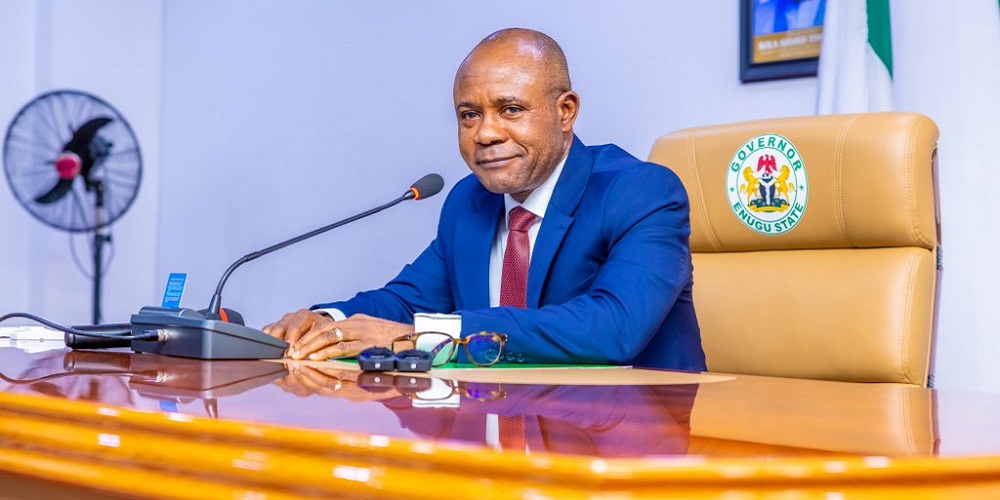
We’re Not Spending N100bn To Revive United Palm Products – Enugu Govt

- /home/naijuinz/public_html/wp-content/plugins/mvp-social-buttons/mvp-social-buttons.php on line 27
https://naijablitznews.com/wp-content/uploads/2024/05/Peter-Mbah.jpg&description=We’re Not Spending N100bn To Revive United Palm Products – Enugu Govt', 'pinterestShare', 'width=750,height=350'); return false;" title="Pin This Post">
- Share
- Tweet /home/naijuinz/public_html/wp-content/plugins/mvp-social-buttons/mvp-social-buttons.php on line 72
https://naijablitznews.com/wp-content/uploads/2024/05/Peter-Mbah.jpg&description=We’re Not Spending N100bn To Revive United Palm Products – Enugu Govt', 'pinterestShare', 'width=750,height=350'); return false;" title="Pin This Post">


Enugu State government has explained that it is not committing N100 billion into its partnership with a private firm to revive the moribund United Palm Products Ltd (UPPL).
In providing more facts on the deal, the state government empahasised that it “is not releasing N100 billion or any dime to Pragmatic Palms Ltd”, adding that instead, Pragmatic Palms Ltd, a special purpose vehicle (SPV) for the partnership, will finance the revitalisation of UPPL.
In a statement issued by the senior special adviser to the governor on external relations, Mr. Uche Anichukwu, the state government said Pragmatic Palm Ltd would provide finance for 60 percent of the transaction value while the Peter Mbah administration would provide the plantations valued at 40 percent equity.
Anichukwu said UPPL is one of the numerous initiatives of the late premier of the defunct Eastern Region, Dr. Michael Okpara, and had been moribund for decades.
He said UPPL was expectedly one of the many moribund assets penciled down for revitalisation by Governor Peter Mbah in line with his campaign promise to convert the state’s dormant assets to productive assets and grow the state’s economy exponentially from the current $4.4 billion to $30 billion through private sector investments.
Anichukwu further clarified that this culminated in the N100 billion deal between the state government and Pragmatic Palms Ltd., a subsidiary of Diamond Stripes Ltd. on Thursday, May 9, 2024 after months-long negotiation and due diligence that started way back in 2023.
He sad, “Because several parties/investors are involved, it became imperative, as is the best international practice, to register a Special Purpose Vehicle (SPV) as the platform to transact the deal. Pragmatic Palms Ltd. was duly incorporated before the signing of the agreement.
“For the avoidance of doubt, however, although it is not the case in this instance, it is apposite to also note that the Companies and Allied Matters Act (CAMA), 2020, provides for Pre-incorporation Contract.
“Section 96 (1) of CAMA, 2020, provides: “Any contract or other transaction purporting to be entered into by the company or by person on behalf of the company prior to its formation may be ratified by the company after its formation and thereupon the company shall become bound by and entitled to the benefit thereof as if it has been in existence at the date of such contract or other transaction and had been a party thereto.
“As demanded by the Enugu State government, Pragmatic Palms Ltd provided a guarantor, which is Diamond Stripes Ltd, a reputable and huge company that has done investments worth over $20 billion spanning power and renewable energy sector, port sector, and agricultural sector since 2013.
Diamond Stripes Ltd is the sole investor in Onitsha River Port and has invested heavily in the agricultural sector where it is the largest owner of silo complexes in Nigeria. It was involved in the acquisition of 600mw Shiroro Hydroelectric Power plant in 2013, concessions of 30mw Gurara Hydroelectric Power Plant in 2019, and establishment of 300mwShiroro solar power project in 2021.
“The state’s interest in the N100 billion UPPL deal is well secured, benefitting from Governor Peter Mbah’s experience as an investment finance expert and an entrepreneur, who has handled multi-billion-dollar projects himself. Besides asking for and getting a corporate guarantor on the part of Pragmatic Palms Ltd, the government also demanded for and got bank guarantors from Pragmatic Palms. Importantly, performance targets and timelines were equally set in the Agreement for Pragmatic Palms Ltd. failing which the Enugu State Government is free to revoke the deal and reassume total ownership of United Palm Products Ltd.
“In addition, the Enugu State Government is represented on the company’s board, including the Chairmanship of the Board, as part of the steps taken to secure the state’s interest,” he said.
Anichukwu also disclosed that the MD of Pragmatic Palms Ltd, is also the MD/CEO of Diamond Stripes, George Nwangwu, and a professor of project financing law, who has led transaction teams that have participated in the consummation of over 100 privatisation or Public Private Partnership (PPP) transactions worth over $20 billion across Africa.
“Prof. Nwangwu was the head of infrastructure finance at the Ministry of Finance under the leadership of Dr. Ngozi Okonjo-Iweala, during which he led the team that delivered the Second Niger Bridge deal.
“Clearly, it is a new dawn for the United Palm Products Ltd. to the benefit of the people of Enugu State after decades of rot and neglect. The partnership is promising and the project in good hands,” he said.
… Reaffirms loyalty to President Bola Tinubu, vows to continue building sustainable leadership
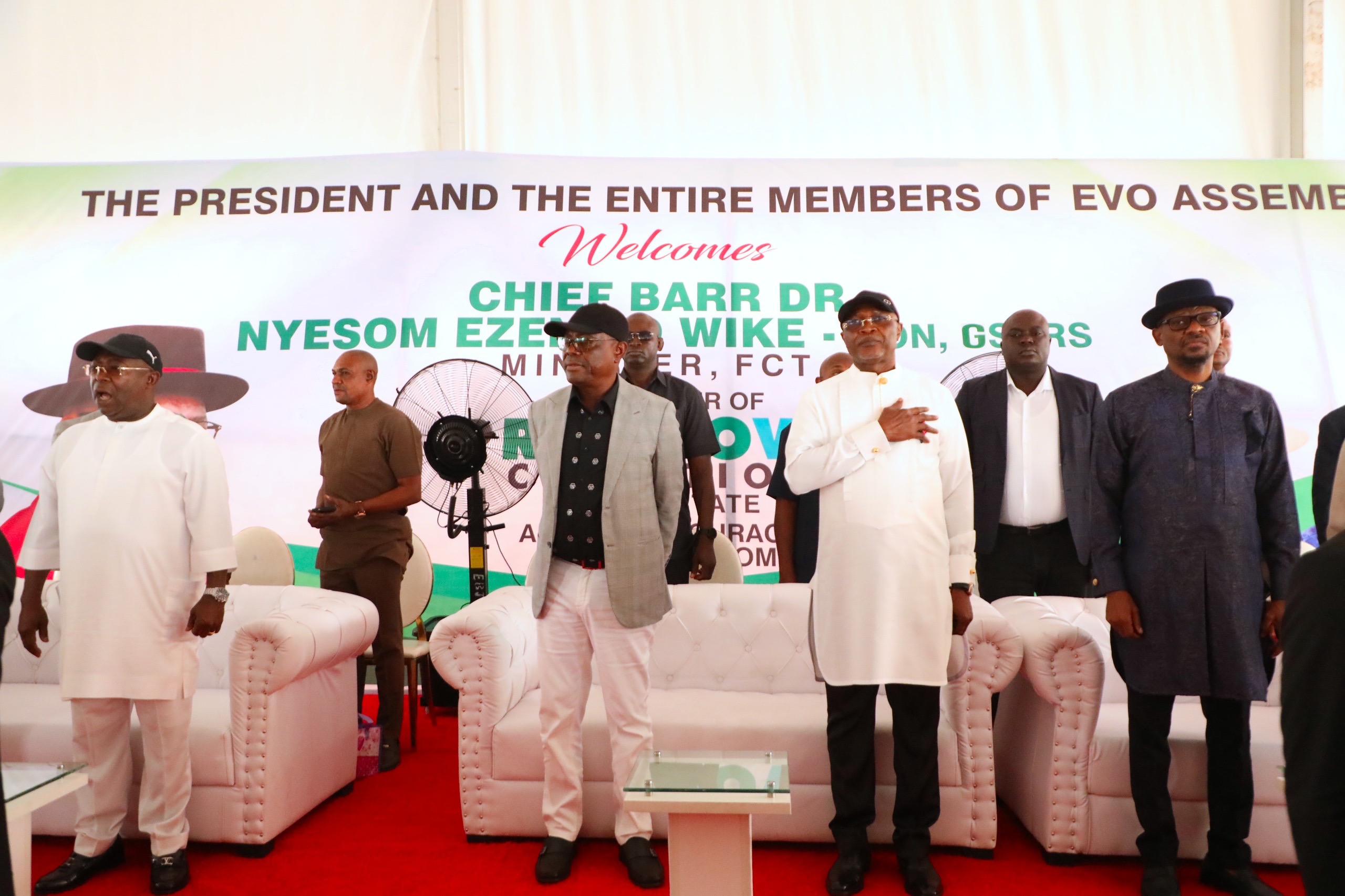
Former Governor of Rivers State and Minister of the Federal Capital Territory (FCT), Chief Nyesom Wike, has challenged the people of Evo Kingdom to point to any tangible development or political empowerment attracted to their land by his predecessor, Chibuike Rotimi Amaechi, despite holding top political offices as Speaker, Governor, and Minister for 24 years.
Speaking during an interactive session with leaders and stakeholders of Evo Kingdom in Obio-Akpor Local Government Area, Wike declared that unlike past leaders who used their elevation to pull down others and monopolize power, his political philosophy centers on human capacity development, divine gratitude, and uplifting his people.
Wike questioned the moral right of those who spent decades in high offices without leaving behind a legacy of leadership or infrastructure in the area, warning against selfish politics that crumbles once the leader passes on.
”Because how will I answer before God if these people could take that kind of risk, and opportunity came up for you to help, for you to uplift them? But because of your greed, because of your selfishness, you don’t want anybody to reach the level you are,” Wike said.
He said; “You don’t want anybody in Obio-Akpor to be governor again because you have become governor. God will not be happy with me”.
Taking direct aim at Amaechi’s 24-year tenure across various arms of government, Wike challenged the kingdom to present evidence of what was attracted to the land under his rival’s reign.
”Someone was Speaker of the House of Assembly for eight years, Governor for eight years, and Minister for eight years—that is 24 years in top leadership positions! What can anybody point to that he attracted to Evo Kingdom or Rivers State in all those 24 years? Nothing! Not one single thing!
”I was a Minister of State for Education, and as I sit here, I can count the projects I brought to Rivers State and my people. But somebody was Speaker, Governor, and headed a very lucrative ministry as a full Minister for eight years, yet brought nothing back home! How can someone who spent 24 years in power without empowering his people or raising new leaders now turn around to tell you he loves you?” Wike queried.
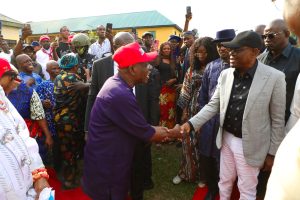
Highlighting his political trajectory and contentment with his achievements under the administration of President Bola Ahmed Tinubu, the FCT Minister stressed that he has no further personal political ambitions other than serving as a vessel for his people.
”After all, what do I want that God has not given to me? Nothing! Nothing! Nothing! The only thing I ask from God today is to continue to give me long life,” he said.
“I can’t be a governor again. I’ve been a minister two times. I cannot be chairman of council again. So I am happy. I don’t have anything to lose”.
He continued: “What leadership, as you are leaving, what’s the leadership you have kept behind to continue with where you have stopped? Because our problem here is that you just want only yourself. When you die, everything crumbles. That is not our own case.”
Addressing political uncertainties and betrayal, the Minister reiterated his firm trust in God rather than human promises.
”As a politician, I know that the only person who will not disappoint is God,” Wike declared.
“So, don’t ever believe that a human being will not disappoint you. No matter the love you have, do the best you can do. If the person disappoints you, don’t kill yourself. God will right the wrong”, he said.
Wike also recounted how his administration restructured the chieftaincy institution to give Evo Kingdom adequate representation in the Rivers State Council of Traditional Rulers, dismissing claims that traditional politics or native charms could intimidate him.
Political leaders and traditional rulers like Eze Temple Ejekwu
and Elder Peter Chinwo, President of Evo Assembly assured the FCT Minister of victory for the President and other candidates endorsed by the Rainbow Coalition.
News
Nigeria’s Ambassador to Hungary, Abass Ogwime, Selected to Commission Hungarian-African House in Budapest

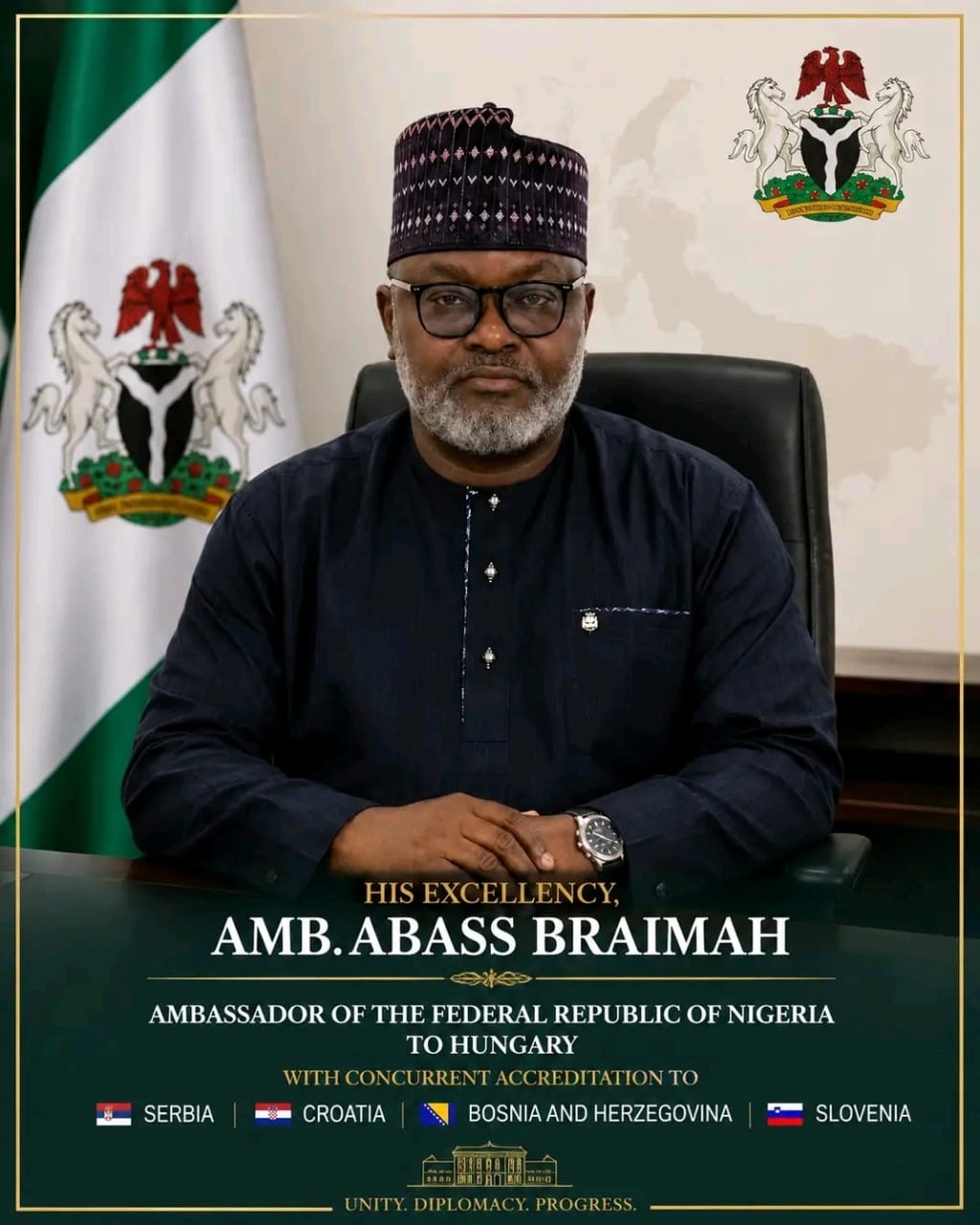
Nigeria’s Ambassador to Hungary, Abass Braimah Ogwime, has been selected among African ambassadors accredited to Hungary to officially commission the newly established Hungarian-African House in Budapest.
Ogwime, who also serves as Nigeria’s ambassador to Serbia, Croatia, Bosnia and Herzegovina, and Slovenia, was the guest speaker at the inauguration ceremony held in Budapest on October 2, 2026.
The event attracted members of the diplomatic community, Hungarian government representatives, African heads of mission, business executives, investors, members of the African diaspora and other stakeholders seeking to strengthen economic, cultural and diplomatic relations between Hungary and African countries.
The Hungarian-African House, known locally as Magyar-Afrika Ház, is an initiative of the Foundation for Africa. The facility is designed to serve as a permanent platform for dialogue, business development, cultural exchange and cooperation between Hungary and African nations.
The initiative is expected to provide a meeting point for Hungarian and African businesses, investors, academic institutions and government representatives to explore investment opportunities, establish strategic partnerships and develop practical areas of collaboration.
Ogwime’s selection as one of the African ambassadors chosen for the commissioning underscores Nigeria’s participation in diplomatic engagements aimed at expanding cooperation between African countries and Hungary.
The Nigerian Embassy in Budapest reaffirmed its commitment to strengthening diplomatic ties, promoting economic partnerships and supporting initiatives that encourage collaboration between Nigerian, African and Hungarian institutions and communities.
The establishment of the Hungarian-African House comes amid broader efforts to deepen Africa-Europe engagement through trade, investment, cultural diplomacy and institutional partnerships.
The new facility is expected to provide a dedicated space for advancing these objectives and fostering long-term relationships between Hungary and African countries.
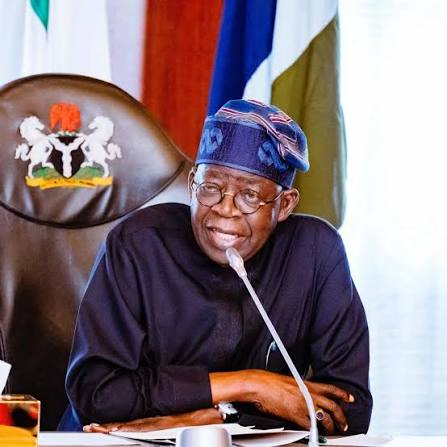
Hundreds of youths on Thursday staged a peaceful protest in Potiskum Local Government Area of Yobe State, demanding an end to President Bola Tinubu’s administration over worsening economic hardship, insecurity and unemployment.
The demonstration, tagged “Tinubu Must Go”, coincided with Nigeria’s 66th Independence Anniversary on October 1.
The protesters marched through the Tsohowar Kasuwa area of Potiskum, carrying placards and flags of the African Democratic Congress (ADC), while expressing dissatisfaction with the state of the country.
They said President Tinubu’s Independence Day broadcast failed to address their concerns, particularly the rising cost of living, poverty, unemployment, insecurity and what they described as poor governance since the administration assumed office in 2023.
Speaking to journalists on condition of anonymity, one of the protesters said the demonstration was an exercise of their fundamental rights and a call for urgent action to address the country’s challenges.
“We came out today to express our fundamental rights, freedom of speech. We are suffering from this government, people are dying due to insecurity, poverty and unemployment in the land,” the protester said.
Another demonstrator, who identified with the opposition, expressed concern over the country’s economic situation and the state of the education sector.
He said the youths were dissatisfied with the government’s handling of issues affecting ordinary Nigerians.
Similarly, a protester identified as Malam Gambo said the demonstration was organised to draw attention to hunger, insecurity and what the participants described as bad governance.
Eyewitnesses reported that the protest remained peaceful and orderly, with young men and women making up the bulk of the demonstrators.
Some participants were seen carrying ADC flags as they marched through parts of Potiskum to express their grievances against the Tinubu administration.

Wike fires Amaechi: You failed as Speaker, Governor and Minister For 24 Years(Photos)

Nigeria’s Ambassador to Hungary, Abass Ogwime, Selected to Commission Hungarian-African House in Budapest

‘Tinubu Must Go’: Yobe Youths Protest Economic Hardship, Insecurity


-

 News19 hours ago
If you elect me as your president in 2027, I will end election rigging in Nigeria — Atiku
-

 News19 hours ago
Nigeria Is Now the Worst Place To Be Born — Peter Obi
-

 Metro19 hours ago
Gunmen Abduct 20 Corps Members In Imo
-
 News19 hours ago
Nigeria at 66: ‘Tinubu made Yahoo Yahoo promise to Nigerians, he’s fake’ – Atiku
-

 Foreign19 hours ago
UK government begins freeing 5,000 prisoners due to extreme prison overcrowding
-

 News10 hours ago
Independence Day: NNPCL Slashes Petrol Price With N66 Discount for Nigerians
You must be logged in to post a comment Login