Connect with us

News

Workers’ suffering: NLC laments on May Day, seeks immediate relief

Published

on

ADVERTISEMENT
Zoom Ad
ADVERTISEMENT
Zoom Ad

President of the Nigeria Labour Congress (NLC), Comrade Joe Ajaero, has alleged that workers in the country, including ordinary citizens, are facing a harrowing situation in which the civic space is being gagged and compressed to the extent that people can no longer express themselves freely without security measures being used to curtail them.


He made this known at the 2025 Pre-May Day Lecture, themed “Reclaiming the Civic Space in the Midst of Economic Hardship,” held at the headquarters of the NLC on Wednesday.

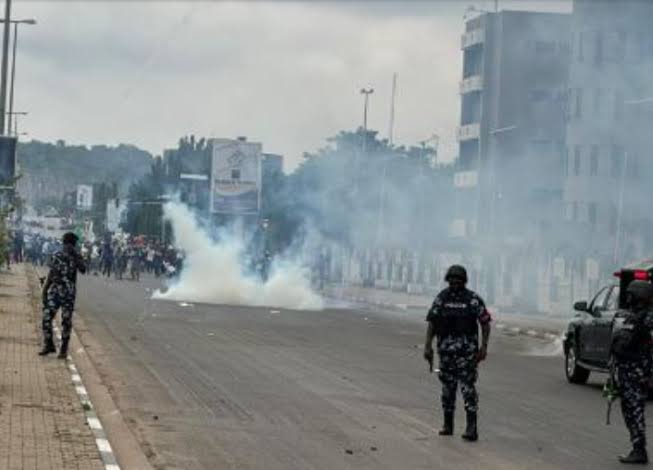
“The civic space is being compressed. Even last two weeks or last week, the people came out to protest police stopped them in Port Harcourt and other places. These days, protests are being fought, people are not allowing Nigerians to freely protest.

“Even that of minimum wage and hardship we tried and they tried to stop us. Forces are being used to compress the civic space and if you do that, you match the end to democracy even those sponsoring it will be the potential victims of it.

Advertisement

“I can tell you, all the people there now are beneficiaries of the suffering of some of us, who protested the military stay in office, annulment of June 12 and all that. None of them was known, their names are not even known in their community. If the civic space was closed, none of them will be in National Assembly, none will be a governor today.

“I think they’re having a momentary relief, it’s not going to last. It is the duty of the civil society, the labour movement to make sure that we’ll fight for the civic space to open.”

Ajaero, who noted that student protests have been suppressed and many voices sponsored to work against popular views, said the labour movement in Nigeria would continue to speak truth to power and fight for the rights of Nigerians.

Corroborating Ajaero’s position, the guest lecturer and Professor of International Law, Sir Christopher Chukwuma, stressed the need to review laws and policies—particularly the Cybercrime Act and the Public Order Act—that are restricting and criminalising civic engagement in the country.

Advertisement

Chukwuma expressed concern that the civic space in Nigeria was diminishing, noting that workers and unions no longer had the freedom to express themselves in a country that claims to practise democracy.

He emphasised that a vibrant civic space is essential to the proper functioning of democratic processes.

According to him, democracy in Nigeria is being threatened by corruption, lack of accountability, threats to the lives of civic actors, and the imposition of domestic laws on what he described as “the civic society of decision.”

He said, “We know how they happen in this country. The very moment there is increase in vulnerability and marginalization of certain groups of people, the civic space is dying. There is a problem.”

Advertisement

Chukwuma added that restrictions on peaceful protests, the mobilisation of security forces to threaten those who wish to exercise their rights, control of social media, attacks on media organisations and practitioners, limited access to justice, inadequate protection of human rights defenders, and insults were all threats to the civic space in Nigeria.

He insisted that although economic hardship could suppress the civic space or distract civic actors by shifting their attention to survival, Nigerian workers still have an opportunity to reclaim and revitalise that space.

He said, “There is need for a focus for policy reforms, there should be a need for certain restrictive laws to be amended. The NLC can advocate for changes in certain laws that potentially criminalize civic engagement, such as the Cybercrime Act and the Public Order Act, the NLC can do that.

The NLC can advocate for reforms that prevent excessive force against civic actors and increase transparency and oversight of security agencies, especially towards human rights defenders or activists.

Advertisement

“There is a need to strengthen the workers’ rights and civic empowerment by reviewing and revisiting laws and regulations that make civic space, ensuring they align with international human rights to their standards. This includes revisiting restrictive legislation, such as the Companies and Allied Matters Act, to protect thoughts of civil society organizations and felicitate their operations. The Congress can do that.

“There is need for implementation measures to enhance citizens’ participation in decision-making processes. These can be achieved through the mechanisms such as town hall meetings. It has always been going on, but encouraging to move on. The Media Rights Agenda is still another aspect of civil society organizations. But there can be collaborations where one finds it difficult, the other helps.”

“The need to resuscitate or reclaim the civic space in order to sustain democracy in Nigeria focuses on the experiences we have had from the past administrations, and it highlights the urgent need for safeguarding freedom of expression, strengthening civil society engagement, enhancing transparency and accountability, especially from the leaders, in order to foster dialogue and reconciliation.

“These measures are crucial for nurturing a vibrant democratic environment that will uphold citizen rights, promote inclusivity, and foster the long-term sustainability of democracy in Nigeria.”

Advertisement
Continue Reading
Advertisement
Click to comment

Warning: Undefined variable $user_ID in /home/naijuinz/public_html/wp-content/themes/zox-news/comments.php on line 49

You must be logged in to post a comment Login

Leave a Reply

News

PIGD Lauds Mutfwang’s Bold Push To Make Plateau Livestock Hub

Published

on

ADVERTISEMENT
Zoom Ad
ADVERTISEMENT
Zoom Ad


The Plateau Initiative for Growth and Development, PIGD, has commended Governor Caleb Manasseh Mutfwang for what it described as a visionary and economically strategic intervention in the livestock sector through the groundbreaking of a 500-cattle-per-day ultra-modern abattoir at Pwomol Village, Heipang, and a Veterinary Teaching Hospital in Barkin Ladi Local Government Area.
In a statement issued by its National Coordinator, Nengak David, the group said the projects mark a defining moment in the administration’s effort to reposition Plateau State from a producer of raw agricultural commodities to a major agro-industrial and livestock processing hub. PIGD said the intervention, supported by the Livestock Productivity and Resilience Support, L-PRES, Programme, speaks directly to the state’s comparative advantage in livestock, animal health services, meat processing, cold-chain development and export opportunities.

According to David, Governor Mutfwang has again demonstrated that governance is not about rhetoric but about building structures that can create jobs, expand revenue, improve food safety and open new economic frontiers for farmers, herders, butchers, transporters, processors, youths and investors across the livestock value chain.
“The groundbreaking of a 500-cattle-per-day ultra-modern abattoir and a Veterinary Teaching Hospital is not an ordinary project. It is a statement of intent. It shows that Governor Mutfwang understands that Plateau cannot continue to sit on huge agricultural and livestock potential without converting it into wealth, jobs and sustainable prosperity for the people,” the statement said.

PIGD noted that the ultra-modern abattoir, described as the largest facility of its kind in the region, would replace crude and unhygienic slaughter practices with a modern, automated and globally competitive meat processing system capable of strengthening public health, expanding market access and attracting private investment.

Advertisement

The group also praised the governor’s vision for the Heipang Special Agro-Processing Zone, saying the initiative would stimulate feed production, cold-room services, meat packaging, leather processing, transportation, veterinary services and other related businesses.
David said the Veterinary Teaching Hospital would further deepen Plateau’s reputation as a centre of excellence in animal health, research and livestock development, while also supporting training, disease control and improved productivity in the sector.

“This is the kind of intervention that creates a real economy. It is the kind of development that touches communities, creates dignity for labour and gives young people a reason to believe that their future can be built at home,” PIGD said.

The group urged the host communities to continue supporting the contractors and government agencies handling the projects to ensure timely completion within the projected period.
PIGD also called on investors, development partners and livestock stakeholders to take advantage of the Mutfwang administration’s renewed focus on agro-processing, saying Plateau is now being positioned as one of Nigeria’s most promising destinations for livestock investment, meat processing and agricultural value addition.
It added that the governor’s intervention was another evidence of an administration quietly but steadily laying the foundation for long-term economic transformation across Plateau State.

Advertisement
Continue Reading

News

Ray of hope as Oborevwori moves to restore power in Isoko, Ndokwa communities

Published

on

ADVERTISEMENT
Zoom Ad
ADVERTISEMENT
Zoom Ad


Delta State Governor, Hon. Sheriff Oborevwori, has taken fresh steps to restore and improve electricity supply in parts of Isoko and Ndokwa land with the commencement of procurement processes for the rehabilitation and expansion of critical power infrastructure across the affected communities.

The move followed the issuance of an Invitation to Tender by the Delta State Ministry of Energy for the execution of key electricity projects aimed at addressing years of power challenges caused by inadequate infrastructure and vandalism.

According to the tender notice signed by the Secretary of the Ministerial Tenders Board, T.O. Bayoko, one of the major projects involves the construction of a 33KV Overhead High Voltage Line from Emevor through Otor-Owhe to Isoko Roundabout, as well as the rehabilitation of vandalized sections of the existing 33KV line between Iyede and Ellu in Isoko North Local Government Area.

Advertisement

The project is expected to significantly improve power supply to communities across the Isoko axis and boost economic activities in the area.

In another intervention, the state government plans to rehabilitate and reconstruct the vandalized 33KV power line stretching from Abbi through Emu-Obodeti to the Kwale 7.5MVA Injection Station in Ndokwa West Local Government Area.

The project is designed to restore stable electricity to several communities that have suffered prolonged disruptions due to the destruction of critical power facilities.

The Ministry also announced plans to upgrade the existing 500KVA Independent Power Project (IPP) substation transformer at the Permanent Secretary’s Quarters in Asaba to a 1000KVA transformer, further strengthening electricity infrastructure within the state capital.

Advertisement

The tender advertisement, issued through the Ministry’s Planning, Research and Statistics Department, invited suitably qualified companies to bid for the projects, underscoring the Oborevwori administration’s commitment to improving power infrastructure as part of its M.O.R.E. Agenda.

Industry observers say the projects, when completed, will not only restore electricity to affected communities but also stimulate economic growth, support small businesses, improve security and enhance the quality of life of residents.

Since assuming office, Governor Oborevwori has continued to prioritize infrastructure development across the state, with renewed attention being given to the power sector following the enactment of the Delta State Electricity Power Sector Law, which seeks to expand access to reliable and sustainable electricity for residents and businesses.

The latest electricity projects are expected to bring relief to thousands of households and businesses in Isoko and Ndokwa communities that have long yearned for improved power supply, while reinforcing the administration’s resolve to accelerate development across all parts of the state.

Advertisement
Continue Reading

News

FG Rubbishes Reports of New Telecoms, Fuel Taxes

Published

on

ADVERTISEMENT
Zoom Ad
ADVERTISEMENT
Zoom Ad


The Federal Government has rubbished reports suggesting that it has adopted or is considering new taxes on telecommunications services and petroleum products following the publication of the International Monetary Fund (IMF) Article IV Consultation Report on Nigeria.

The Government said the reports misrepresent the content of the IMF report and do not reflect its policy direction.

The IMF Article IV Consultation Report contains the Fund’s assessment of Nigeria’s economy as well as recommendations for consideration by the authorities. Those recommendations do not amount to government policy and are not binding on Nigeria. Decisions on tax matters are taken through established constitutional and legislative processes and are guided by national priorities and prevailing economic realities.

Advertisement

The Government clarified that the Value Added Tax (VAT) waiver on petroleum products remains in place and has not been withdrawn. It also noted that although existing legislation provides for a fuel surcharge, such a measure can only take effect through a ministerial order and publication in the Official Gazette. No such process is under consideration.

The continued suspension of these charges has helped cushion the effect of global energy price fluctuations on households and businesses while keeping domestic fuel prices relatively stable.

The Government further clarified that the telecommunications excise duty introduced before 2023 has been repealed under the new tax laws and is therefore no longer applicable.

Against this backdrop, reports claiming that new taxes are being planned for telecommunications services or petroleum products are not factual and should be disregarded.

Advertisement

The Federal Government remains focused on reforms that promote economic growth, improve revenue administration and create a more competitive environment for investment and job creation. The emphasis remains on expanding economic activity, plugging leakages and improving efficiency rather than placing additional tax burdens on citizens.

Any future tax measures will be announced through official channels and implemented in line with the law.

Continue Reading

Trending

Copyright © 2024 Naija Blitz News